
Loading, please wait...


LOT 0590
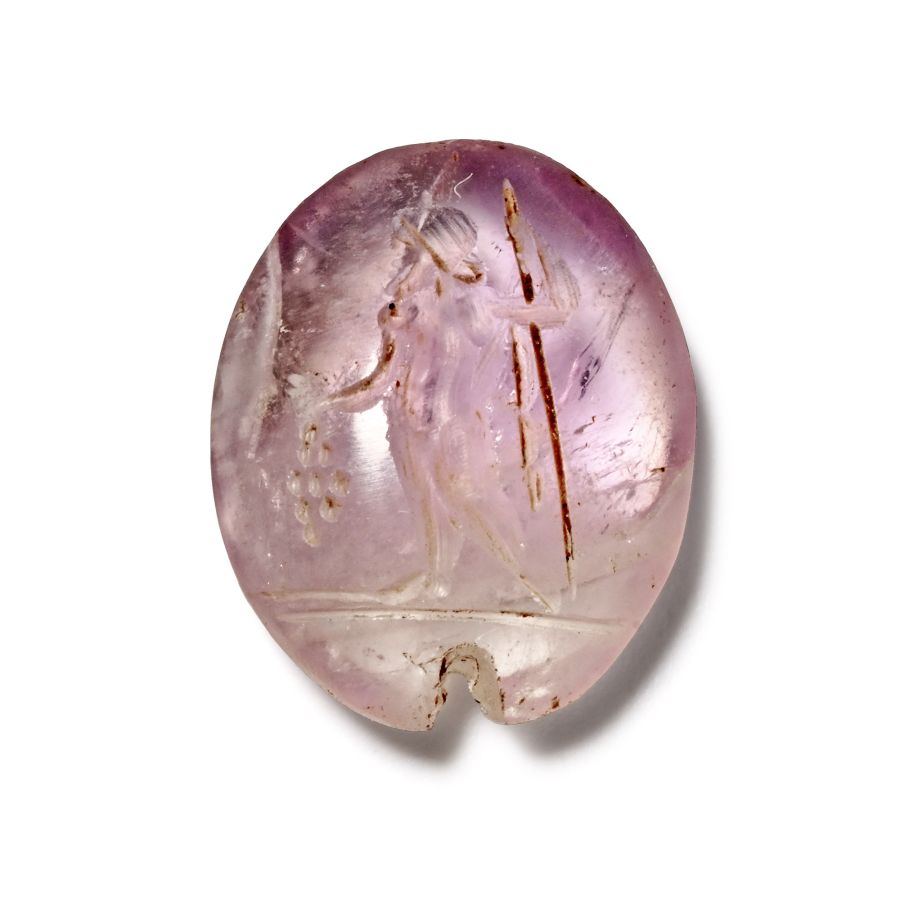
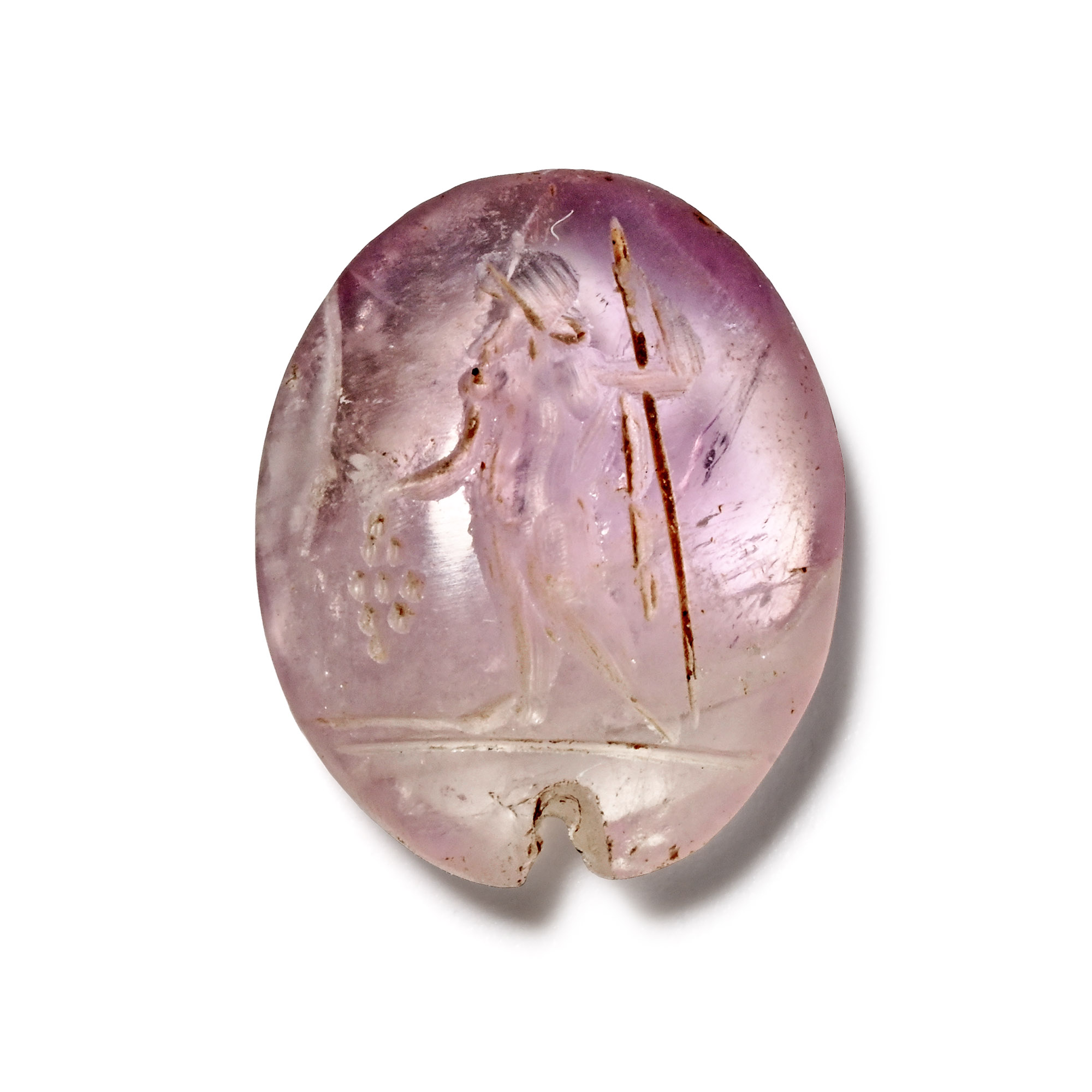
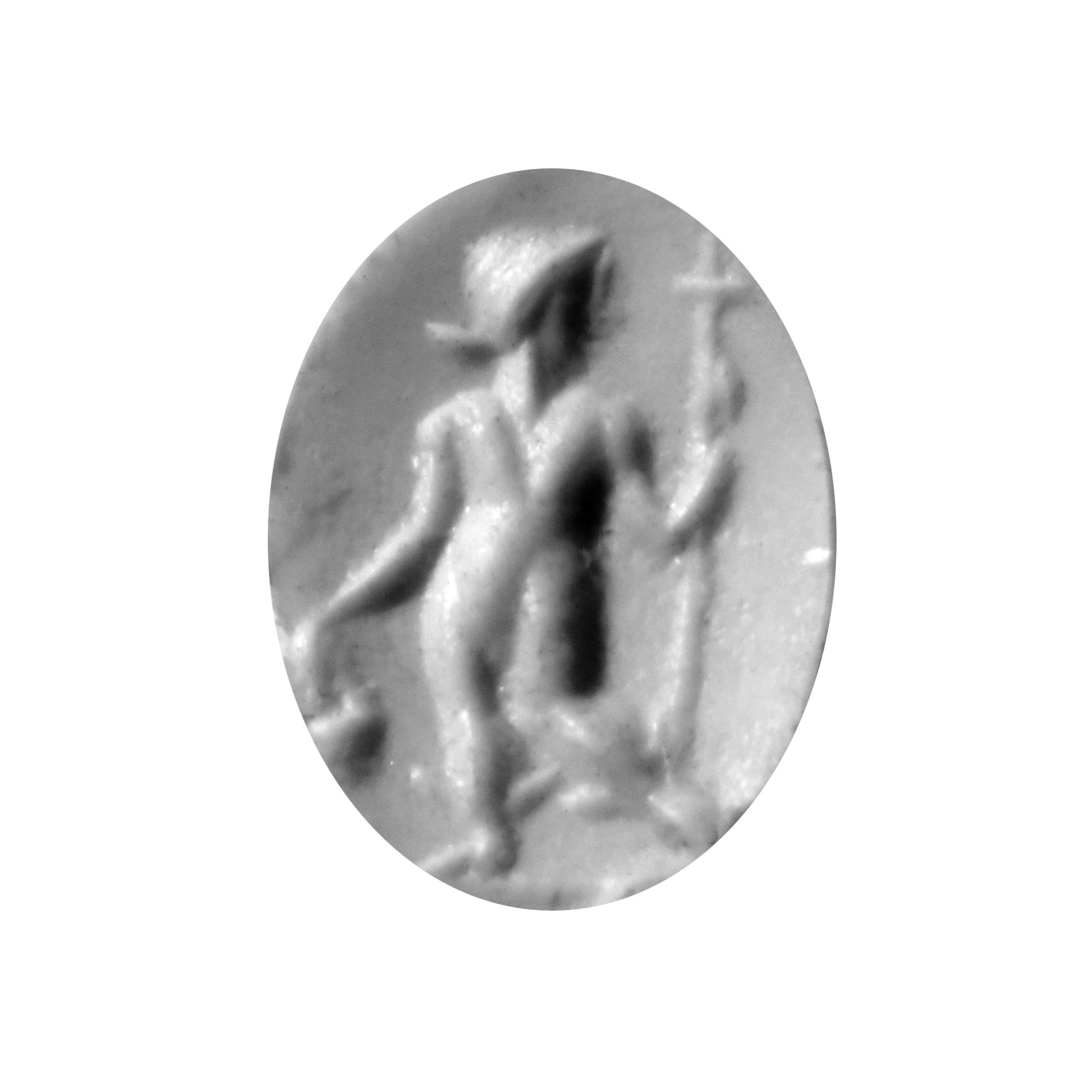
Roman Chalcedony Gemstone with Bacchus
2ND-3RD CENTURY A.D.
1/2 in. (0.64 grams, 12 mm).
Biconvex type with incuse design on the underside of nude Bacchus holding a bunch of grapes and a staff; supplied with a museum-quality impression. [No Reserve]
ProvenanceFrom the private collection of a European gentleman (1942-2024), formed since the 1970s.
CONDITIONTimeLine Auctions follows a vetting process to ensure the authenticity and legality of all items, reinforcing our commitment to integrity and responsible trading. Each antiquity, antique, and coin lot undergoes thorough examination by a vetting committee of at least ten external specialists, professional trade association members, scientists, and archaeologists: Our Vetting Process
AUCTIONS:
TimeLine is a leading auction house specialising in antiquities, ancient art, collectables, natural history, coins, medals, and books. Our auctions offer museums, collectors, historians, and enthusiasts the opportunity to acquire unique and historically significant pieces.
-
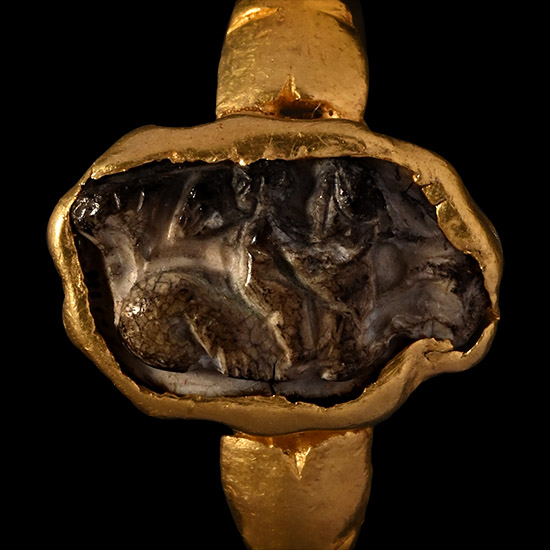
Roman Gold Ring with Burnt Agate Cameo of Eros, the Greek God of Love Riding a Hippocampus
1st century A.D.Estimate: £1,200 - 1,700 (+bp*)
Opening Bid: £600
D-section hoop with ellipsoid cell, inset cameo with Eros on a hippocamp. 3.59 grams, 20.92 mm overall, 16.98 mm internal diameter (approximate size British M, USA 6, Europe 12.46, Japan 12)
Private collection, Europe. Acquired on the English art market. -
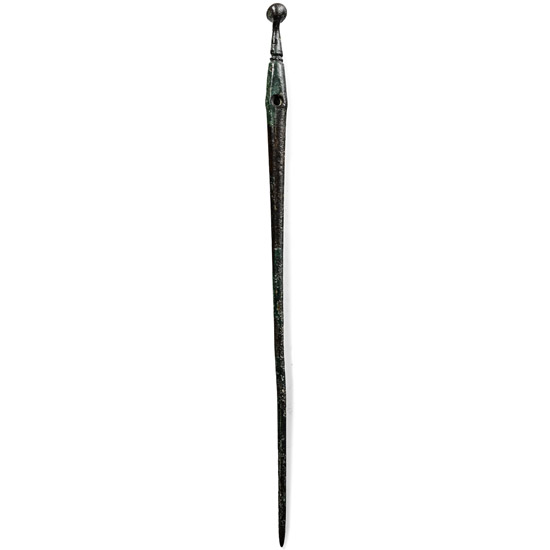
Roman Bronze Dress Pin with Ear Scoop
1st-4th century A.D.Sold for (Inc. bp): £78
Comprising a slender tapering handle with a pointed end, the finial formed as a small spoon with a piercing below. 6.36 grams, 12.5 cm
Ex German art market, 2000s. Acquired from an EU collector living in London. From the collection of a Surrey, UK, gentleman. -
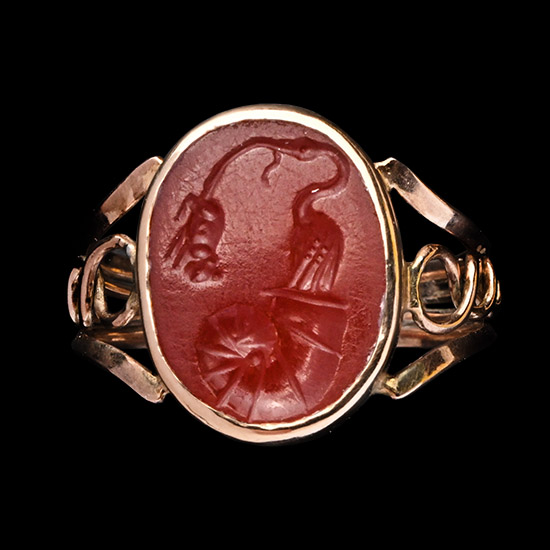
Roman Carnelian Gemstone with Stork Emerging from a Seashell in Gold Ring
1st century B.C.Sold for (Inc. bp): £3,510
The oval intaglio engraved with a whimsical image of a stork emerging from the mouth of a large seashell, its neck arched forward to seize a small mouse by the tail; set in a finely made 19th-century ring with openwork shoulders; supplied with a museum-quality impression. 4.25 grams, 24.31 mm overall, 19.30 mm internal diameter (approximate size British T, USA 9 1/2, Europe 21.26, Japan 20)
Acquired on the European art market. This lot has been checked against the Interpol Database of stolen works of art and is accompanied by search certificate number no.13365-257944.
The stork, a bird symbolic in antiquity of vigilance, filial piety, and longevity, here appears in an imaginative fusion with a marine shell—an element often associated with Venus and the sea. The capture of the mouse adds an element of humour and narrative intrigue, perhaps evoking themes of cunning, the triumph of wit, or the unexpected in nature. Such unusual compositions are occasionally found in Roman glyptics of the late Republican period, appealing both for their novelty and symbolic richness.
