
Loading, please wait...
Details
LOT 254558
Roman Chacedony Gemstone with Nude Figure
2ND-3RD CENTURY A.D.
1/2 in. (0.64 grams, 12 mm).
Biconvex type with incuse design to the underside of a nude figure holding a bunch of grapes and a staff; supplied with a museum-quality impression. [No Reserve]
Provenance
From the private collection of a European gentleman (1942-2024), formed since the 1970s.
CONDITIONVETTING:
TimeLine Auctions follows a vetting process to ensure the authenticity and legality of all items, reinforcing our commitment to integrity and responsible trading. Each antiquity, antique, and coin lot undergoes thorough examination by a vetting committee of at least ten external specialists, professional trade association members, scientists, and archaeologists: Our Vetting Process
AUCTIONS:
TimeLine is a leading auction house specialising in antiquities, ancient art, collectables, natural history, coins, medals, and books. Our auctions offer museums, collectors, historians, and enthusiasts the opportunity to acquire unique and historically significant pieces.
LOT 254558
Roman Chacedony Gemstone with Nude Figure
Estimate £300 - 400€350 - 460 (for guidance only)$410 - 540 (for guidance only)
Opening Bid
£5 (EUR 6; USD 7) +BP*
RELATED LOTS
-
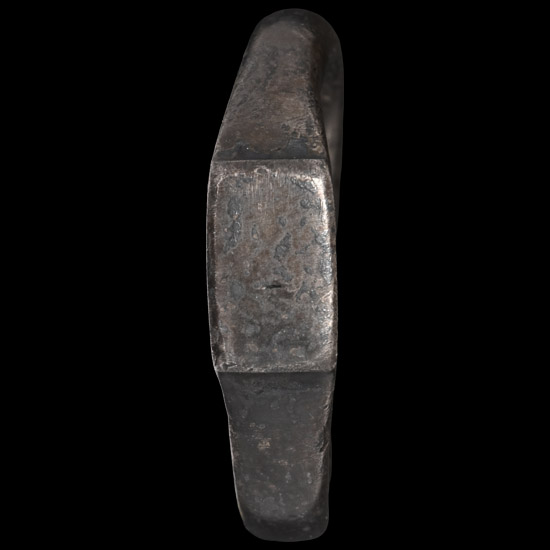
Roman Silver Ring with Rectangular Bezel
1st-4th century A.D.Estimate: £60 - 80 (+bp*)
Opening Bid: £5
Large ring with round-section hoop and a raised plain bezel. 8.29 grams, 26.69 mm overall, 21.01 x 18.98 mm internal diameter (approximate size British T 1/2, USA 9 3/4, Europe 21.89, Japan 21)
From the old family collection of a West Country, UK, lady; acquired by descent from her grandfather circa 2001. -
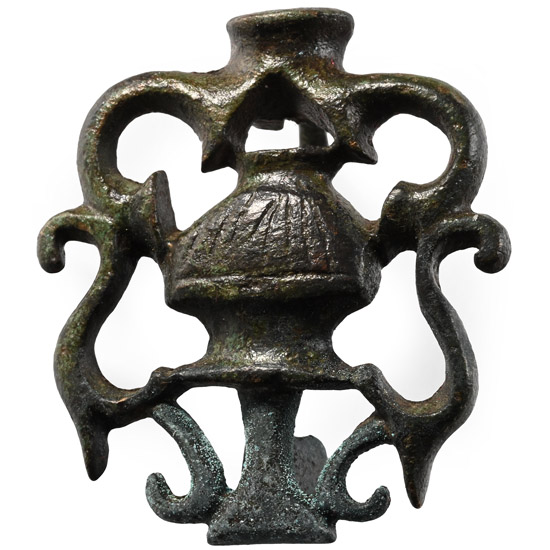
Roman Bronze Amphora and Trumpets Plate Brooch
2nd-3rd century A.D.Estimate: £60 - 80 (+bp*)
Opening Bid: £5
Composed of a central amphora with ribbed body flanked by trumpet-shaped scrolls, a pin and catch on the reverse. 13.2 grams, 34 mm
From the private coin collection of a West London, UK, gentleman, formed since the mid 1980s. -
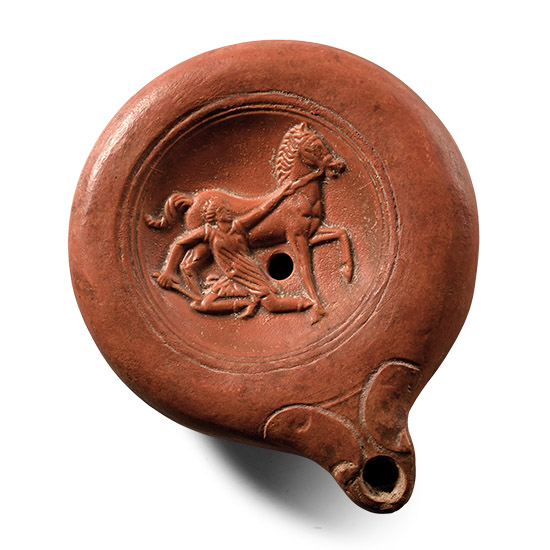
Large Roman Terracotta Oil Lamp with 'Fallen Amazon' and Horse
Circa 1st-2nd century A.D.Estimate: £150 - 200 (+bp*)
Opening Bid: £50
Shallow oil lamp with narrow nozzle, the discus with a dynamic scene of an advancing horse moving to the right with a fallen Amazon hanging on to its bridle; inked collector's number '220' on the base. 115 grams, 12.3 cm
Ex important German collection, 1960-1990.
