
Loading, please wait...
LOT 0917
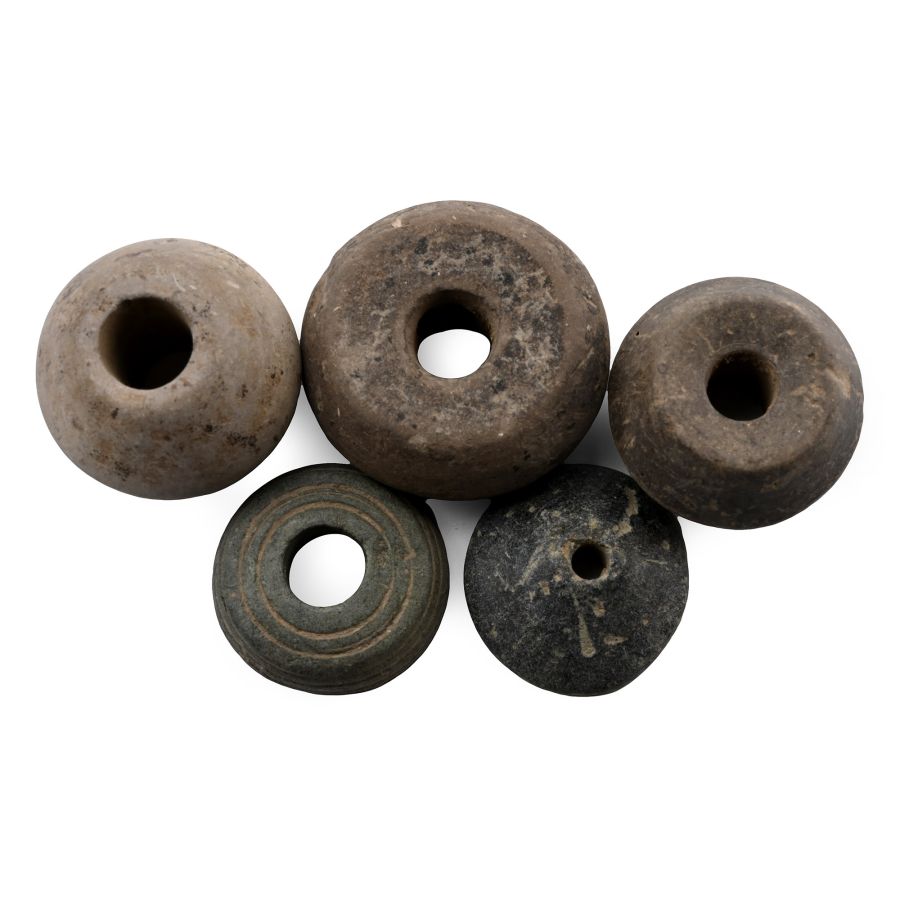
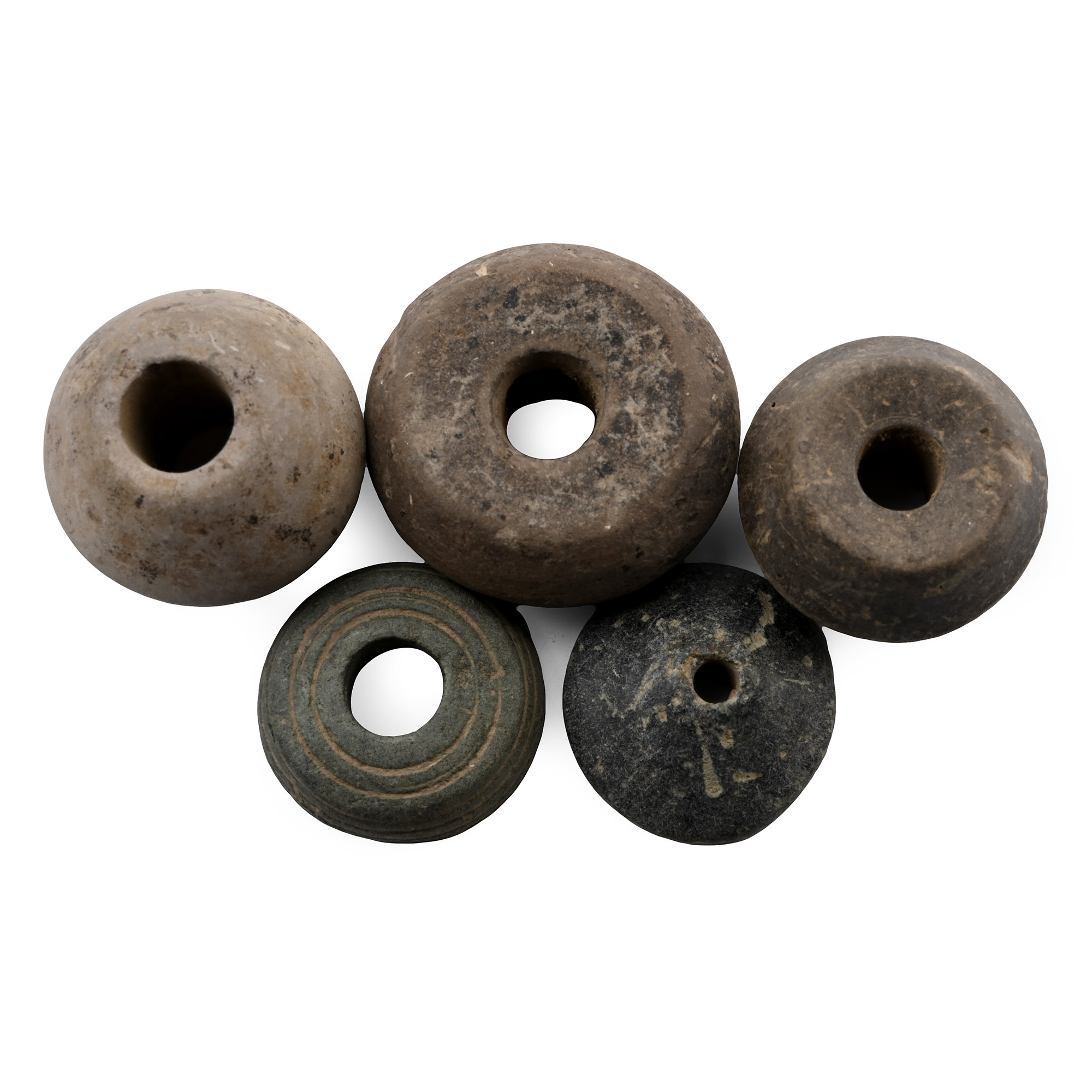
Roman Ceramic Spindle Whorl Group
1ST-4TH CENTURY A.D.
1 - 1 1/4 in. (54 grams total, 24-32 mm).
Including plano-convex, biconvex and other types, one with circumferential ribbing. [5, No Reserve]
ProvenanceAcquired on the London art market in the late 1980s-1990s.
From the family collection of an East London, UK, gentleman.
This lot is accompanied by an illustrated lot declaration signed by the Head of the Antiquities Department, Dr Raffaele D'Amato.
TimeLine Auctions follows a vetting process to ensure the authenticity and legality of all items, reinforcing our commitment to integrity and responsible trading. Each antiquity, antique, and coin lot undergoes thorough examination by a vetting committee of at least ten external specialists, professional trade association members, scientists, and archaeologists: Our Vetting Process
AUCTIONS:
TimeLine is a leading auction house specialising in antiquities, ancient art, collectables, natural history, coins, medals, and books. Our auctions offer museums, collectors, historians, and enthusiasts the opportunity to acquire unique and historically significant pieces.
-
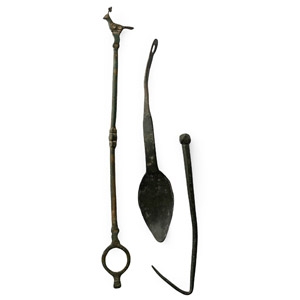
Roman Bronze Spoon, Pin and Distaff
1st-6th century A.D.Sold for (Inc. bp): £72
Comprising a spoon with ovoid, flat bowl; pin with polygonal finial stamped with ring-and-dot motifs, pierced towards the point; distaff with bird finial. 53 grams total, 11.5-20.5 cm
Acquired on the UK art market. Property of an East Anglia private collector. This lot is accompanied by an illustrated lot declaration signed by the Head of the Antiquities Department, Dr Raffaele D'Amato. -
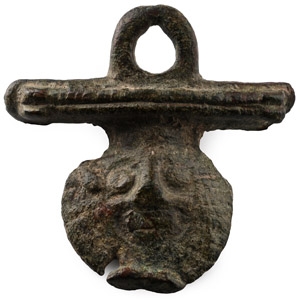
Roman Bronze Cauldron Mount
1st-4th century A.D.Sold for (Inc. bp): £20
Comprising a discoid plaque with low-relief mask, radiating lines to the rim, transverse gusseted bar with ledge to rear, suspension loop. 117 grams, 77 mm
Acquired on the UK art market during the late 20th century. From the private collection of David King (1940-2024), Hoddesdon, Hertfordshire, UK. This lot is accompanied by an illustrated lot declaration signed by the Head of the Antiquities Department, Dr Raffaele D'Amato. -
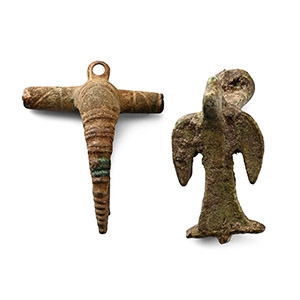
Roman Bronze Brooch Group
1st-2nd century A.D.Sold for (Inc. bp): £33
Comprising: bird-shaped plate brooch with pin and catch; Dolphin-type bow brooch with ribbed shank. 19.2 grams total, 34-35 mm
Acquired on the UK art market circa 2005. From an old north country, UK, collection. This lot is accompanied by an illustrated lot declaration signed by the Head of the Antiquities Department, Dr Raffaele D'Amato.
