
Loading, please wait...
LOT 0751
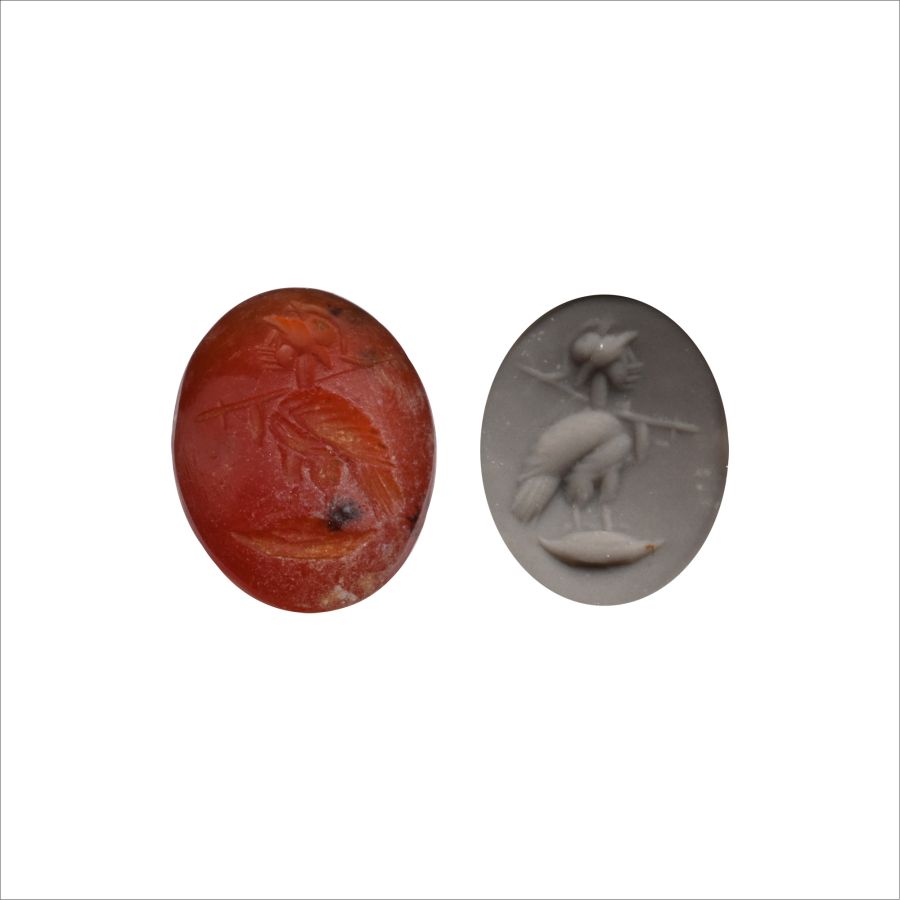
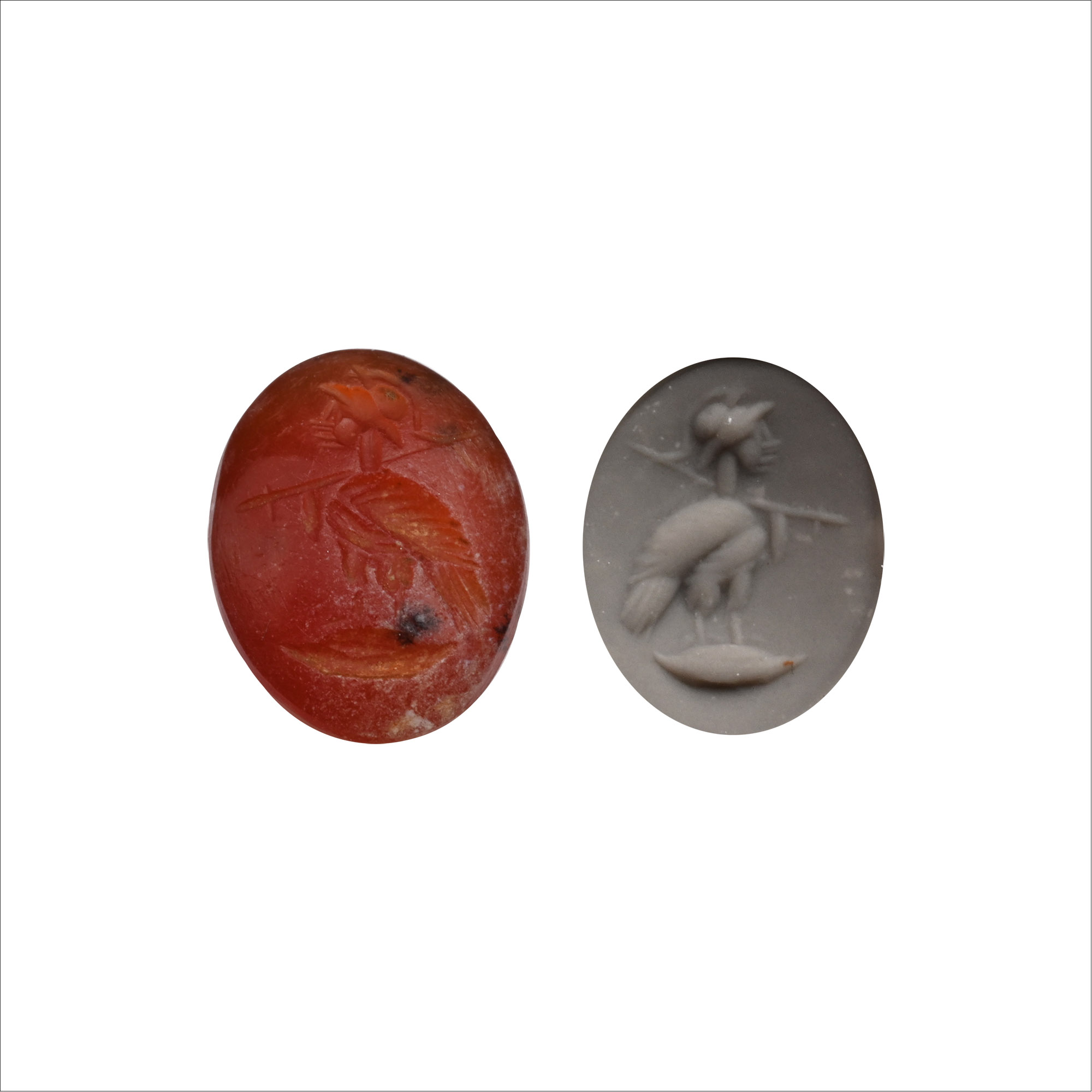
Roman Carnelian Intaglio with Harpy
1ST-5TH CENTURY A.D.
3/8 in. (0.65 grams, 11 mm).
Intaglio harpy figure on a baseline; supplied with a museum-quality impression.
ProvenanceAcquired in 1992.
Private collection, thence by descent.
Private collection, since the late 1990s.
This lot is accompanied by an illustrated lot declaration signed by the Head of the Antiquities Department, Dr Raffaele D'Amato.
TimeLine Auctions follows a vetting process to ensure the authenticity and legality of all items, reinforcing our commitment to integrity and responsible trading. Each antiquity, antique, and coin lot undergoes thorough examination by a vetting committee of at least ten external specialists, professional trade association members, scientists, and archaeologists: Our Vetting Process
AUCTIONS:
TimeLine is a leading auction house specialising in antiquities, ancient art, collectables, natural history, coins, medals, and books. Our auctions offer museums, collectors, historians, and enthusiasts the opportunity to acquire unique and historically significant pieces.
-
.jpg)
Roman Mosaic with Naiad Holding Frond and Golden Hydria
Eastern Empire, 1st-3rd century A.D.Sold for (Inc. bp): £11,700
Floor panel with depicting a naiad nymph, minor goddess of watery elements, depicted as a beautiful young woman dressed in a garment draped around her slender waist, secured by a golden sash, holding a reed at the crook of her right elbow and bringing a golden hydria to her lips; some reconstitution, restored and mounted in a modern matrix and frame for display. 47.5 kg, 112 x 80 cm including frame
Ex property of a Munich collector; previously acquired in the 1980s. Property of an English gentleman. This lot has been checked against the Interpol Database of stolen works of art and is accompanied by AIAD certificate number no.160577-10073. This lot has been cleared against the Art Loss Register database, and is accompanied by an illustrated lot declaration signed by the Head of the Antiquities Department, Dr Raffaele D'Amato.
Naiades were the nymphs of streams, fountains, lakes, rivers, marshes and springs, and in conjunction with Artemis, they were protectors of girls and nurses of the young. They were minor goddesses who attended the assemblies on Mount Olympus and often gave their names to water supplies, towns and islands. -
.jpg)
Roman Hexagonal Bone Gaming Dice
1st-4th century A.D.Sold for (Inc. bp): £1,105
Hexagonal in plan and pierced centrally, shallow spots disposed 1:6, 2:5, 3:4; old collector's label 'Clermont' and inked number '1258'. 2.6 grams, 14 mm
Louis-Gabriel Bellon (1819–1899), Paris. Anonymous sale, France, 2009. Private European collection, acquired at the above sale. This lot is accompanied by an illustrated lot declaration signed by the Head of the Antiquities Department, Dr Raffaele D'Amato. -
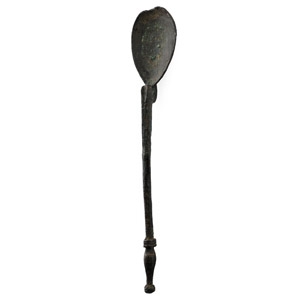
Roman Bronze Swan-Necked Spoon
1st-4th century A.D.Sold for (Inc. bp): £85
Shallow piriform bowl attached to a stepped baluster, hexagonal-section handle with baluster finial. 14.7 grams, 12.1 cm
Acquired on the UK art market during the late 20th century. From the private collection of David King (1940-2024), Hoddesdon, Hertfordshire, UK. This lot is accompanied by an illustrated lot declaration signed by the Head of the Antiquities Department, Dr Raffaele D'Amato.
