
Loading, please wait...
LOT 0159
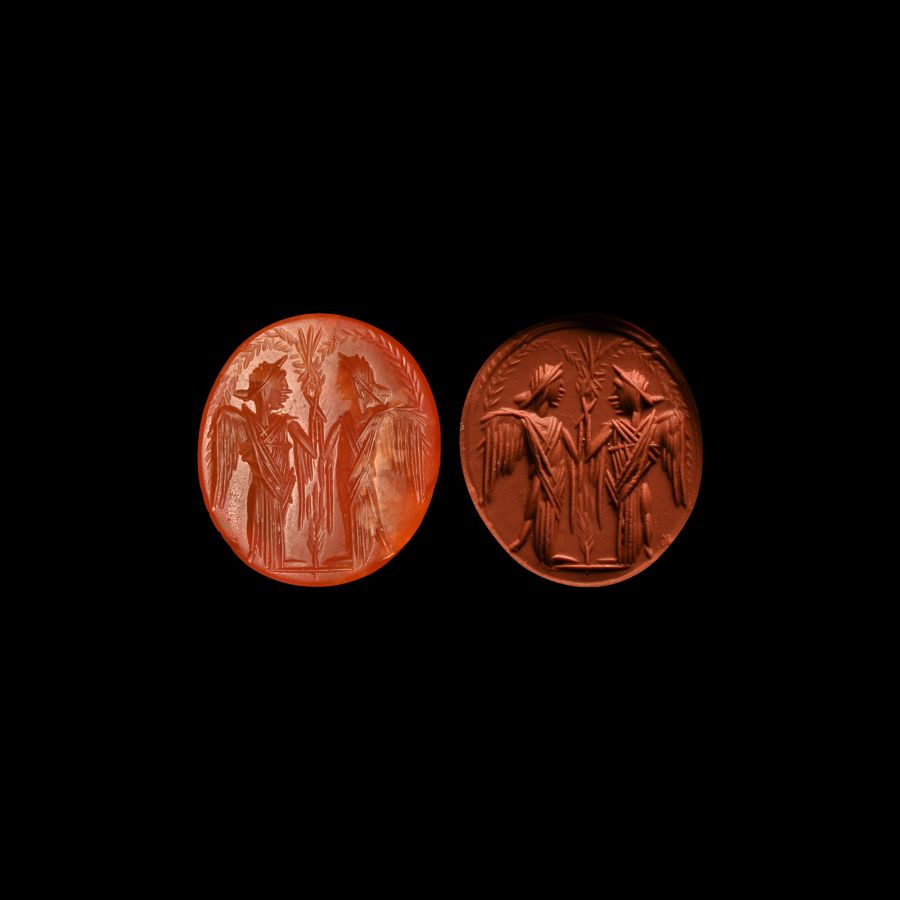
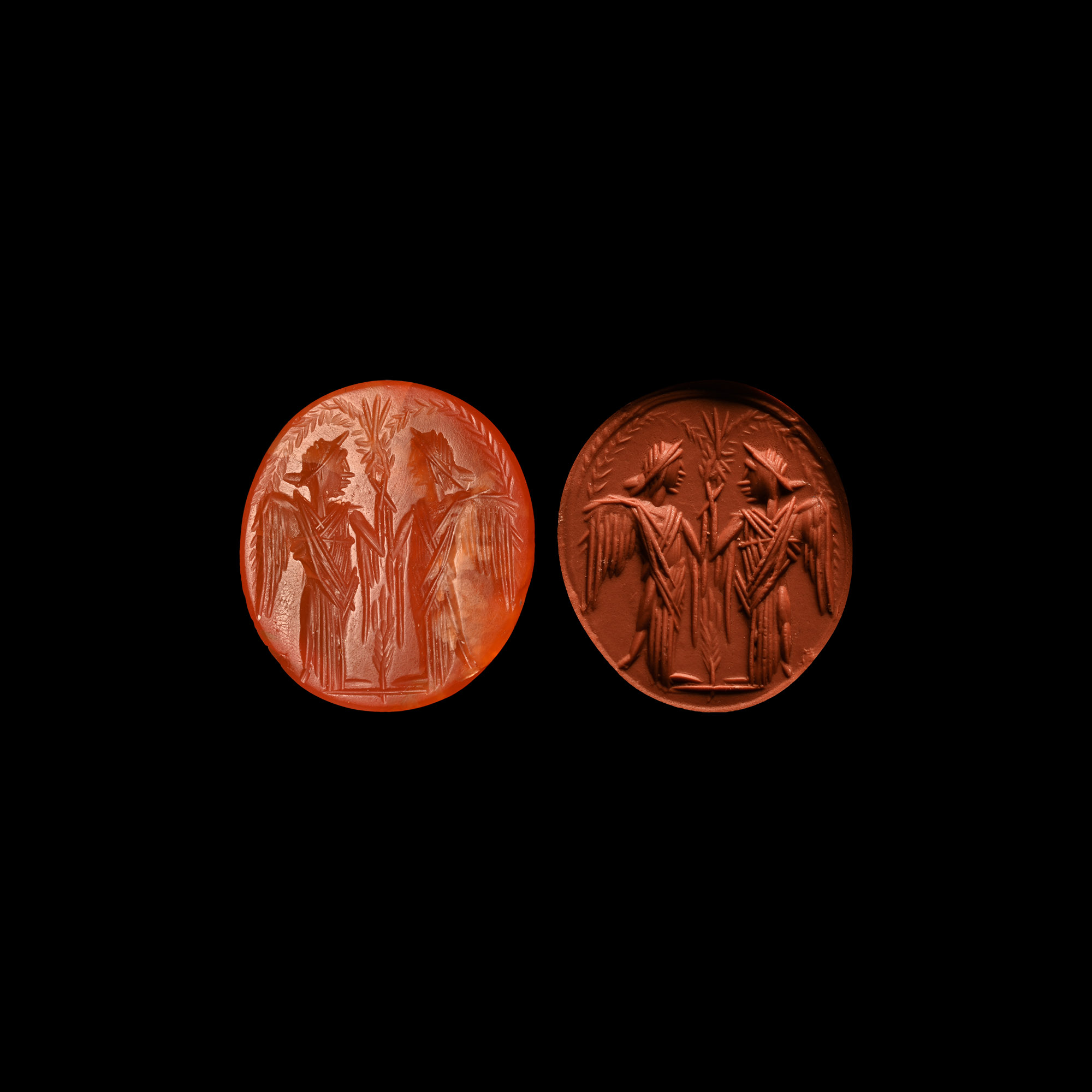
Roman Carnelian Gemstone with Two Victories
4TH CENTURY A.D.
5/8 in. (1.64 grams, 17 mm).
The oval intaglio engraved with two winged Victories, facing each other in profile, wearing long garments crossed on the breast like a trabea consularis, both holding a staff-standard with a double forked tip.
ProvenanceAcquired in the late 1980s-early 1990s.
Important North West London collection.
Cf. a very similar winged Victory in a 7th century A.D. pendant with an ancient Roman gemstone, in Kornbluth, G., ‘The Transformative Power of the Metalwork Mount’ in Entwistle, C., Adams, N., Gems of Heaven, recent research on engraved Gemstones in Late Antiquity, c. AD 200-600, London, 2011, p.254, pl.21.
FootnotesThe iconography of two Victories facing each other is clearly from Late Antiquity and reflects the images of the two victorious empires - East and West - that, transformed into winged Nikes, are holding together the standard with the chi-rho (the two Greek letters forming the initials of the name of Christ), conceived as a long shaft topped by the Greek letter P (R) and the superimposed letter X.
CONDITIONTimeLine Auctions follows a vetting process to ensure the authenticity and legality of all items, reinforcing our commitment to integrity and responsible trading. Each antiquity, antique, and coin lot undergoes thorough examination by a vetting committee of at least ten external specialists, professional trade association members, scientists, and archaeologists: Our Vetting Process
AUCTIONS:
TimeLine is a leading auction house specialising in antiquities, ancient art, collectables, natural history, coins, medals, and books. Our auctions offer museums, collectors, historians, and enthusiasts the opportunity to acquire unique and historically significant pieces.
LOT 0159
Roman Carnelian Gemstone with Two Victories
Estimate £800 - 1,000€930 - 1,160 (for guidance only)$1,080 - 1,350 (for guidance only)
-
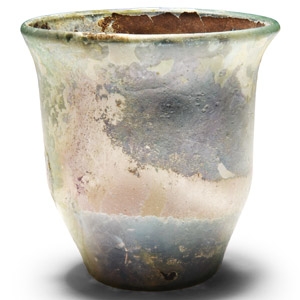
Roman Iridescent Glass Beaker
Circa 2nd-3rd century A.D.Sold for (Inc. bp): £182
Translucent with straight sides narrowing to the dimpled base, flared and rolled rim. 37 grams, 87 mm
Acquired 1970s-1996. Property of a North American collector. London collection, 2016. -
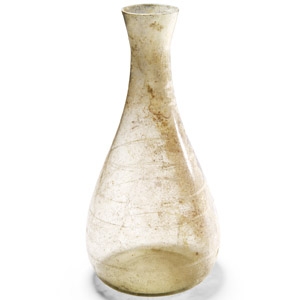
Roman Translucent Glass Flask with Engraved Rings
4th century A.D.Sold for (Inc. bp): £130
Tall with funicular neck, four engraved rings to the body. 74 grams, 17.6 cm high
Acquired 1970s-1996. Property of a North American collector. London collection, 2016. -
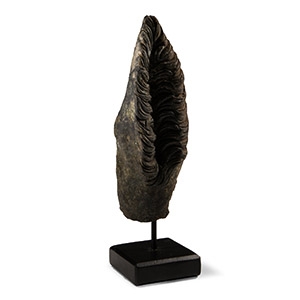
Larger Than Life-Size Roman Bronze Satyr's Ear
1st-3rd century A.D.Sold for (Inc. bp): £1,690
Probably from a colossal statue of Silenus or a satyr, detailed and naturalistic rendering of a left ear, conical shape with accurate depiction of the internal hair. 767 grams, 18.5 cm
Acquired in Europe before 1995. Private collection, Europe.
In the mythology of ancient Greece and in the Graeco-Roman literary world, satyrs were a community of beings who lived mostly in woods, surrounded by nature, and often together with nymphs. In the most ancient period they were imagined by the Greeks like Sileni, in human form, but with the ears, tail and sometimes hooves of horses. Seilenoi were depicted as fat, elderly, white-haired men, with snub noses, balding heads, and the ears and tails of asses. They were sometimes covered in fluffy white hair and occasionally sported a pair of ox horns.
