
Loading, please wait...
LOT 0861
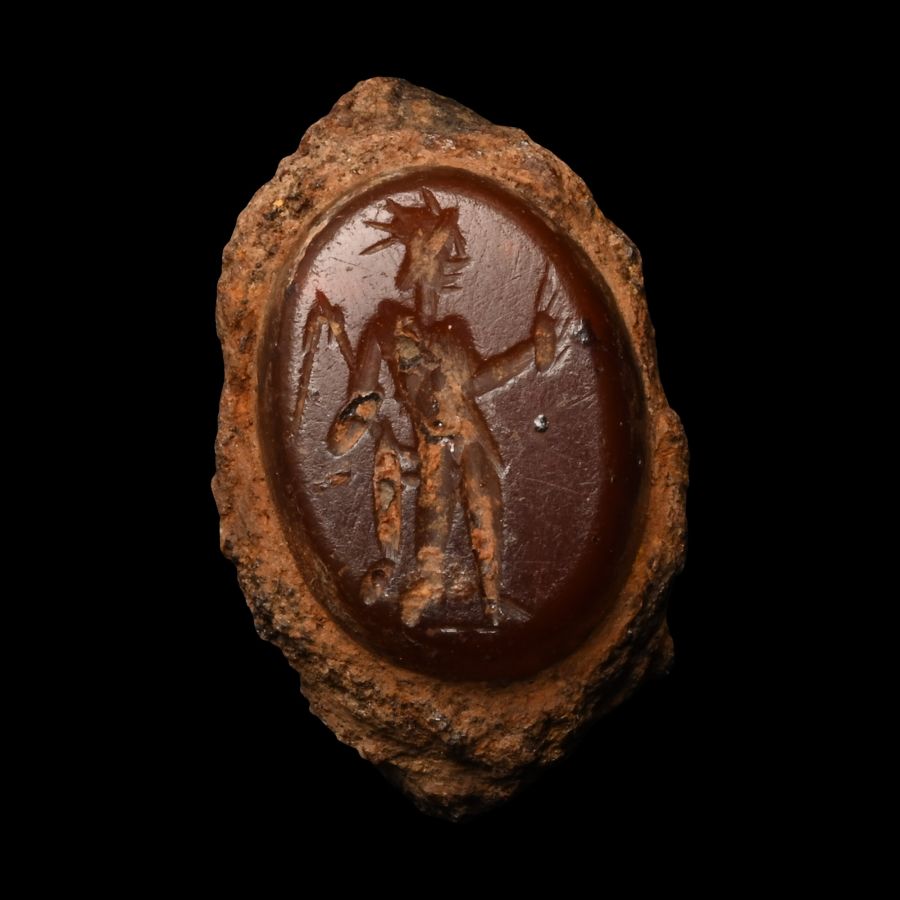
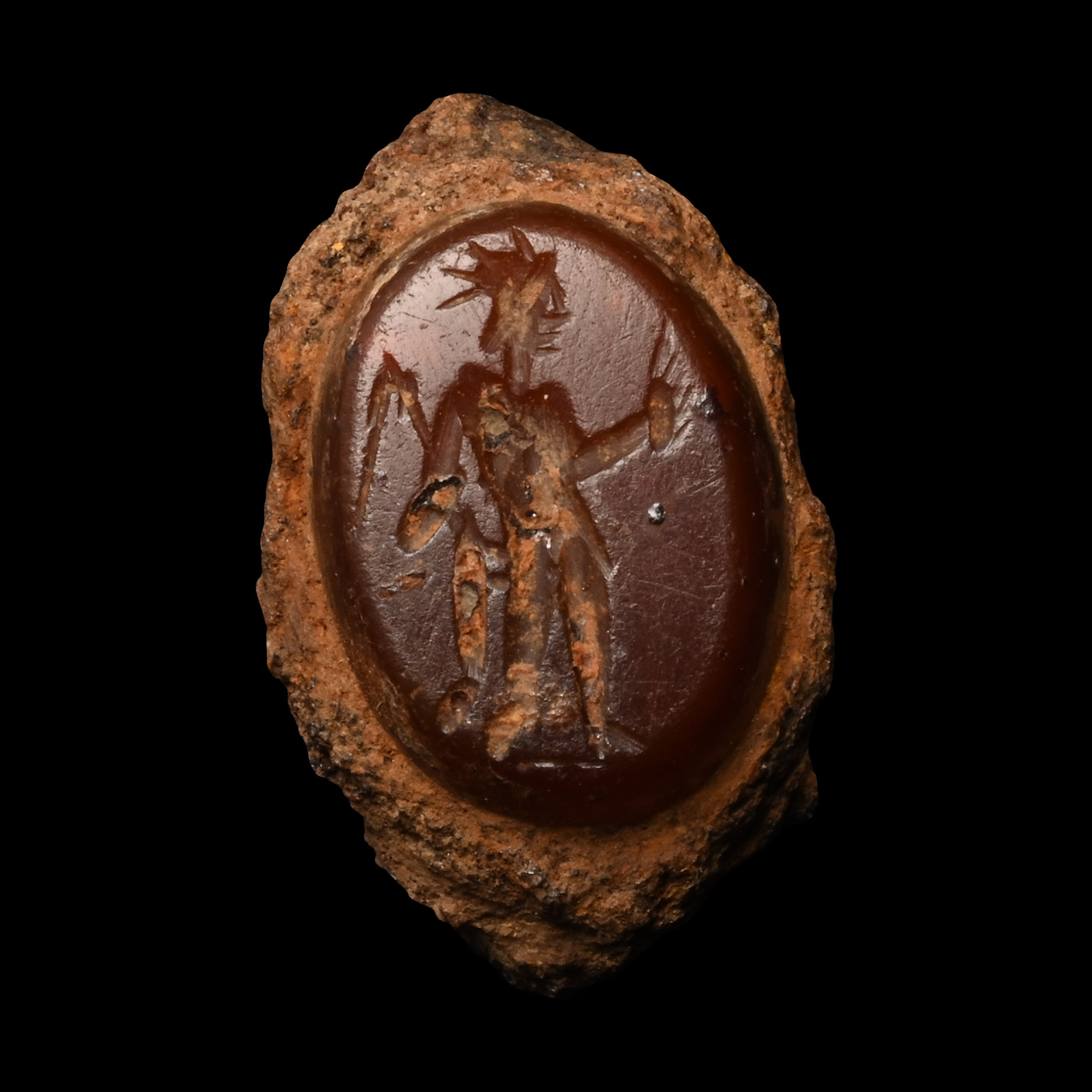
Roman Carnelian Gemstone with Sol Standing Right
2ND-3RD CENTURY A.D.
3/4 in. (2.75 grams, 19 mm).
Ellipsoid cloison with intaglio figure of Sol standing with sceptre in one hand, the other extended, radiate crown to the head; mounted in a fragment of the ferrous finger ring. [No Reserve]
ProvenanceFrom the Fadel family collection, London, UK, 1970s.
This lot is accompanied by an illustrated lot declaration signed by the Head of the Antiquities Department, Dr Raffaele D’Amato.
Cf. Ruseva-Slokoska, L., Roman Jewellery, Sofia, 1991, item 274, for type.
CONDITIONTimeLine Auctions follows a vetting process to ensure the authenticity and legality of all items, reinforcing our commitment to integrity and responsible trading. Each antiquity, antique, and coin lot undergoes thorough examination by a vetting committee of at least ten external specialists, professional trade association members, scientists, and archaeologists: Our Vetting Process
AUCTIONS:
TimeLine is a leading auction house specialising in antiquities, ancient art, collectables, natural history, coins, medals, and books. Our auctions offer museums, collectors, historians, and enthusiasts the opportunity to acquire unique and historically significant pieces.
-
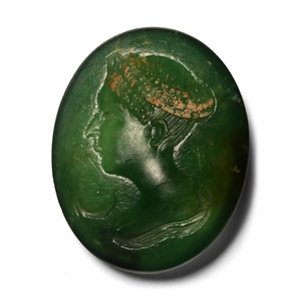
Roman Chrysoprase Gemstone with Empress Sabina
125-130 A.D.Sold for (Inc. bp): £1,950
With slightly domed upper face, intaglio profile portrait bust, possibly of Empress Vibia Sabina (83-136 A.D.) with her hair draped in a braid above her brow, crescent placed beside her shoulder; supplied with a museum-quality impression. 0.65 grams, 14 mm
From the Fadel family collection, London, UK, 1970s. This lot is accompanied by an illustrated lot declaration signed by the Head of the Antiquities Department, Dr Raffaele D’Amato. -
.jpg)
Roman Silver Statuette of Aesculapius God of Medicine and Healing
1st-2nd century A.D.Sold for (Inc. bp): £494
Standing wearing a loosely draped himation, with caduceus resting on the right hip; mounted on a custom-made stand. 75 grams total, 55 mm including stand
Ex Ancient Art, North London, UK. From a collection acquired on the UK art market from various auction houses and collections mostly before 2000. From an important Cambridgeshire estate; thence by descent. This lot is accompanied by an illustrated lot declaration signed by the Head of the Antiquities Department, Dr Raffaele D’Amato. -
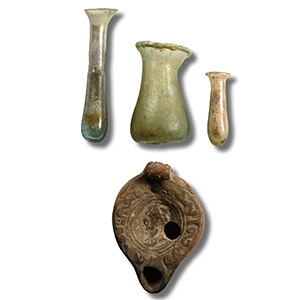
Romano-British Glass Vessel and Terracotta Oil Lamp Group
1st-2nd century AD.Sold for (Inc. bp): £117
Comprising: a small unguentarium with iridescent surface; a small flask with rolled rim; terracotta oil lamp with lug handle. 71 grams total, 41-75 mm
From an old collection formed before WWII, and believed to have been found at Worcester, UK. Acquired from Alan Cherry, Bournemouth, UK, in 2007. Ian Wilkinson collection, Nottinghamshire, UK, formed since 1985. This lot is accompanied by an illustrated lot declaration signed by the Head of the Antiquities Department, Dr Raffaele D’Amato.
