
Loading, please wait...
_900x900.jpg "Roman Carnelian Gemstone with Sol in Quadriga")
_200x200.jpg "Roman Carnelian Gemstone with Sol in Quadriga")
.jpg "Roman Carnelian Gemstone with Sol in Quadriga")
LOT 0020
Roman Carnelian Gemstone with Sol in Quadriga
2ND-3RD CENTURY A.D.
1/2 in. (0.99 grams, 13.33 mm).
Octagonal in plan with intaglio scene of Sol in his quadriga on a baseline; supplied with a museum-quality impression. [No Reserve]
ProvenanceFrom the private collection of a European gentleman (1942-2024), formed since the 1970s.
CONDITIONTimeLine Auctions follows a vetting process to ensure the authenticity and legality of all items, reinforcing our commitment to integrity and responsible trading. Each antiquity, antique, and coin lot undergoes thorough examination by a vetting committee of at least ten external specialists, professional trade association members, scientists, and archaeologists: Our Vetting Process
AUCTIONS:
TimeLine is a leading auction house specialising in antiquities, ancient art, collectables, natural history, coins, medals, and books. Our auctions offer museums, collectors, historians, and enthusiasts the opportunity to acquire unique and historically significant pieces.
-
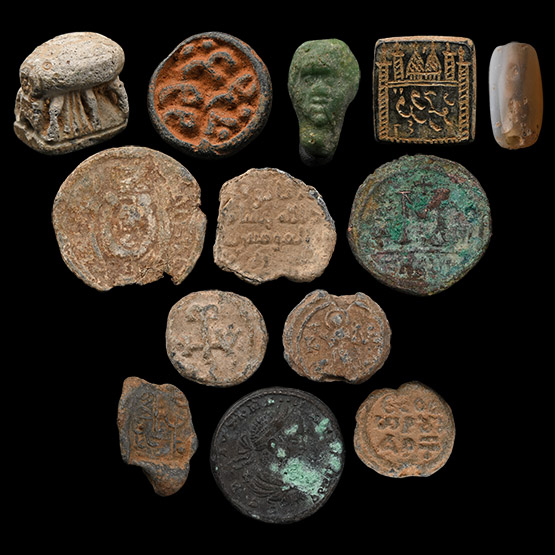
Roman and Later Artefact Collection
Circa 1st millennium A.D.Sold for (Inc. bp): £468
Including scaraboid amulet, fusiform banded agate bead, bronze head from a votive figure and other items. 101 grams total, 17-30 mm
Private collection, acquired on the German art market in 1992; thence by descent.
Among the collection there is an interesting coin (AE follis) of Tiberius II, Μ, above cross, to left ANNO, to right VIII, in ex. THEUP., AD 590-591. -
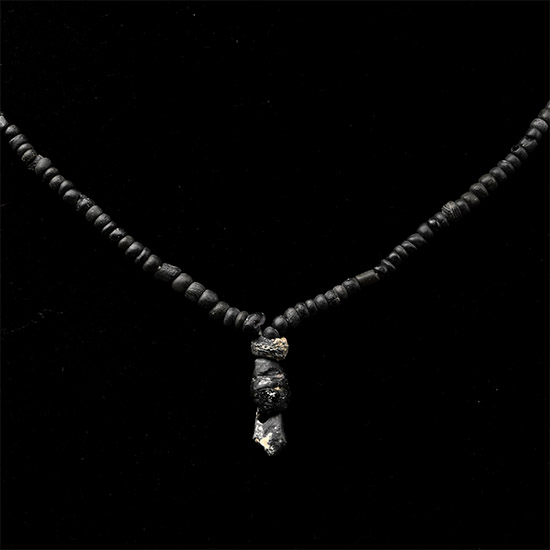
Roman Black Glass and Other Bead Necklace String
1st-4th century A.D. and laterSold for (Inc. bp): £72
Composed mainly of oblate beads with larger beads as a central feature, restrung. 6.69 grams, 39 cm
Ex London, UK, collection, 1990s. -
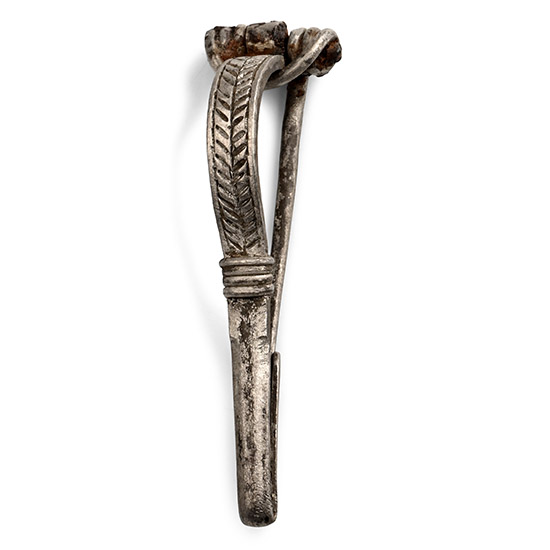
Roman Decorated Silver P-Shaped Bow Brooch
2nd-3rd century A.D.Sold for (Inc. bp): £182
Comprising an elliptical-section bow with D-shaped chord decorated with herringbone pattern, spring extending to the pin; tapering foot with catch to the reverse; top of catch extended to a wire coiled about the lower bow 7.68 grams, 55 mm
Ex German art market, 2000s. Acquired from an EU collector living in London. From the collection of a Surrey, UK, gentleman.
