
Loading, please wait...
_900x900.jpg "Roman Carnelian Gemstone with Sol and Greek Inscription")
_200x200.jpg "Roman Carnelian Gemstone with Sol and Greek Inscription")


.jpg "Roman Carnelian Gemstone with Sol and Greek Inscription")
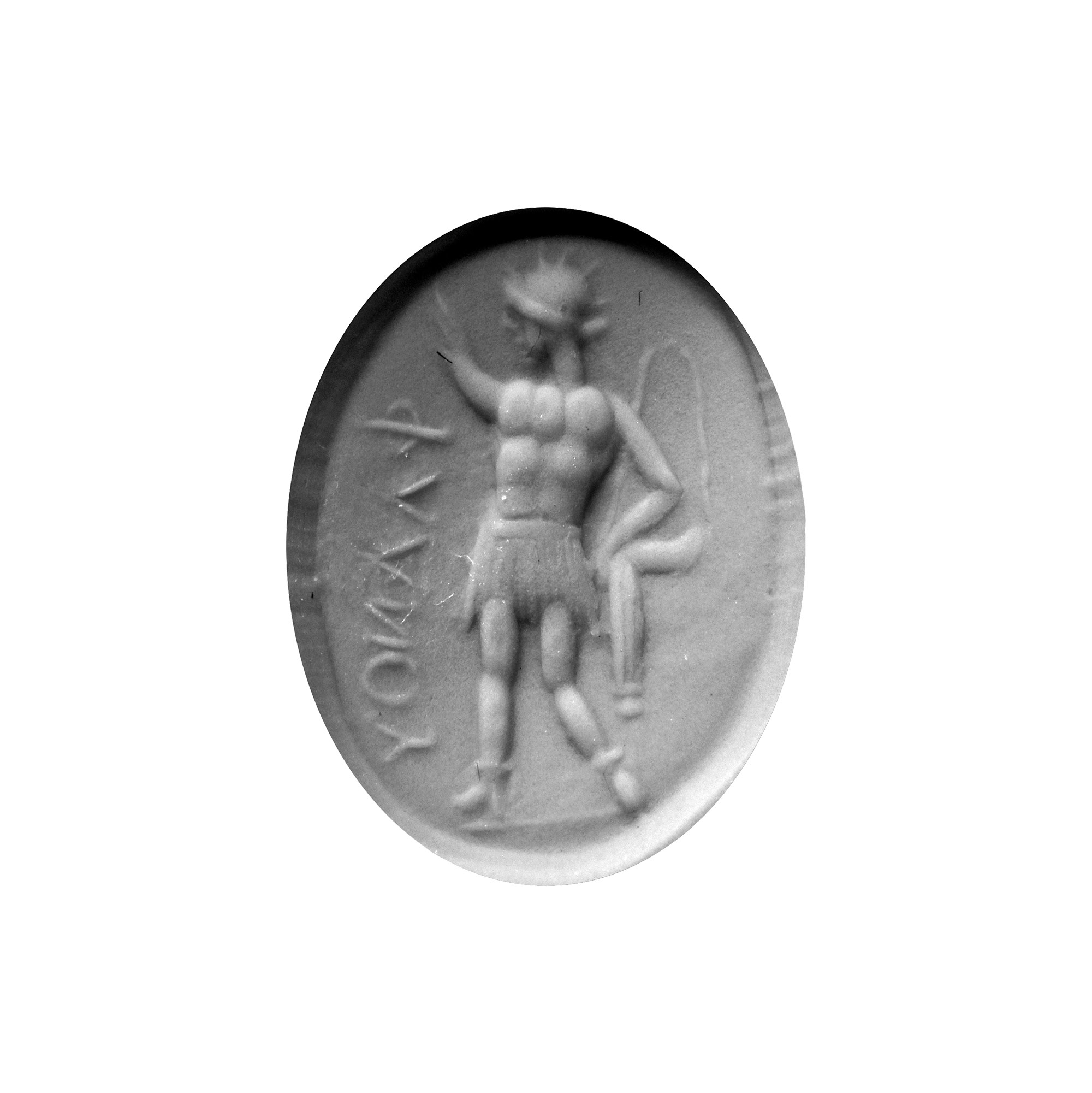
LOT 0085
Roman Carnelian Gemstone with Sol and Greek Inscription
1ST CENTURY A.D.
5/8 in. (1.24 grams, 16 mm).
Domed base, featuring a standing god Sol (Greek Helios) wearing a radiate crown and muscled cuirass, his left arm raised and the right hand holding a long whip, Greek inscription 'ΦλλNOY' = gem belonging to a man named Phaanos = 'the radiant one, the shining one ', creating a play-of-words between the owner's name and the solar deity.
ProvenancePrivate collection, UK.
UK private collection, acquired on the English art market in the 2000s.
See Museum Wales, item number 81.79H/4.36, for an intaglio from Caerleon Fortress Baths, Caerleon, with a more stylised figure of Sol in a similar pose.
CONDITIONTimeLine Auctions follows a vetting process to ensure the authenticity and legality of all items, reinforcing our commitment to integrity and responsible trading. Each antiquity, antique, and coin lot undergoes thorough examination by a vetting committee of at least ten external specialists, professional trade association members, scientists, and archaeologists: Our Vetting Process
AUCTIONS:
TimeLine is a leading auction house specialising in antiquities, ancient art, collectables, natural history, coins, medals, and books. Our auctions offer museums, collectors, historians, and enthusiasts the opportunity to acquire unique and historically significant pieces.
LOT 0085
Roman Carnelian Gemstone with Sol and Greek Inscription
Sold for (Inc. bp): £975
-
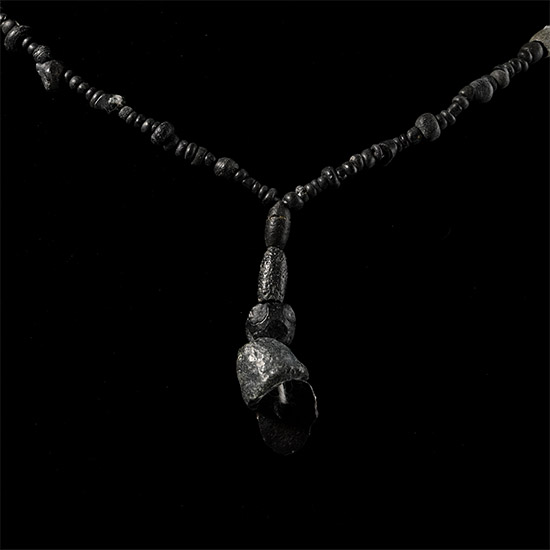
Roman Black Glass and Other Bead Necklace String
1st-4th century A.D. and laterSold for (Inc. bp): £26
Composed mainly of small oblate beads interspersed with larger beads, the central feature composed of five larger beads; restrung. 10.2 grams, 31 cm
Acquired in the 1990s. Ex London, UK, collection. -
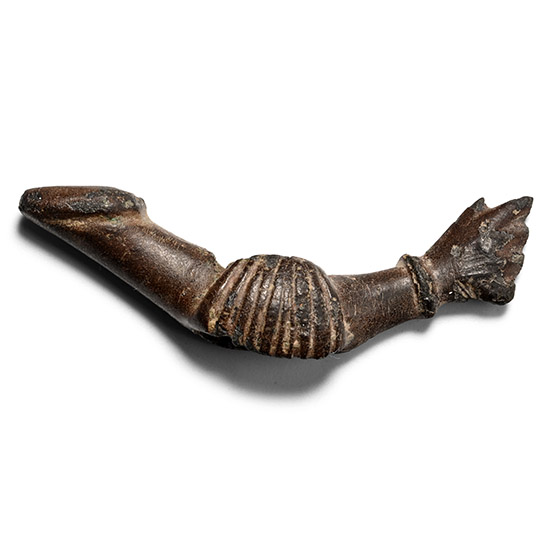
Roman Bronze Phallic Knife Guard
1st-4th century A.D.Sold for (Inc. bp): £65
Curving guard with an oval socket, one side formed as an erect phallus and the other as a hand making the fica gesture. 4.91 grams, 39 mm
Found near Lincoln, Lincolnshire, UK. Acquired on the UK art market. Property of a Lancashire, UK, collector. -
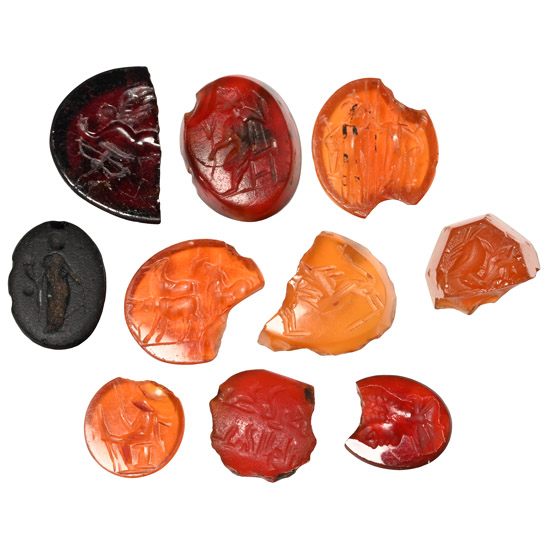
Roman Gemstone Group
2nd-3rd century A.D.Sold for (Inc. bp): £286
Including Cupid with bow, Mars with spear, Dioscouri and other types; each supplied with a museum-quality impression. 5.46 grams total, 9-14 mm
From the private collection of a European gentleman (1942-2024), formed since the 1970s.
