
Loading, please wait...
LOT 0732
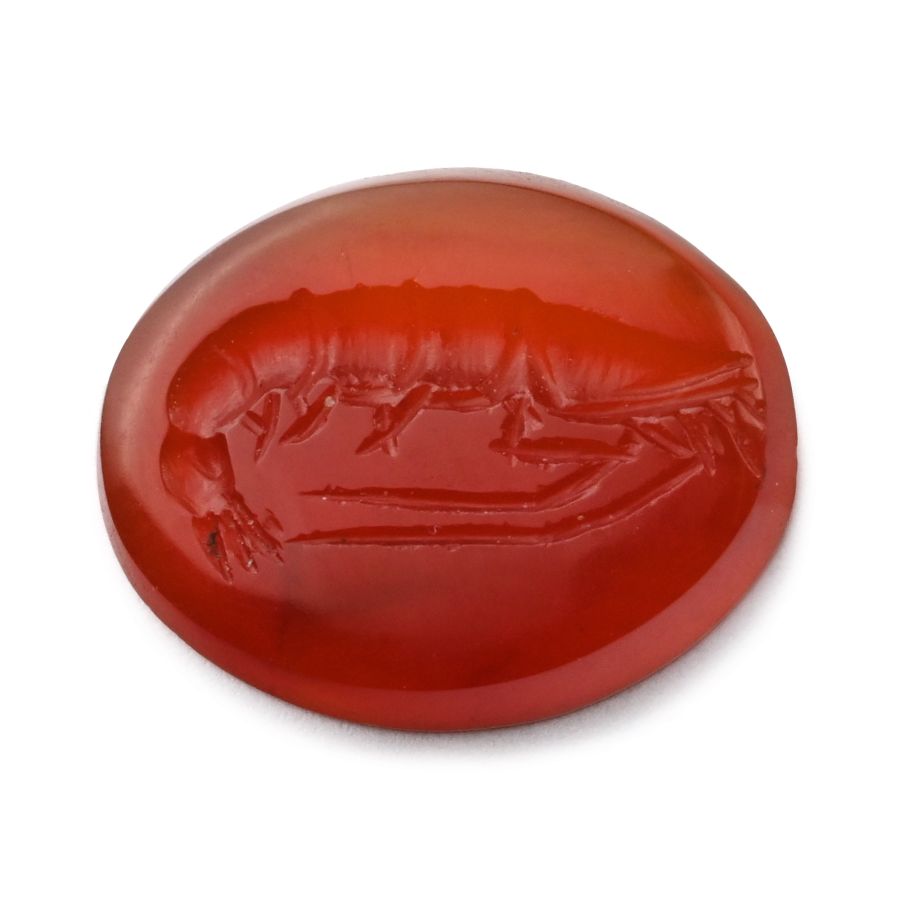
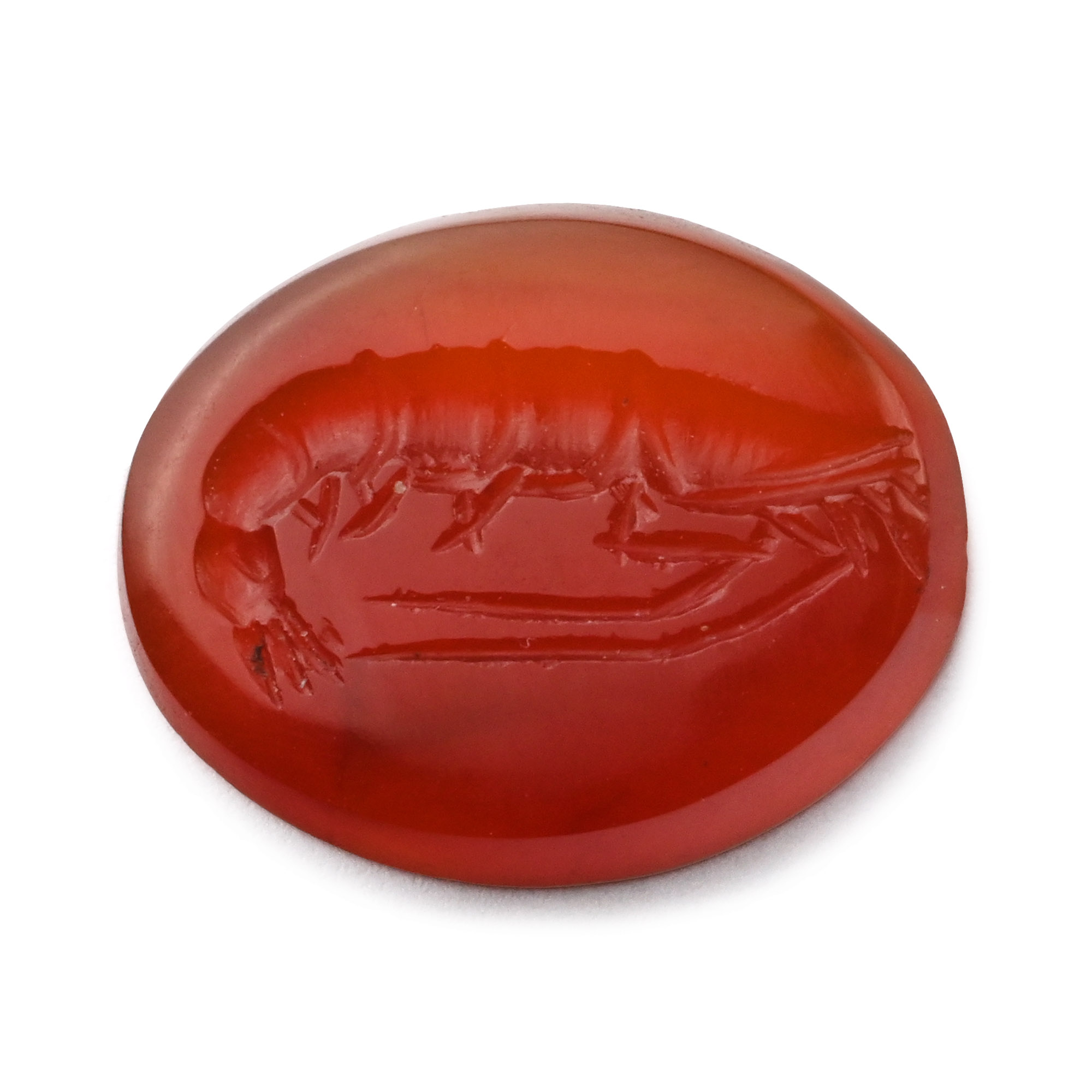
Roman Carnelian Gemstone with Shrimp
2ND-3RD CENTURY A.D.
1/2 in. (0.60 grams, 13 mm).
Intaglio shrimp motif with articulated body.
ProvenanceAcquired on the London art market in the late 1980s-1990s.
From the family collection of an East London, UK, gentleman.
This lot is accompanied by an illustrated lot declaration signed by the Head of the Antiquities Department, Dr Raffaele D'Amato.
TimeLine Auctions follows a vetting process to ensure the authenticity and legality of all items, reinforcing our commitment to integrity and responsible trading. Each antiquity, antique, and coin lot undergoes thorough examination by a vetting committee of at least ten external specialists, professional trade association members, scientists, and archaeologists: Our Vetting Process
AUCTIONS:
TimeLine is a leading auction house specialising in antiquities, ancient art, collectables, natural history, coins, medals, and books. Our auctions offer museums, collectors, historians, and enthusiasts the opportunity to acquire unique and historically significant pieces.
-
.jpg)
Roman Bronze Mercury Statuette
Eastern Provincial, 3rd-4th century A.D.Sold for (Inc. bp): £715
Modelled in the round, standing nude with attributes, cloak and caduceus on the left arm, coin-purse in the right hand; winged diadem; on a square base with stub legs. 102 grams, 10 cm
Ex German art market, 2000s. Acquired from an EU collector living in London. From the collection of a Surrey, UK, gentleman. This lot is accompanied by an illustrated lot declaration signed by the Head of the Antiquities Department, Dr Raffaele D'Amato. -
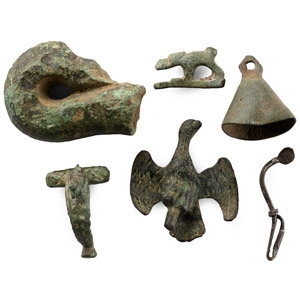
Roman Bronze Artefact Collection
1st-4th century A.D.Sold for (Inc. bp): £59
Comprising: an eagle statuette; a bell; a dog-shaped knife pommel; two brooch fragments; a furniture mount in the shape of a swan head. 161 grams total, 25-48 mm
Acquired on the UK art market. Property of an East Anglia, UK, gentleman. This lot is accompanied by an illustrated lot declaration signed by the Head of the Antiquities Department, Dr Raffaele D'Amato. -
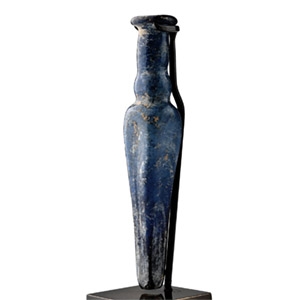
Roman Fine Blue Glass Flask
2nd-3rd century A.D.Sold for (Inc. bp): £364
Iridescent square-section vessel with dimpled sides, tall neck and everted rim; mounted on a custom-made stand. 82 grams total, 14.3 cm including stand
Ex Mayfair, London, UK, gallery, 1990s-2000s. From an important collection of glass, the property of a London gentleman. This lot is accompanied by an illustrated lot declaration signed by the Head of the Antiquities Department, Dr Raffaele D'Amato.
