
Loading, please wait...
LOT 0855
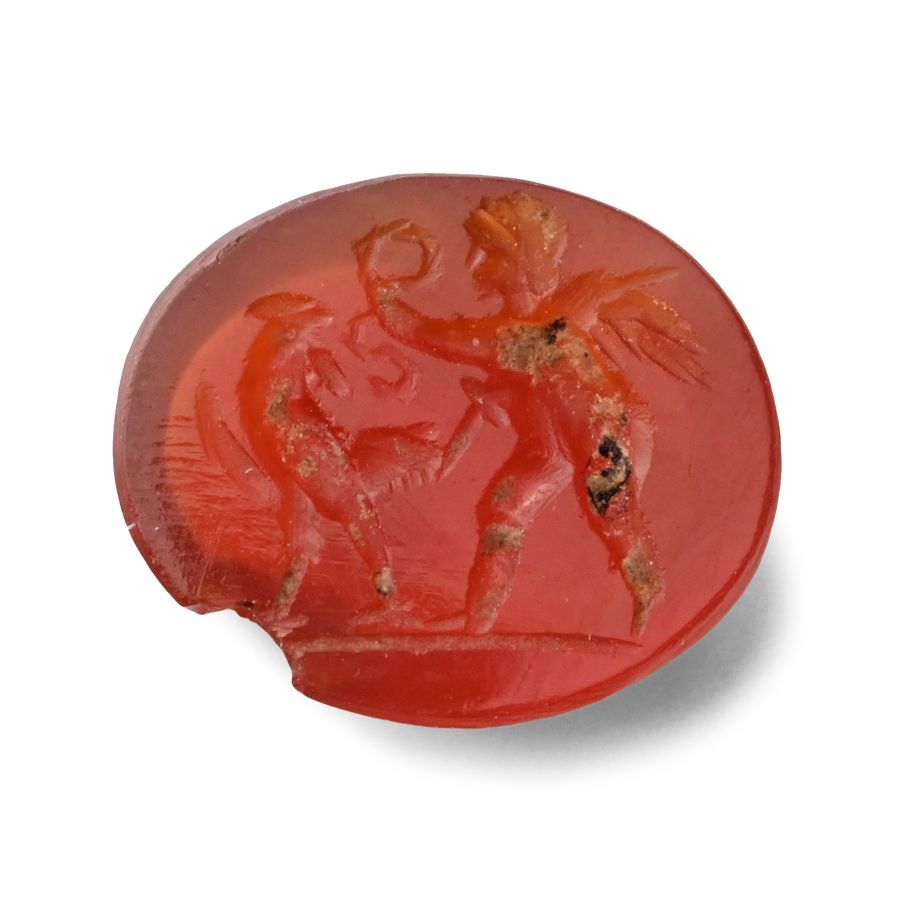
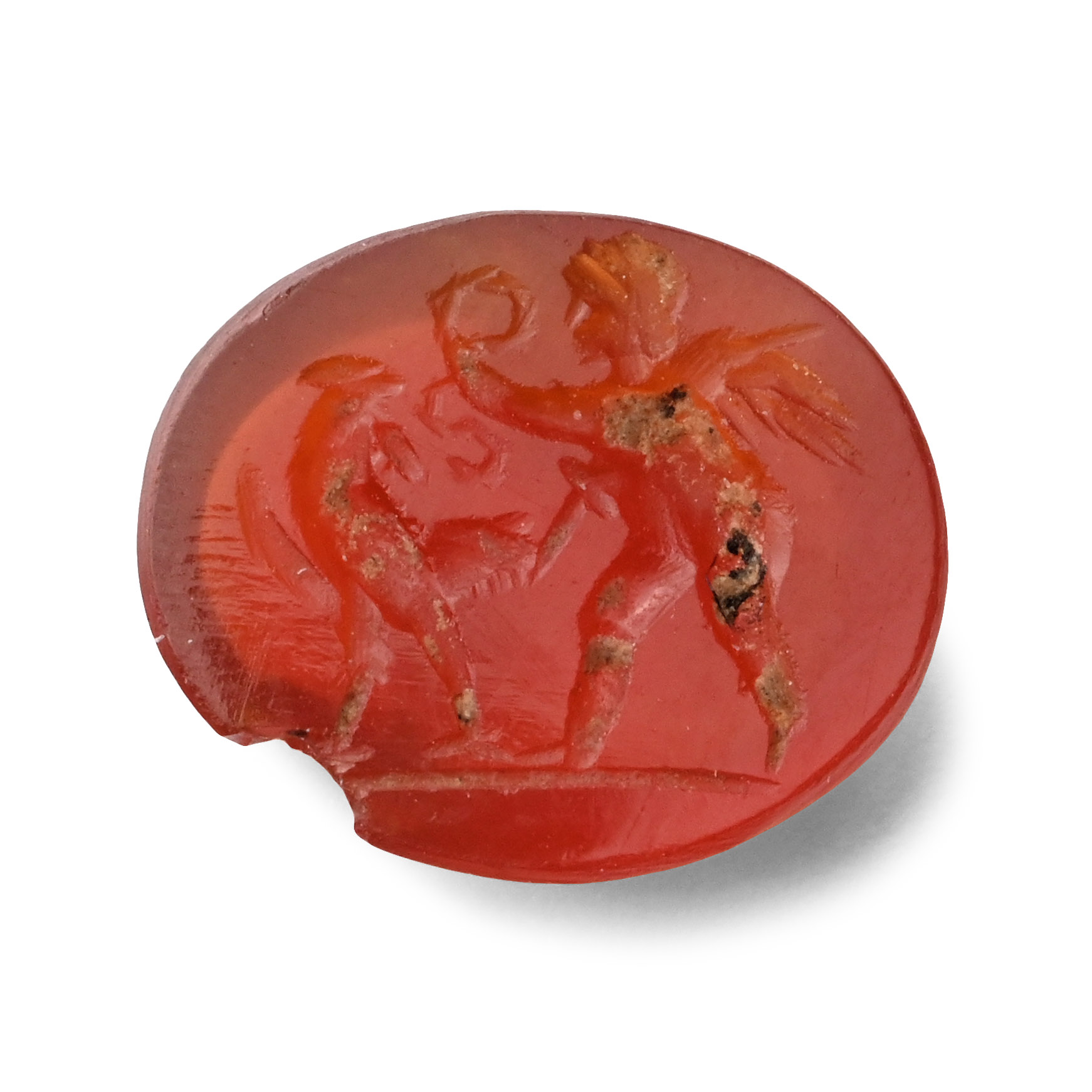
Roman Carnelian Gemstone with Putto
2ND-3RD CENTURY A.D.
3/8 in. (0.34 grams, 9 mm).
Carnelian plaque with chamfered sidewall, intaglio scene with a putto attempting to put a wreath over the head of a hen. [No Reserve]
ProvenanceFrom the collection of a gentleman, acquired on the London art market in the 1990s.
This lot is accompanied by an illustrated lot declaration signed by the Head of the Antiquities Department, Dr Raffaele D'Amato.
TimeLine Auctions follows a vetting process to ensure the authenticity and legality of all items, reinforcing our commitment to integrity and responsible trading. Each antiquity, antique, and coin lot undergoes thorough examination by a vetting committee of at least ten external specialists, professional trade association members, scientists, and archaeologists: Our Vetting Process
AUCTIONS:
TimeLine is a leading auction house specialising in antiquities, ancient art, collectables, natural history, coins, medals, and books. Our auctions offer museums, collectors, historians, and enthusiasts the opportunity to acquire unique and historically significant pieces.
-
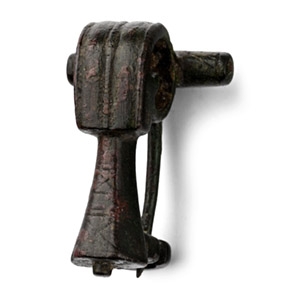
Roman Bronze Knee Brooch
2nd century A.D.Sold for (Inc. bp): £59
Comprising a chord in a horizontal sleeve with pin to the rear, deep scrolled bow with spurs to the reverse, scooped lower end and trapezoidal foot, hooked catch to reverse; light linear ornament to flared shank. 20.5 grams, 35 mm
Found Dorchester, Dorset, UK, in 1971. Ex UK art market. From the private collection of a Leicestershire, UK, gentleman. This lot is accompanied by an illustrated lot declaration signed by the Head of the Antiquities Department, Dr Raffaele D'Amato. -
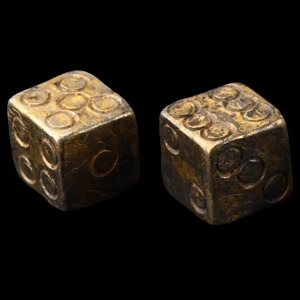
Silver-Gilt Gaming Dice Pair
Roman, 1st-4th century A.D. or laterSold for (Inc. bp): £260
Each cuboid with punched rings disposed 1:6, 2:4, 3:5. 8.63 grams total, 8 mm each
Ex German art market, 2000s. Acquired from an EU collector living in London. From the collection of a Surrey, UK, gentleman. This lot is accompanied by an illustrated lot declaration signed by the Head of the Antiquities Department, Dr Raffaele D'Amato. -
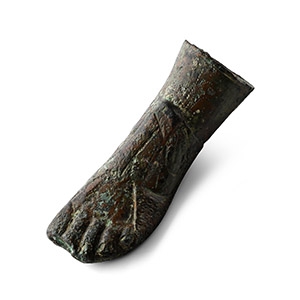
Roman Bronze Sandaled Foot
1st-4th century A.D.Sold for (Inc. bp): £72
Modelled in the half-round with detailed pointillé texture to the leather upper and ankle-band; hole to underside and fixing hole at rear. 85 grams, 72 mm
Acquired on the UK art market during the late 20th century. From the private collection of David King (1940-2024), Hoddesdon, Hertfordshire, UK. This lot is accompanied by an illustrated lot declaration signed by the Head of the Antiquities Department, Dr Raffaele D'Amato.
