
Loading, please wait...


LOT 1096
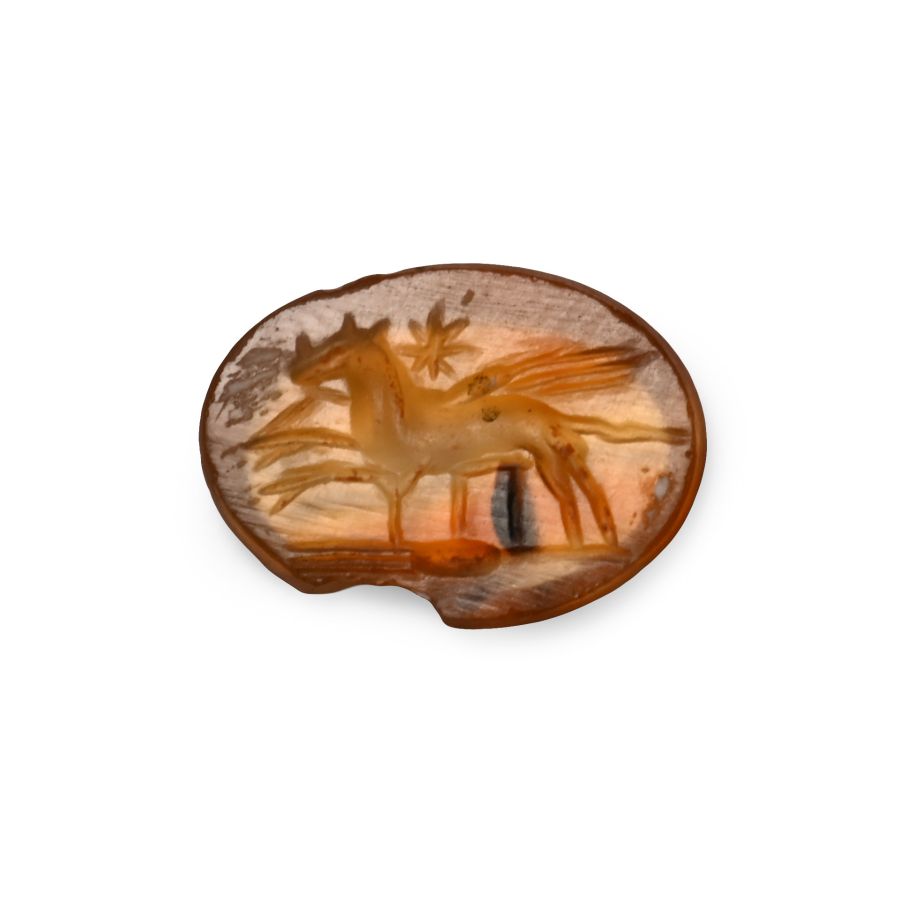
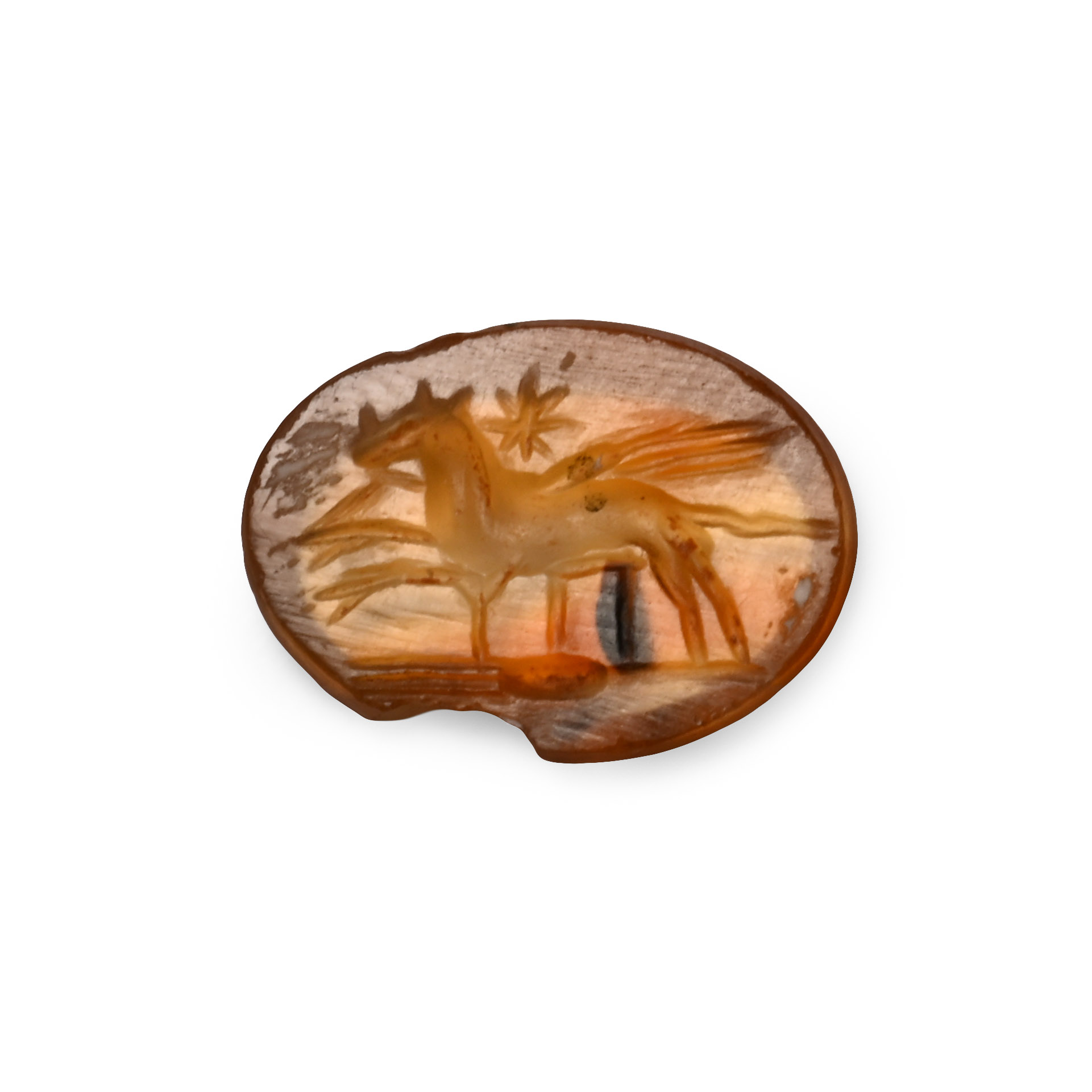
Roman Carnelian Gemstone with Pegasus
1ST CENTURY A.D.
1/2 in. (0.46 grams, 13 mm).
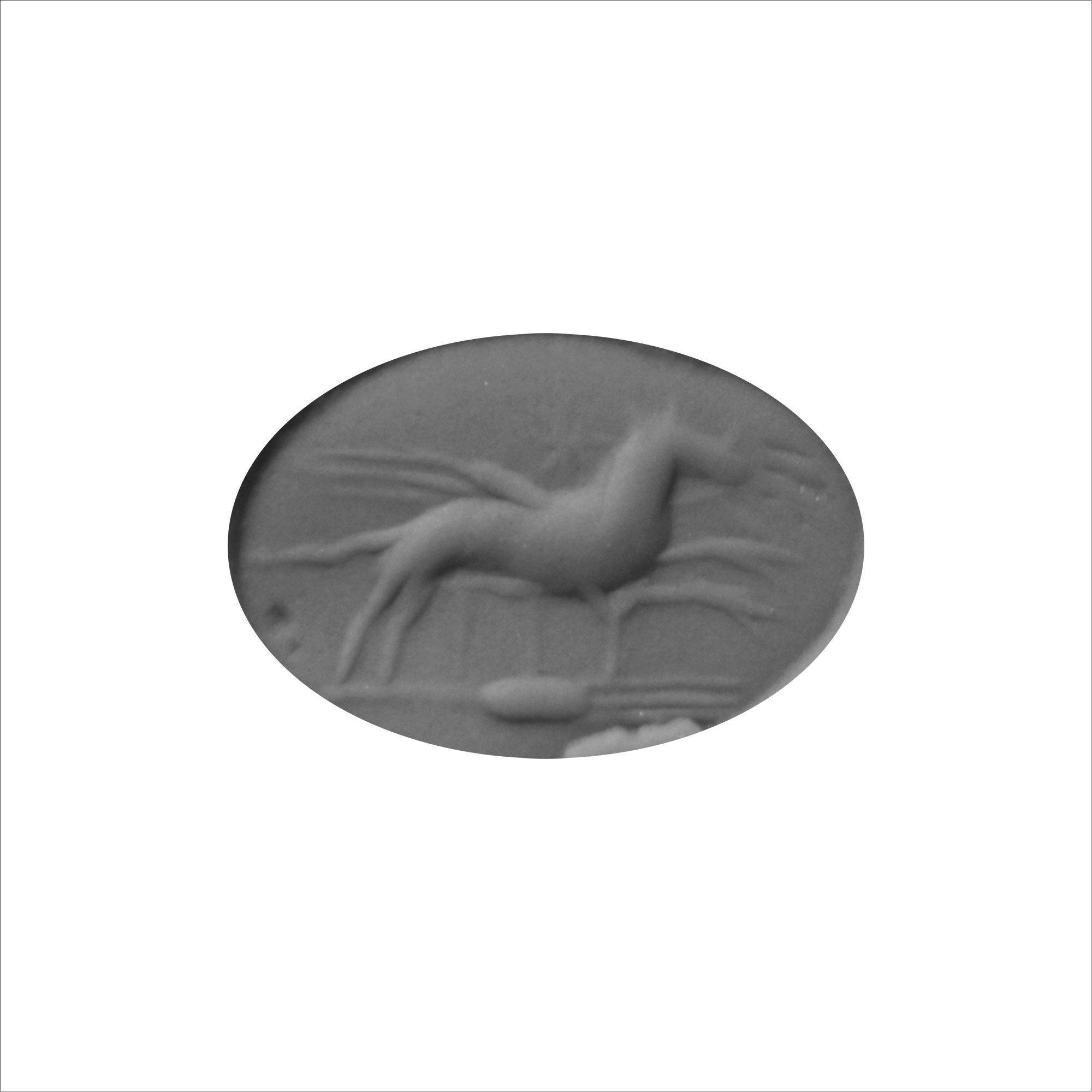
Ellipsoid in plan with intaglio winged horse leaping from a baseline, starburst above the rump; supplied with a museum-quality impression. [No Reserve]
ProvenanceFrom the private collection of a European gentleman (1942-2024), formed since the 1970s.
LiteratureCf. a similar gemstone with Pegasus in Gołyźniak, P., Engraved Gems and Propaganda in the Roman Republic and under Augustus, Oxford, 2020, no.160.
CONDITIONTimeLine Auctions follows a vetting process to ensure the authenticity and legality of all items, reinforcing our commitment to integrity and responsible trading. Each antiquity, antique, and coin lot undergoes thorough examination by a vetting committee of at least ten external specialists, professional trade association members, scientists, and archaeologists: Our Vetting Process
AUCTIONS:
TimeLine is a leading auction house specialising in antiquities, ancient art, collectables, natural history, coins, medals, and books. Our auctions offer museums, collectors, historians, and enthusiasts the opportunity to acquire unique and historically significant pieces.
LOT 1096
Roman Carnelian Gemstone with Pegasus
Estimate £200 - 300€230 - 350 (for guidance only)$270 - 410 (for guidance only)
Opening Bid
£5 (EUR 6; USD 7) +BP*
-
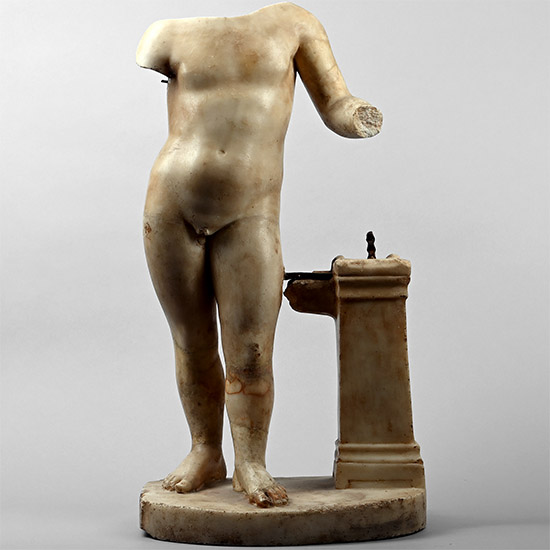
Roman Marble Torso of Young Boy
1st century A.D.Estimate: £50,000 - 70,000 (‡+bp*)
Opening Bid: £25,000
Statue of a young naked boy, in Parian or Carrara marble, shown in a contrapposto stance, with his right hip raised and his left leg extended slightly forward; chest and upper abdomen with subtle muscular definition, narrow torso and slim arms, rounded belly and chubby thighs; professionally repaired. 34.7 kg, 66 cm
European private collection, 19th century (based on restoration techniques). Ex Sotheby's, London, 8 December 1986, no.287. Ex private collection, Melbourne, Australia, prior to 2001. Private collection, Europe. Accompanied by a printed copy of the Spanish cultural export licence no.1775-3178156. This lot has been checked against the Interpol Database of stolen works of art and is accompanied by search certificate no.13456-260917.
During the Roman imperial period, children were widely represented in the art of both the public and private spheres. Images of both mortal and divine children appeared in the artworks and furnishings of the home, on the tomb monuments and burial containers associated with the funerary realm, and on imperial state art. This statue of a nude young boy, which is made of Parian or Carrara marble, exemplifies the Roman interest in the subject of children. This shift in movement is echoed in the tilt of the boy’s head downward and to his right, suggesting that he has fixed his gaze on something in this direction. -
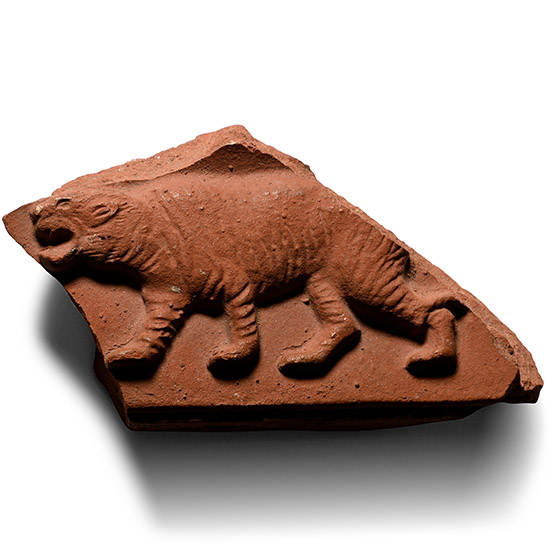
Roman Terracotta Sigillata Fragment with Tiger
3rd-4th century A.D.Estimate: £300 - 400 (‡+bp*)
Opening Bid: £180
Fragment of a vessel with an advancing tiger with an open mouth on a profiled ground line with finely engraved fur; the shard ending smoothly on the underside and reverse indicating that it might be the edge fragment of a rectangular or polygonal plate (lanx). 40.6 grams, 79 mm
French art market, 2021. -

Roman Bronze Head with Cross Fourchee
4th century A.D.Estimate: £1,800 - 2,400 (‡+bp*)
Opening Bid: £950
Hollow-formed model male head with aperture to underside used as a 'money box'; with short beard and incised expanding-arm cross to the brow. 89 grams, 54 mm
German private collection, 1980s. with Artemis Gallery, 1990s. Private collection, acquired in 1999. This lot has been checked against the Interpol Database of stolen works of art and is accompanied by a search certificate number no.12866-241640.
Money boxes in the Roman Empire, particularly in the 4th century A.D., were used as practical containers for storing coins in everyday life. They were often made from pottery or metal, and while many examples had to be broken open, others were made with small doors or openings to allow access to the contents.
