
Loading, please wait...
LOT 0119
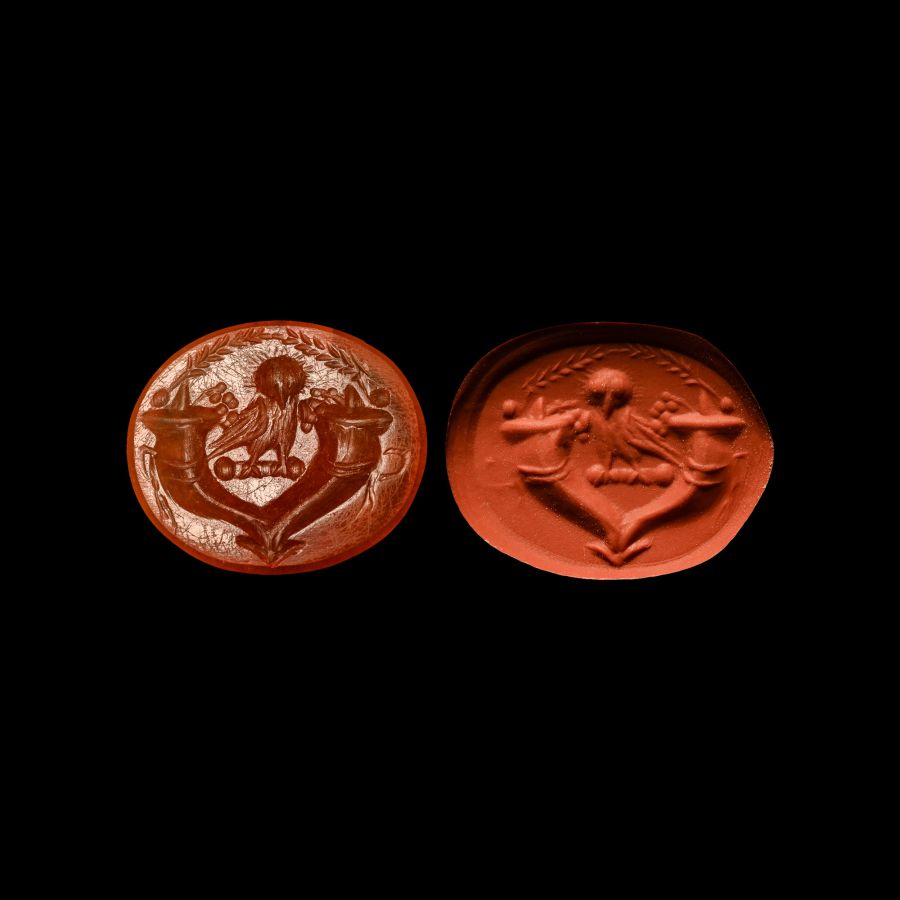
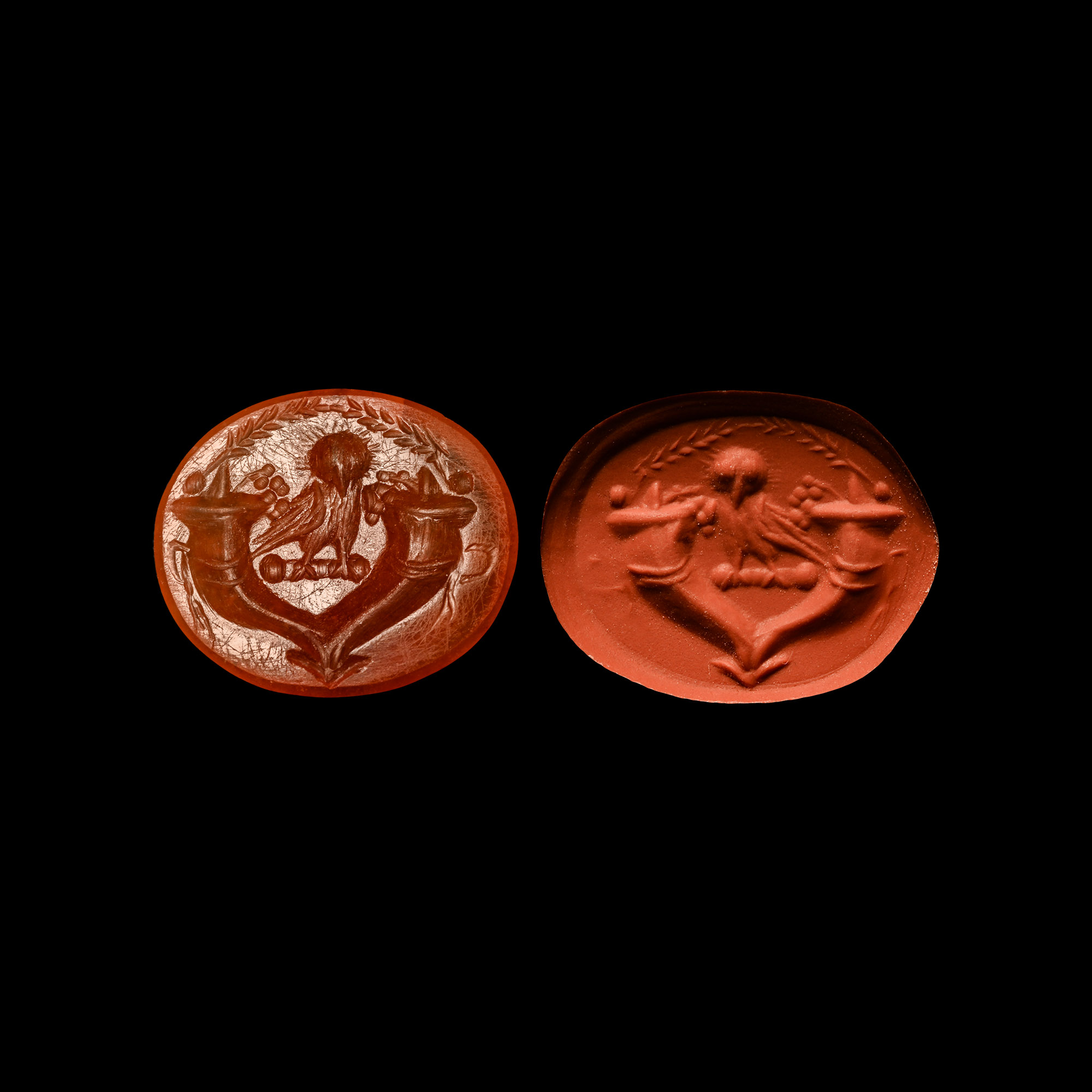
Roman Carnelian Gemstone with Owl Between Cornucopiae
1ST CENTURY A.D.
1/2 in. (0.65 grams, 13 mm).
The oval intaglio engraved with the bird facing, flanked by two opposing cornucopiae.
ProvenanceAcquired in the late 1980s-early 1990s.
Important North West London collection.
Cf. Henig, M., A corpus of Roman Engraved Gemstones from British Sites, Oxford, 2007, for similar gemstones with caduceus (no.422) and calathus (App.54) flanked by cornucopiae.
FootnotesAccording to Greek mythology, the cornucopia was the horn lost by the Achelous river in the fight with Hercules for Deianeira and filled by the Naiads with flowers and fruit as a symbol of abundance, thus alluding to the fertility of the valley where the Achelous flowed. The owl, symbol of Athena, flanked by cornucopiae, evoked the abundance asked from the goddess by the wearer of the gemstone.
CONDITIONTimeLine Auctions follows a vetting process to ensure the authenticity and legality of all items, reinforcing our commitment to integrity and responsible trading. Each antiquity, antique, and coin lot undergoes thorough examination by a vetting committee of at least ten external specialists, professional trade association members, scientists, and archaeologists: Our Vetting Process
AUCTIONS:
TimeLine is a leading auction house specialising in antiquities, ancient art, collectables, natural history, coins, medals, and books. Our auctions offer museums, collectors, historians, and enthusiasts the opportunity to acquire unique and historically significant pieces.
-
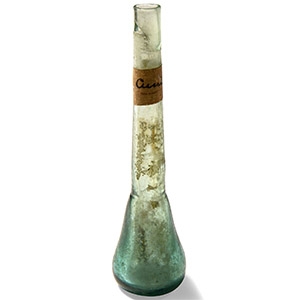
Roman Blue-Green Glass Unguentarium
3rd-4th century A.D.Sold for (Inc. bp): £117
Piriform-bodied with an extended tubular neck with rim absent; iridescent surfaces; antique handwritten collector's label around the neck; repaired. 41.4 grams, 11.7 cm high
Acquired 1970s onwards. Private collection of Michael O'Hara, Cambridgeshire, UK. Ex private collection of Benjamin Hyde-Smith, Hertfordshire, UK. -
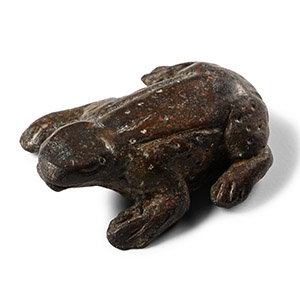
Roman Bronze Crouching Frog
1st-3rd century A.D.Sold for (Inc. bp): £195
Modelled in the round with naturalistic detailing, spotted detailing to the body. 12.9 grams, 27 mm
‘The Ancient Menagerie Collection’ formerly the property of a Cambridgeshire lady, collected since the 1990s and acquired from auctions and dealers throughout Europe and the USA, now ex London collection. -
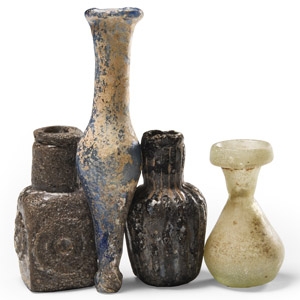
Roman Glass Vessel Collection
1st-4th century A.D.Sold for (Inc. bp): £182
Miniature vessels including unguentaria in various colours. 56 grams total, 42-83 mm
Acquired 1970s-1996. Property of a North American collector. London collection, 2016.
