
Loading, please wait...
LOT 0184
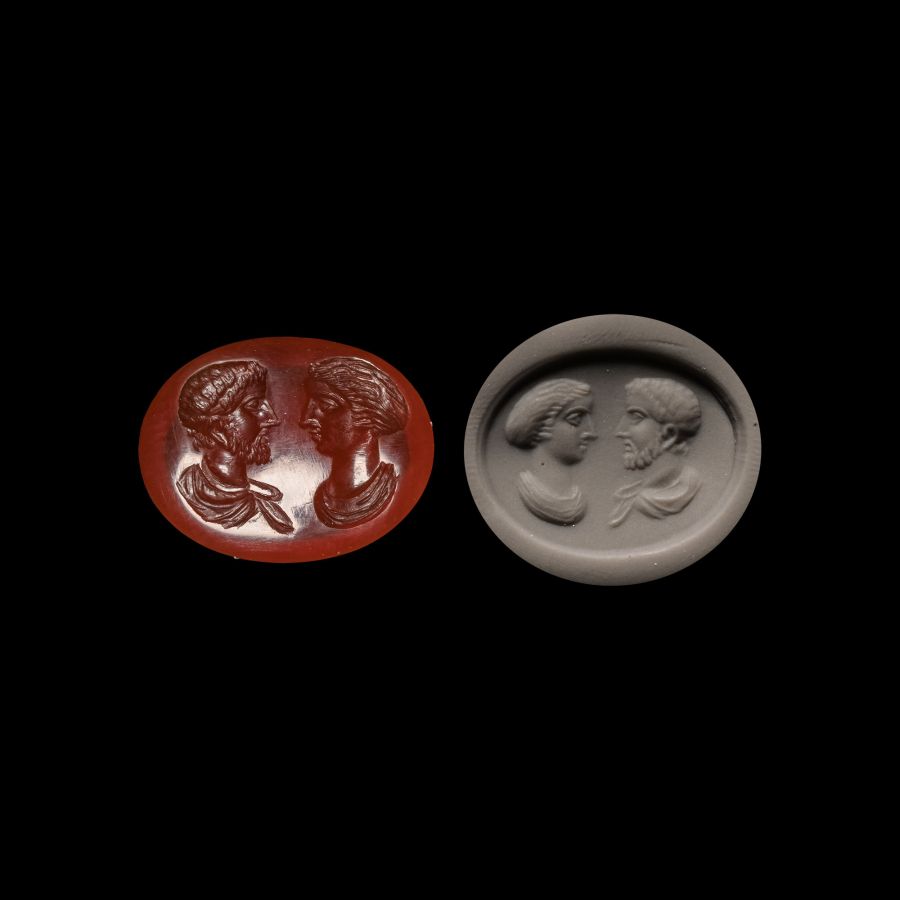
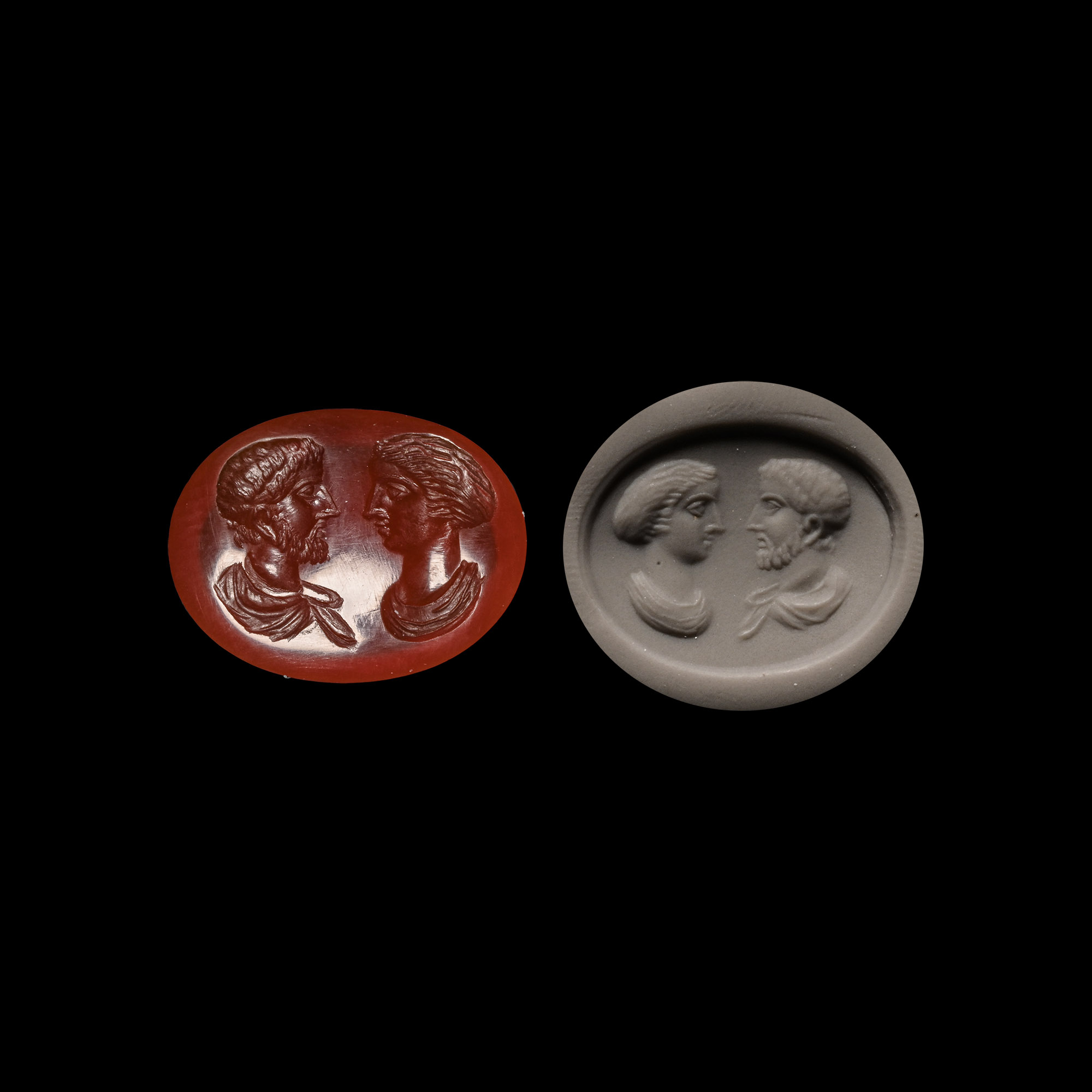
Roman Carnelian Gemstone with Opposed Busts
LATE 2ND CENTURY A.D.
5/8 in. (1 grams, 16 mm).
With two opposed profile male and female busts; supplied with a museum-quality impression.
ProvenanceFrom the collection of a Swiss gentleman formed in Europe from 1970-1980s; thence by descent from the family in London.
CONDITIONTimeLine Auctions follows a vetting process to ensure the authenticity and legality of all items, reinforcing our commitment to integrity and responsible trading. Each antiquity, antique, and coin lot undergoes thorough examination by a vetting committee of at least ten external specialists, professional trade association members, scientists, and archaeologists: Our Vetting Process
AUCTIONS:
TimeLine is a leading auction house specialising in antiquities, ancient art, collectables, natural history, coins, medals, and books. Our auctions offer museums, collectors, historians, and enthusiasts the opportunity to acquire unique and historically significant pieces.
-
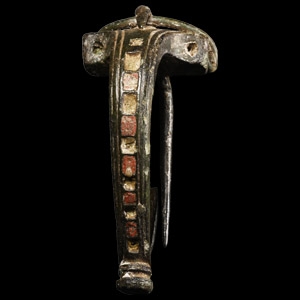
Large Romano-British 'Published' Enamelled Bronze Head Stud Bow Brooch
Late 1st-2nd century A.D.Sold for (Inc. bp): £169
The head of the brooch with rectangular wings with concave reverse housing the spring, a separate hinged pin fitted around the axis bar, an integral rectangular bow with a circular aperture at the apex and a central column of rectangular green/blue and red enamel cells. 33.39 grams, 60 mm
Found whilst searching with a metal detector near Conistone with Kilnsey, North Yorkshire, UK, circa 2018. Accompanied by a copy of the British Museum's Portable Antiquities Scheme (PAS) report no.YORYM-366098. -
.jpg)
Roman Gold Ring with Serapis Gemstone
1st century A.D.Sold for (Inc. bp): £1,300
Hollow-formed with inset carnelian gemstone engraved with a profile bust of Serapis above a perching eagle flanked by fronds, possibly a marriage. 3.15 grams, 26.98 mm overall, 13.22 mm internal diameter (approximate size British D, USA 1 3/4, Europe 1.15, Japan 1)
Acquired early 1990s. Ex private American collection; thence by descent. Private Swiss collection since 1998. -
.jpg)
Roman Gold Ring with Carnelian Cameo of Eros
Early 3rd century A.D.Sold for (Inc. bp): £1,170
Composed of a convex hoop with expanding angled shoulders, oval bezel set with carnelian cameo gemstone carved with the head and face of Eros with pinched features and centrally-parted hair; a marriage. 7.09 grams, 21.79 mm overall, 17.87 mm internal diameter (approximate size British H 1/2, USA 4, Europe 6.81, Japan 6)
Acquired 1990s-early 2000s. East Anglian private collection.
This ring belongs to the typology of gold rings with gem (Type II, Variant I) of Ruseva-Slokoska classification.
