
Loading, please wait...


LOT 0800
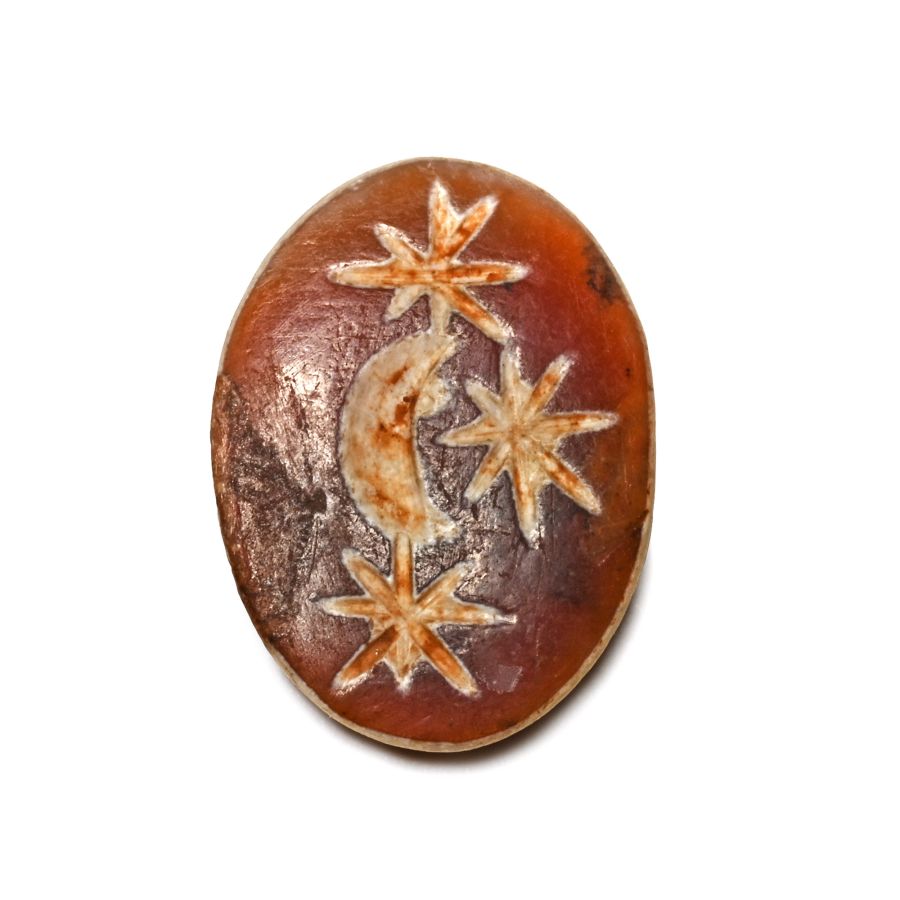
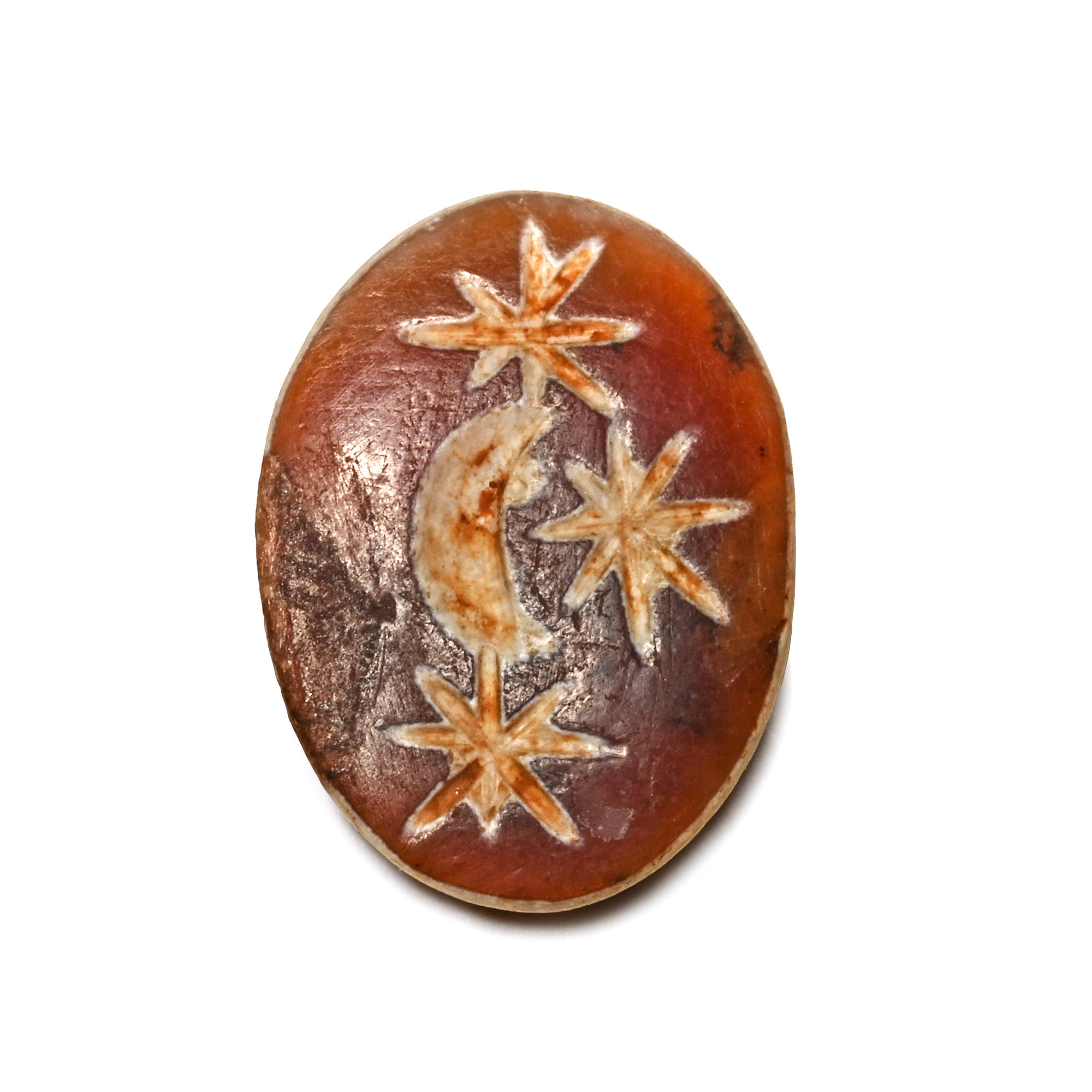
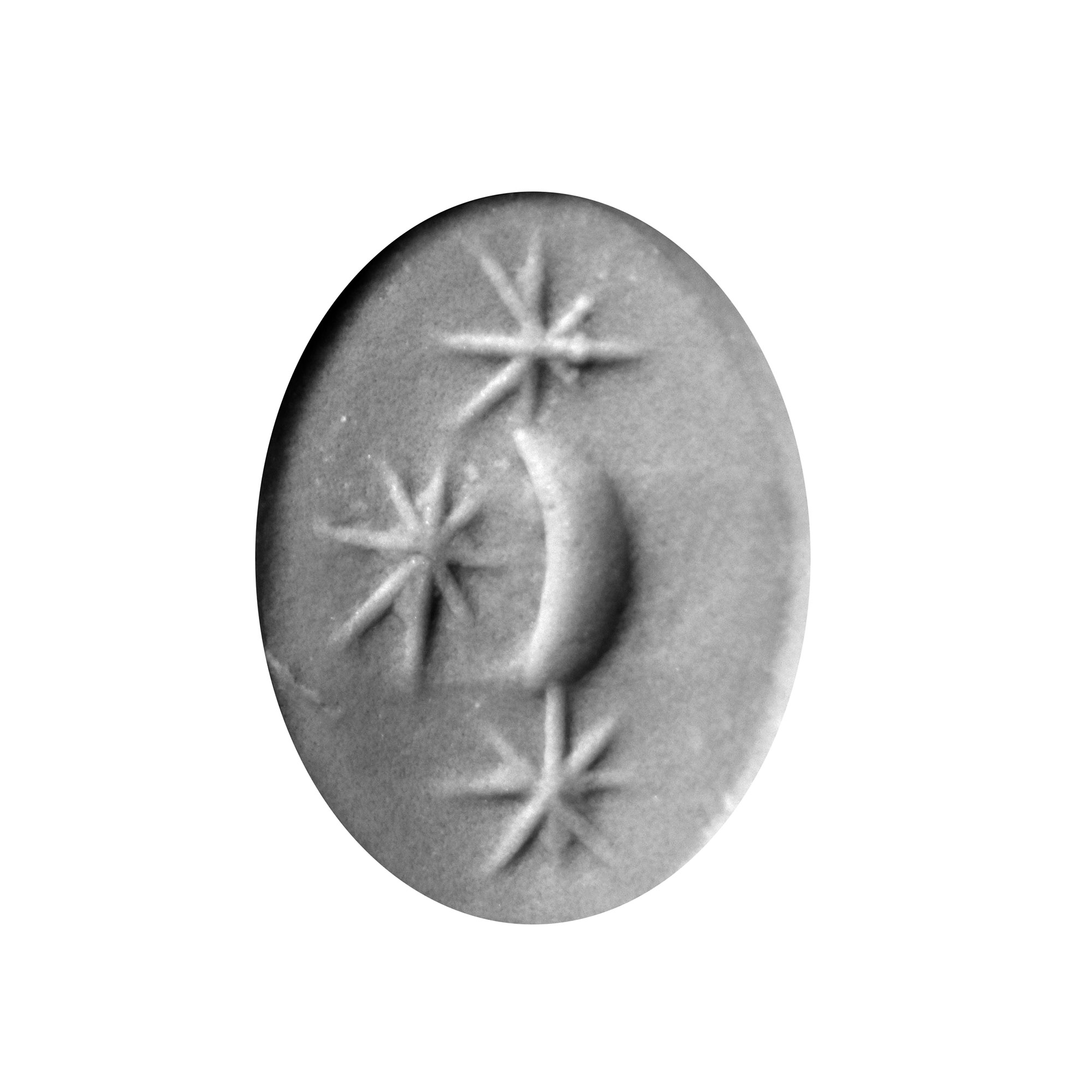
Roman Carnelian Gemstone with Moon and Stars
2ND-3RD CENTURY A.D.
1/2 in. (0.52 grams, 13 mm).
Ellipsoid type with incuse design of a crescent moon and three stars; supplied with a museum-quality impression. [No Reserve]
ProvenanceFrom the private collection of a European gentleman (1942-2024), formed since the 1970s.
CONDITIONTimeLine Auctions follows a vetting process to ensure the authenticity and legality of all items, reinforcing our commitment to integrity and responsible trading. Each antiquity, antique, and coin lot undergoes thorough examination by a vetting committee of at least ten external specialists, professional trade association members, scientists, and archaeologists: Our Vetting Process
AUCTIONS:
TimeLine is a leading auction house specialising in antiquities, ancient art, collectables, natural history, coins, medals, and books. Our auctions offer museums, collectors, historians, and enthusiasts the opportunity to acquire unique and historically significant pieces.
-
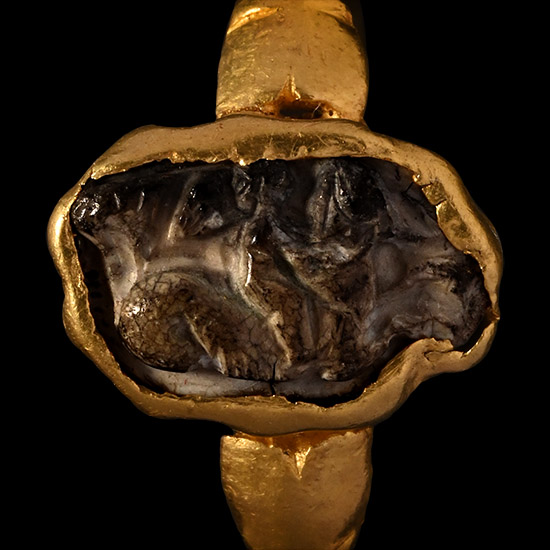
Roman Gold Ring with Burnt Agate Cameo of Eros, the Greek God of Love Riding a Hippocampus
1st century A.D.Estimate: £1,200 - 1,700 (+bp*)
Opening Bid: £600
D-section hoop with ellipsoid cell, inset cameo with Eros on a hippocamp. 3.59 grams, 20.92 mm overall, 16.98 mm internal diameter (approximate size British M, USA 6, Europe 12.46, Japan 12)
Private collection, Europe. Acquired on the English art market. -
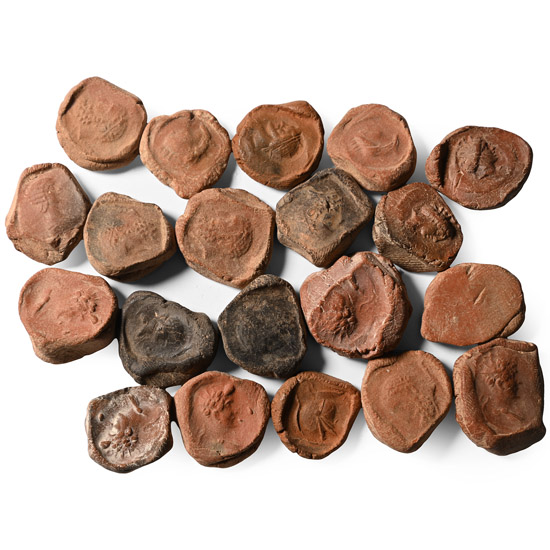
Roman Terracotta Bullae, Tesserae or Token Group
3rd century B.C.-1st century A.D.Sold for (Inc. bp): £143
A mixed group of ceramic bullae, tesserae or theatre tokens bearing low-relief motifs, mainly consisting of profile busts of deities. 41.2 grams total, 17-22 mm
From the private collection of a European gentleman (1942-2024), formed since the 1970s.
The term 'tessera' was used in Roman times to convey the Greek term σύμβολον (token). Small tiles are known as tokens, often shaped like coins, made of metal (copper, lead, iron), clay, bone, wood, or glass, stamped as well as engraved. The tokens, however, are not exclusively coin-shaped, as the Latin term 'tessera' refers to a four-sided shape. Tokens and tesserae seem to have been used both in Athens and Rome for the distribution of goods. According to written sources, the term ‘token’ is identified with credentials of the official authorities. They have also been interpreted as tokens of identity, as entrance tickets to theatre performances, tribunals or assemblies of citizens, archival material of seal engraving, as pawns in games, Charon’s obols and even as amulets. -
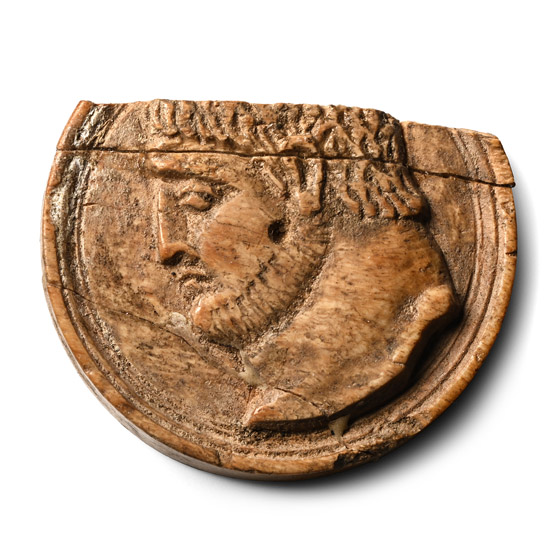
Roman Bone Bifacial Roundel with Imperial Bust of Maximinus II Daia and Inscription
3rd-4th century A.D.Sold for (Inc. bp): £208
Large section of a roundel with a profile bust of an emperor (Maximinus II Daia ?) with a short, dressed beard and hair, the reverse with an inscription '□PωTAC' and letter Z (or N) below. 3.84 grams, 29 mm
From the private collection of a European gentleman (1942-2024), formed since the 1970s.
