
Loading, please wait...
LOT 0786
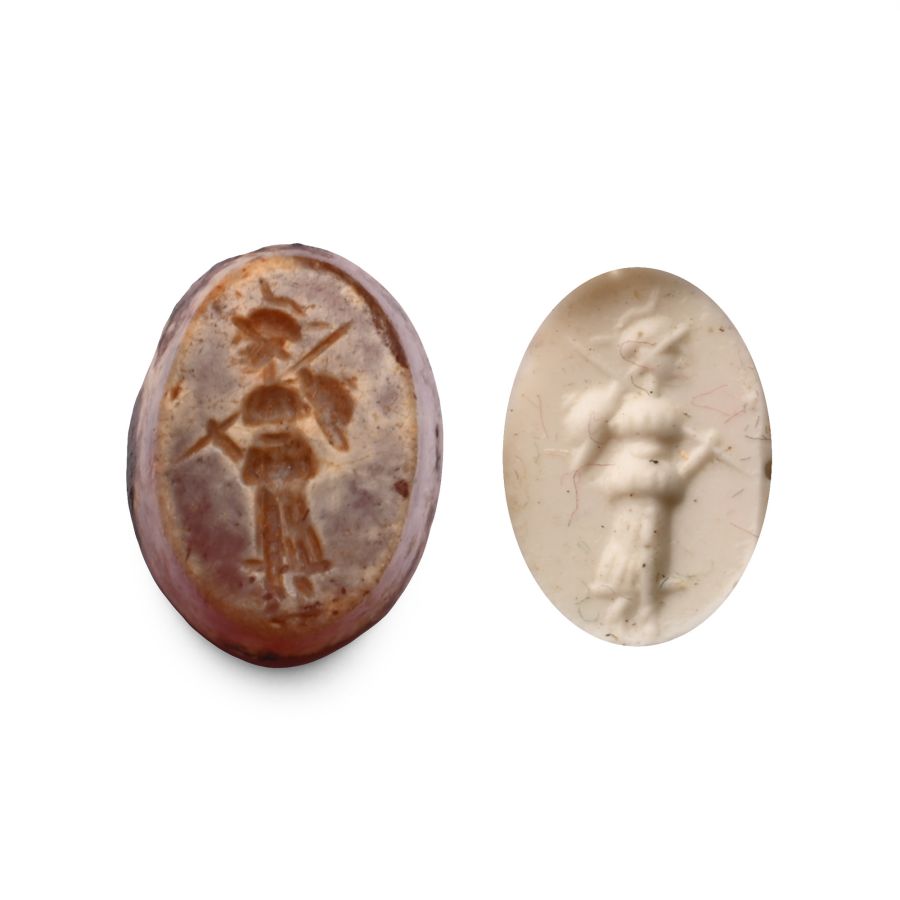
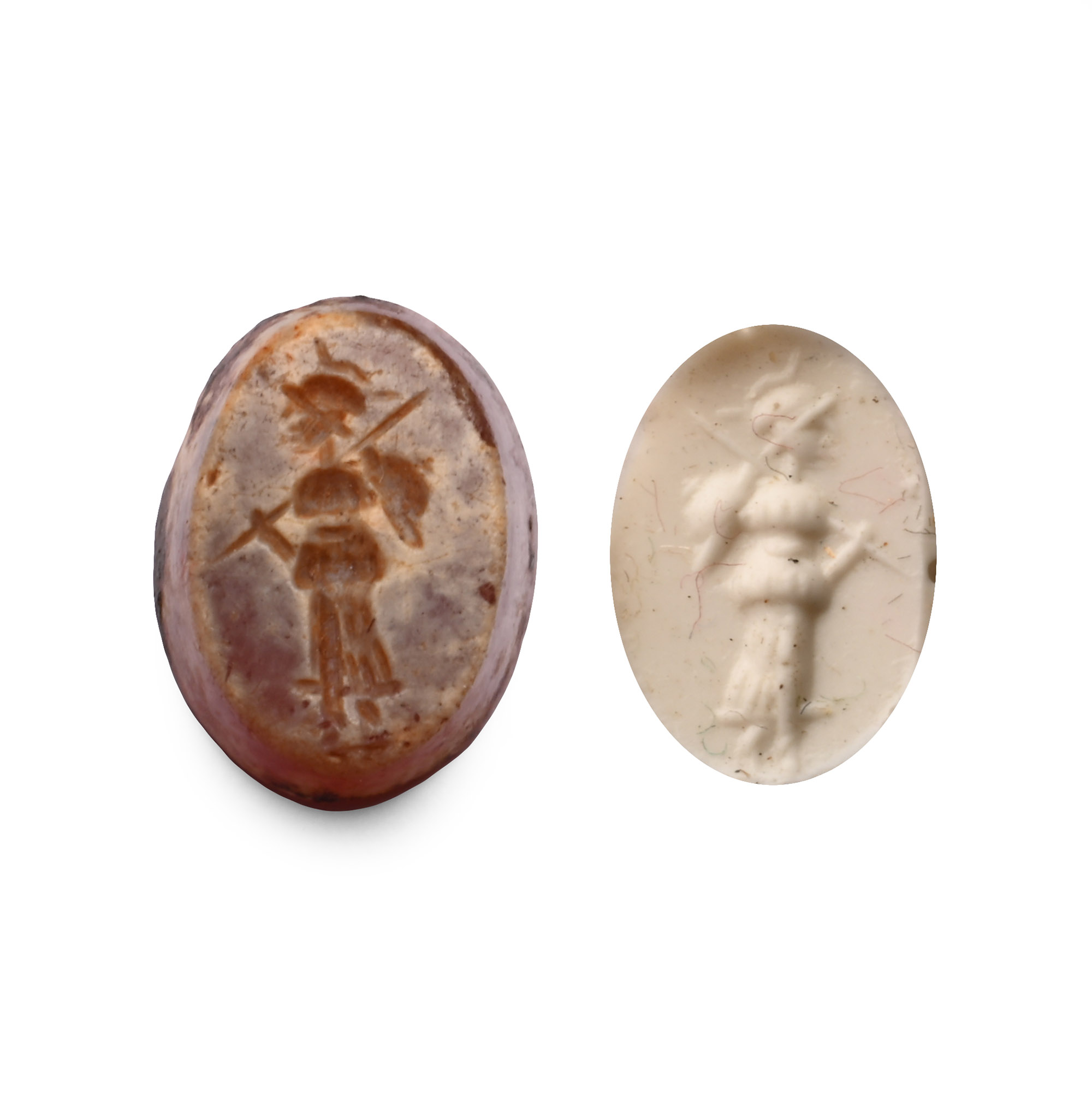
Roman Carnelian Gemstone with Minerva
2ND-3RD CENTURY A.D.
1/2 in. (0.61 grams, 12.29 mm).
With intaglio Minerva standing with spear over her shoulder; supplied with a museum-quality impression. [No Reserve]
ProvenanceFrom the private collection of a European gentleman (1942-2024), formed since the 1970s.
CONDITIONTimeLine Auctions follows a vetting process to ensure the authenticity and legality of all items, reinforcing our commitment to integrity and responsible trading. Each antiquity, antique, and coin lot undergoes thorough examination by a vetting committee of at least ten external specialists, professional trade association members, scientists, and archaeologists: Our Vetting Process
AUCTIONS:
TimeLine is a leading auction house specialising in antiquities, ancient art, collectables, natural history, coins, medals, and books. Our auctions offer museums, collectors, historians, and enthusiasts the opportunity to acquire unique and historically significant pieces.
-
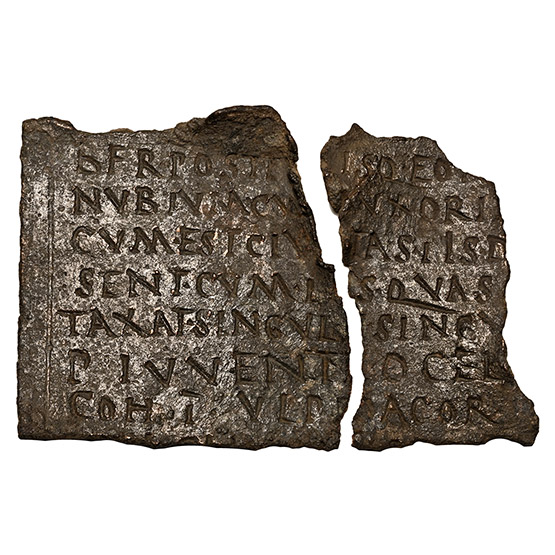
Roman Bronze Military Diploma Fragments for a Soldier of the Cohors I Ulpia Dacorum
129 A.D.Sold for (Inc. bp): £1,105
Two adjacent fragments of bronze sheet with incised script to both faces; the larger with two straight edges; obverse with incised lateral margin and text in rustic capitals: 'SFR · POSTI[.] ISQ EO / NUBIVM.CV VXORI / CVM· EST.CIV [.]TAS · ISD / SENT · CVM · ILS QVAS / TAXAT · SINGVLI · SINE / P I V V ENTI OCEL / COH I VLP [.] ACOR'; reverse with looser, wider-spaced capitals written perpendicular to the obverse: '..THICIF ·OI / IANVSANI / COS / ..IFP CP / ...ASCRI .. / ETI NIP [.] / ...N...' 16.1 grams total, 40-42 mm
Ex German art market, 1990s. Acquired from an EU collector living in London. From the collection of a Surrey, UK, gentleman. -
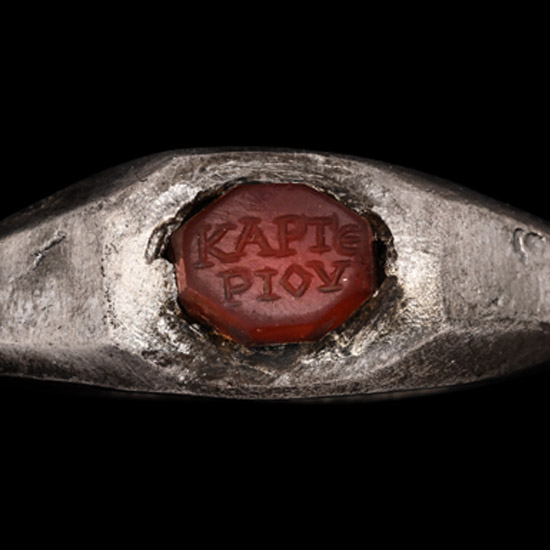
Roman Silver Ring with Carnelian Gemstone with Inscription
1st-2nd century A.D.Sold for (Inc. bp): £351
Keeled hoop with expanding angular shoulders, set with a red carnelian intaglio bearing the inscription 'KAPTE / PIOV'; possibly a marriage. 9.99 grams, 30.43 mm overall, 17.55 x 12.88 mm internal diameter (approximate size British G 1/2, USA 3 1/2, Europe 5.55, Japan 5)
Ex German art market, 2000s. Acquired from an EU collector living in London. From the collection of a Surrey, UK, gentleman. -
.jpg)
Roman Rock Crystal Gemstone with Crouching Lion
2nd-3rd century A.D.Sold for (Inc. bp): £111
With intaglio lion crouching with head reversed towards a crescent; supplied with a museum-quality impression. 1.40 grams, 15.92 mm
From the private collection of a European gentleman (1942-2024), formed since the 1970s.
