
Loading, please wait...
LOT 0662
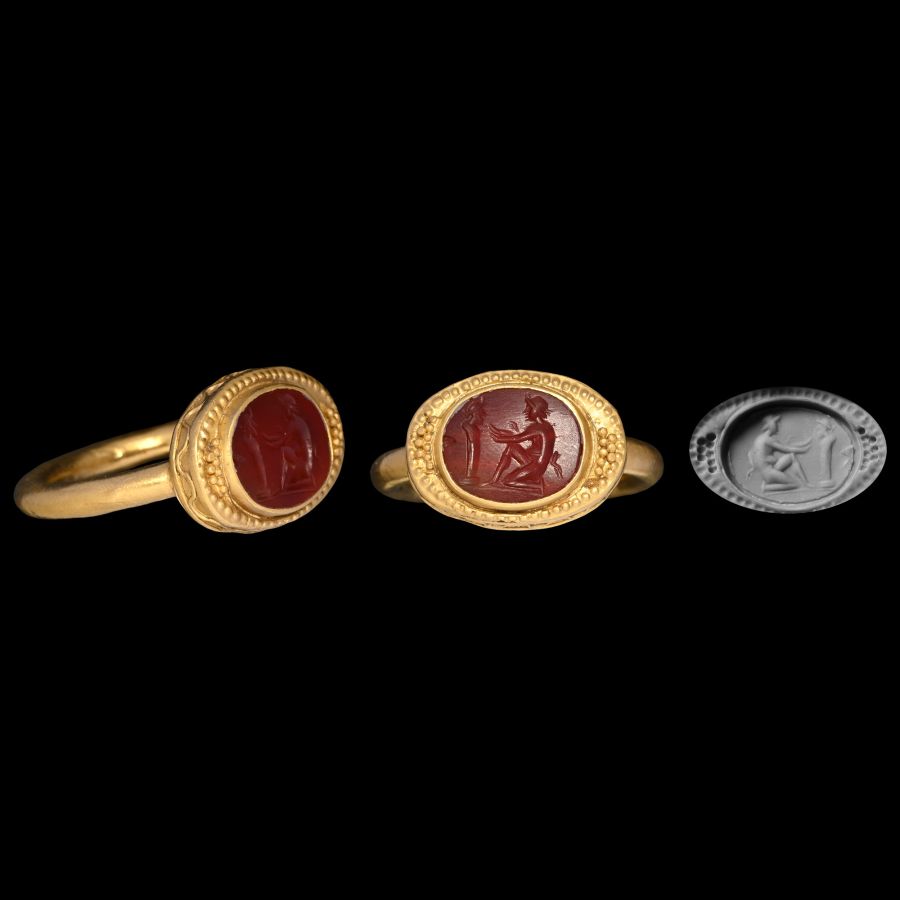
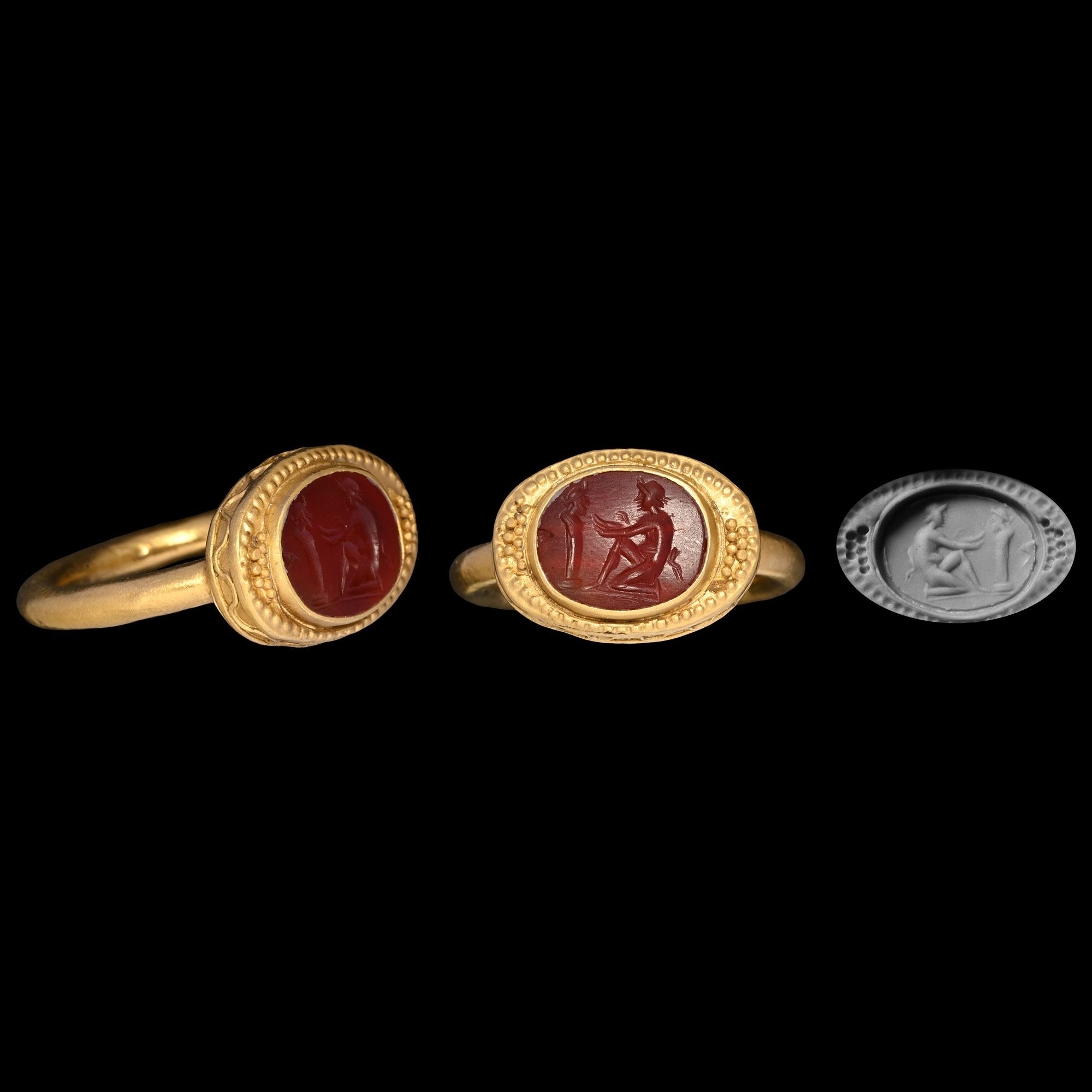
Roman Carnelian Gemstone with Kneeling Satyr Before Herm in Gold Ring
1ST CENTURY A.D.
1 in. (5.15 grams, 24.05 mm overall, 17.24 mm internal diameter (approximate size British N, USA 6 1/2, Europe 13.72, Japan 13)).
Ellipsoid cloison with incuse image of a kneeling male figure wearing a petasos with hand outstretched towards a herm, all on a baseline; set in a later gold ring; supplied with a museum-quality impression.
ProvenanceAcquired on the UK art market.
Private collection, England.
This lot has been checked against the Interpol Database of stolen works of art and is accompanied by search certificate number no.13168-249502.
TimeLine Auctions follows a vetting process to ensure the authenticity and legality of all items, reinforcing our commitment to integrity and responsible trading. Each antiquity, antique, and coin lot undergoes thorough examination by a vetting committee of at least ten external specialists, professional trade association members, scientists, and archaeologists: Our Vetting Process
AUCTIONS:
TimeLine is a leading auction house specialising in antiquities, ancient art, collectables, natural history, coins, medals, and books. Our auctions offer museums, collectors, historians, and enthusiasts the opportunity to acquire unique and historically significant pieces.
LOT 0662
Roman Carnelian Gemstone with Kneeling Satyr Before Herm in Gold Ring
Sold for (Inc. bp): £2,340
-
.jpg)
Roman Marble Left Foot from a Sculpture
2nd century A.D.Sold for (Inc. bp): £3,380
Comprising an elegantly carved lower part of the calf and foot, a detailed rendering of the toes; the proportions suggesting that the subject was a child or a young woman; mounted on a custom-made display stand. 771 grams total, 15 cm high including stand
Nicolas Koutoulakis (1910-1996), thence by descent. Ex Galerie Dominique Thirion, Brussels, 1990s. Private collection of Mr K.A., France. with Kallos Gallery, London, UK. Accompanied by an academic report by Dr Raffaele D'Amato. This lot has been checked against the Interpol Database of stolen works of art and is accompanied by a search certificate number no.13010-246748. -
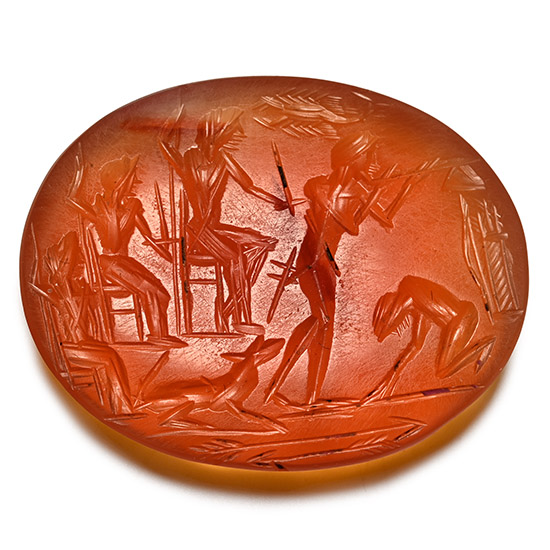
Large Roman Carnelian Gemstone with Ritual Scene
3rd century A.D.Sold for (Inc. bp): £572
Dense figural scene comprising: left, three seated figures in profile, each with spear or staff in one hand and a raised sword in the other; resting hound below the seats, scorpion above; baseline with two arrows in exergue; standing figure advancing, holding an axe above a smaller figure crouching in submission; quiver and bow to the right; supplied with a museum-quality impression. 6.65 grams, 29 mm
with Hotel des Ventes de Monte-Carlo, 2019. Private collection, England.
The presentation has many of the qualities of an initiation ritual with a group elders sitting in witness and an officiant testing the courage of the initiand. -
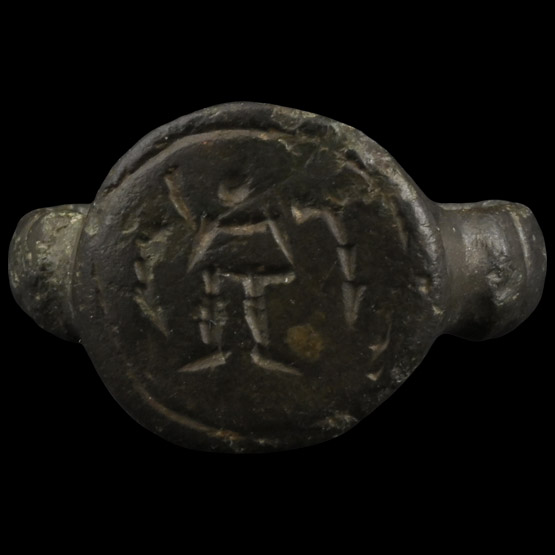
Late Roman Bronze Ring with Warrior
280-400 A.D.Sold for (Inc. bp): £72
Comprising a D-section hoop with notched shoulders, a raised circular bezel with a stylised warrior. 5.19 grams, 20.44 mm overall, 15.11 mm internal diameter (approximate size British G 1/2, USA 3 1/2, Europe 5.55, Japan 5)
Acquired on the UK and EU art market before 2000. From the private collection of a Surrey, UK, gentleman.
The small copper alloy Roman finger ring seems to be of Guiraud Type 4f (similar to Henig Type II) and dates from the 3rd to early 5th century A.D. The size of the ring suggests it may have been worn on the end of the finger, but most probably used by a child.
