
Loading, please wait...
LOT 0125
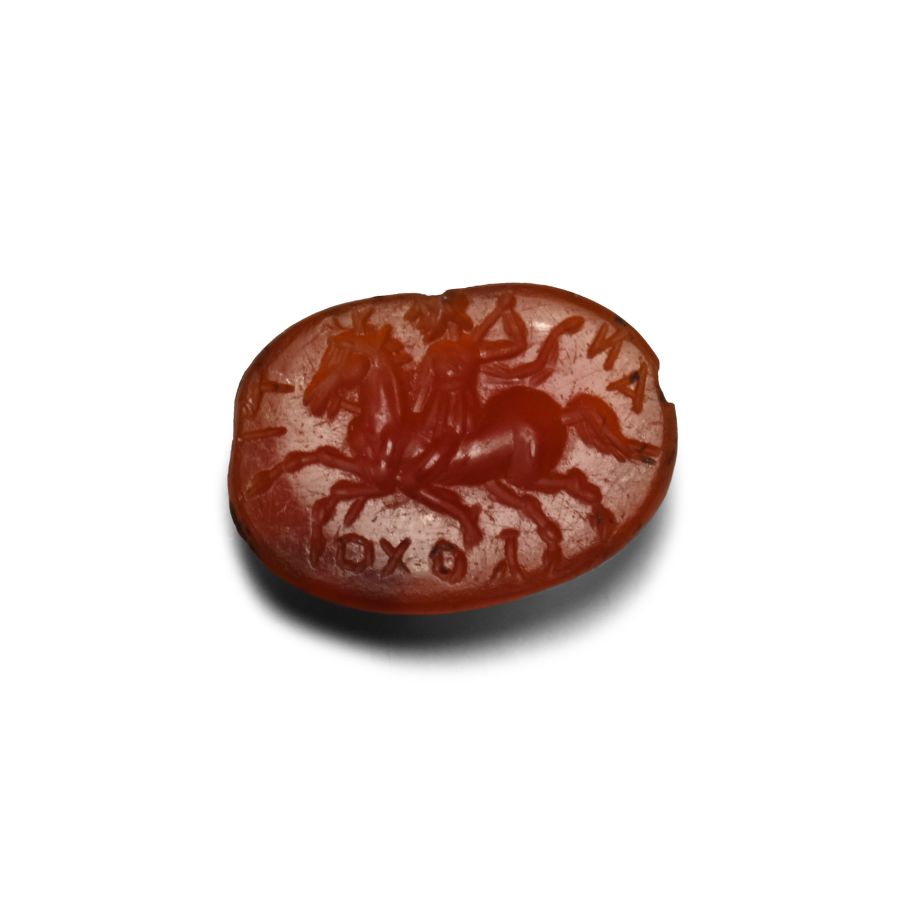
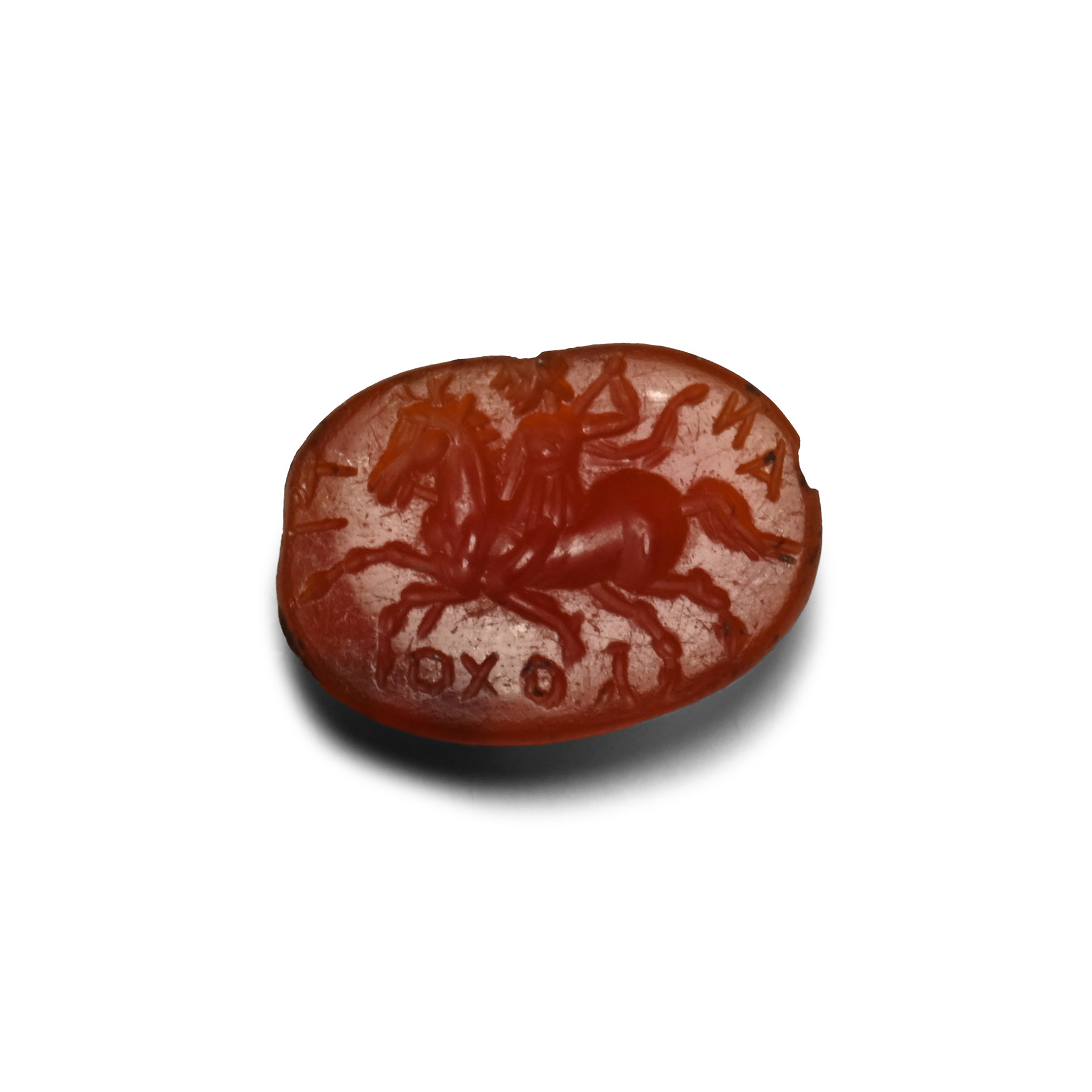
Roman Carnelian Gemstone with Horse Belonging to Antiochos
1ST-2ND CENTURY A.D.
1/2 in. (0.69 grams, 12 mm).
Ellipsoid in plan with intaglio horseman blowing a horn, Greek legend to the border 'AHTIOXOY' (belonging to Antiochos).
ProvenanceFrom the private collection of Mr K.A., acquired in the 1990s-early 2000s.
CONDITIONTimeLine Auctions follows a vetting process to ensure the authenticity and legality of all items, reinforcing our commitment to integrity and responsible trading. Each antiquity, antique, and coin lot undergoes thorough examination by a vetting committee of at least ten external specialists, professional trade association members, scientists, and archaeologists: Our Vetting Process
AUCTIONS:
TimeLine is a leading auction house specialising in antiquities, ancient art, collectables, natural history, coins, medals, and books. Our auctions offer museums, collectors, historians, and enthusiasts the opportunity to acquire unique and historically significant pieces.
LOT 0125
Roman Carnelian Gemstone with Horse Belonging to Antiochos
Sold for (Inc. bp): £338
-
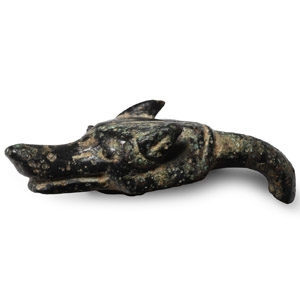
Roman Bronze Dog Finial
1st century B.C.-1st century A.D.Sold for (Inc. bp): £91
Comprising a canine head with raised snout and swept ears; hooked bar to the rear. 7.8 grams, 33 mm
From the collection of a gentleman, acquired on the London art market in the 1990s. -
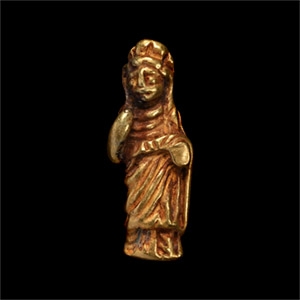
Roman Gold Amulet of a Draped Female
1st-4th century A.D.Estimate: £800 - 1,000 (+bp*)
Opening Bid: £400
Standing, wearing a palla over her hair and holding her proper right hand to her face; loop to the rear. 7.93 grams, 27 mm
From the collection of a gentleman, acquired on the London art market in the 1990s. -
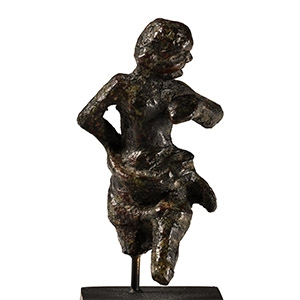
Roman Bronze Dancing Woman Statuette
Circa 2nd century A.D.Sold for (Inc. bp): £72
Modelled in dynamic pose with her peplos slipping loose from her shoulders and held at her waist by her right hand; head turned and left hand held at the breast; possibly a Maenad; mounted on a custom-made stand. 40.3 grams total, 63 mm including stand
From a collection acquired on the UK art market from various auction houses and collections mostly before 2000. From an important Cambridgeshire estate; thence by descent.
Maenads were followers of Dionysus whose rites were characterised by vigorous dancing to loud music and crashing cymbals, in which the revellers whirled and became drunk, and incited each another to greater abandon.
