
Loading, please wait...
LOT 0706
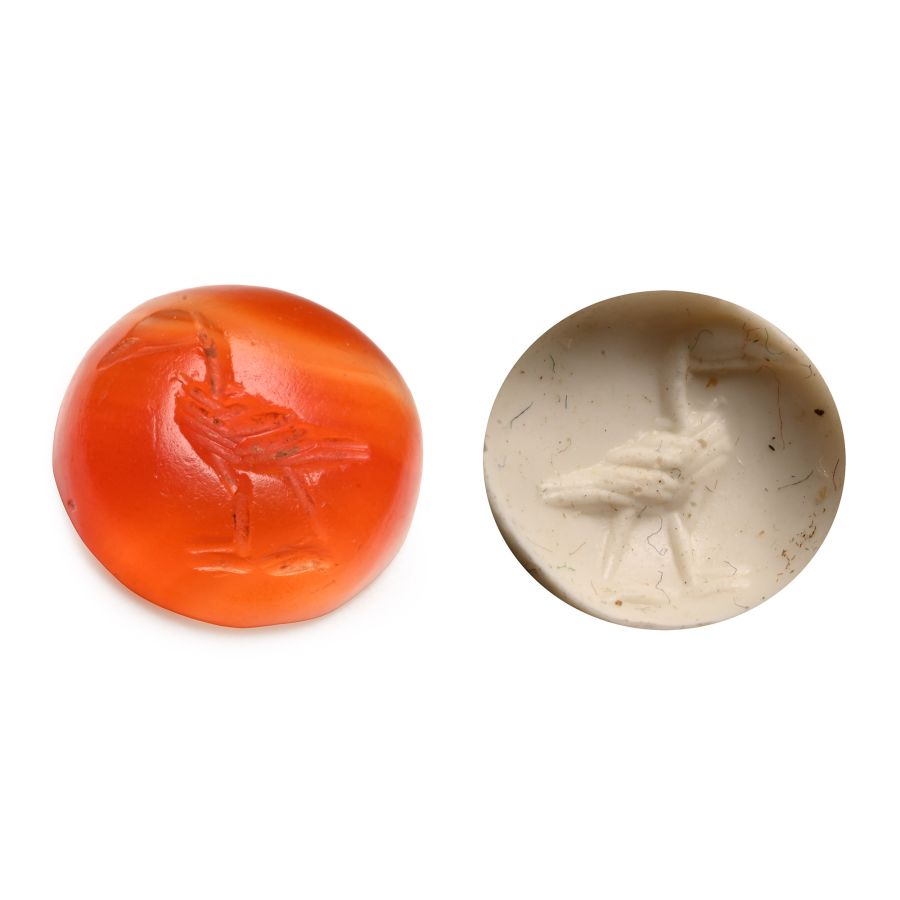
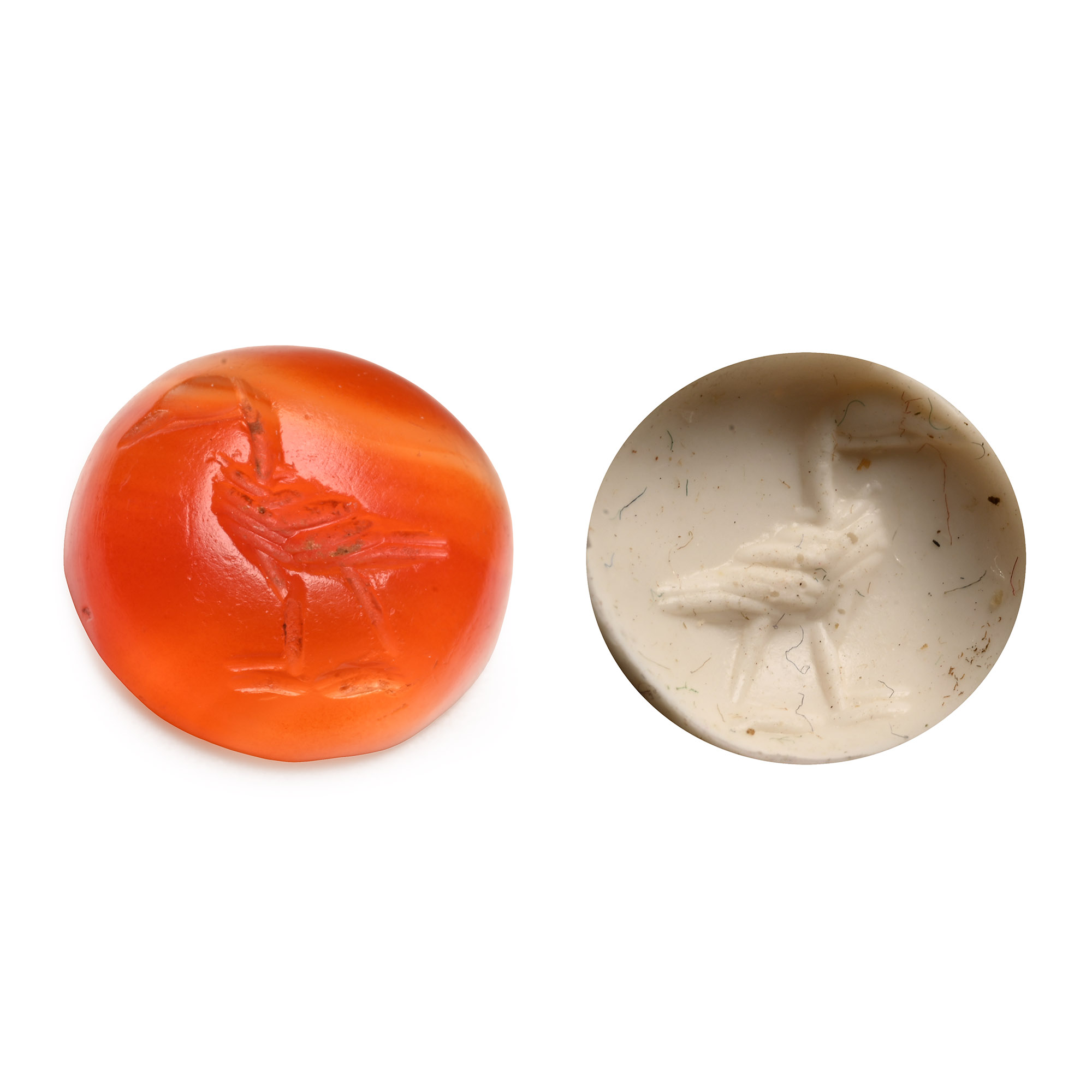
Roman Carnelian Gemstone with Goose
2ND-3RD CENTURY A.D.
3/8 in. (0.54 grams, 10.3 mm).
With intaglio goose standing on a baseline; supplied with a museum-quality impression. [No Reserve]
ProvenanceFrom the private collection of a European gentleman (1942-2024), formed since the 1970s.
CONDITIONTimeLine Auctions follows a vetting process to ensure the authenticity and legality of all items, reinforcing our commitment to integrity and responsible trading. Each antiquity, antique, and coin lot undergoes thorough examination by a vetting committee of at least ten external specialists, professional trade association members, scientists, and archaeologists: Our Vetting Process
AUCTIONS:
TimeLine is a leading auction house specialising in antiquities, ancient art, collectables, natural history, coins, medals, and books. Our auctions offer museums, collectors, historians, and enthusiasts the opportunity to acquire unique and historically significant pieces.
-
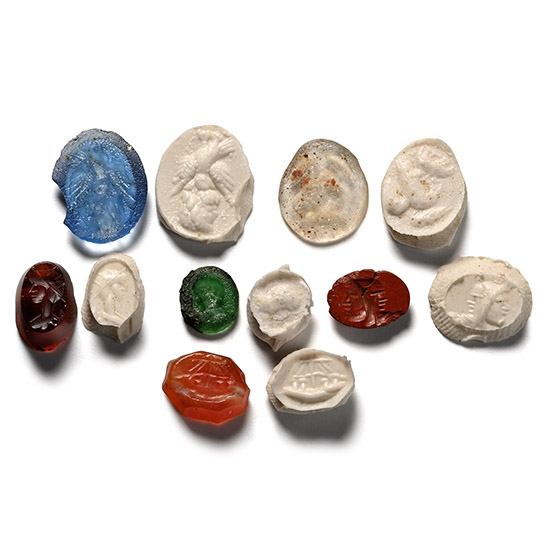
Roman Gemstone and Glass Intaglio Collection
Circa 2nd-3rd century A.D.Sold for (Inc. bp): £156
Comprising: profile male bust; janiform bust; eagle with prey; female bust with solar crown; head of Jupiter above an eagle with spread wings; ship with mast and sail; each supplied with a museum-quality impression. 1.90 grams total, 7.96-13.82 mm
From the private collection of a European gentleman (1942-2024), formed since the 1970s. -
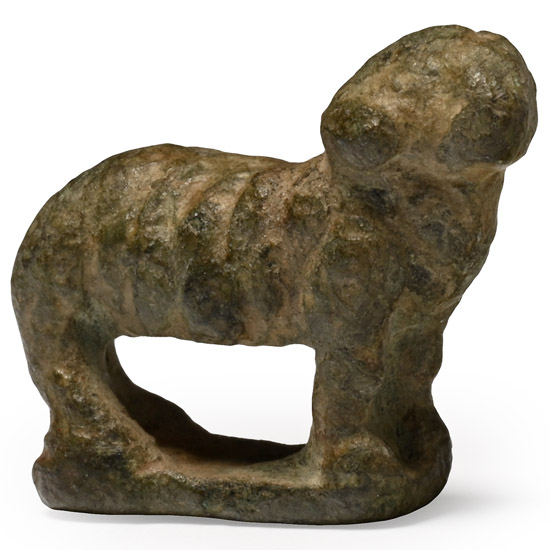
Roman Bronze Statuette of a Ram
1st-4th century A.D.Sold for (Inc. bp): £46
Standing on a rectangular base with its head turned to the side, curving horns and fleece detailing on the body. 9.13 grams, 23.2 mm
From the private collection of a European gentleman (1942-2024), formed since the 1970s. -
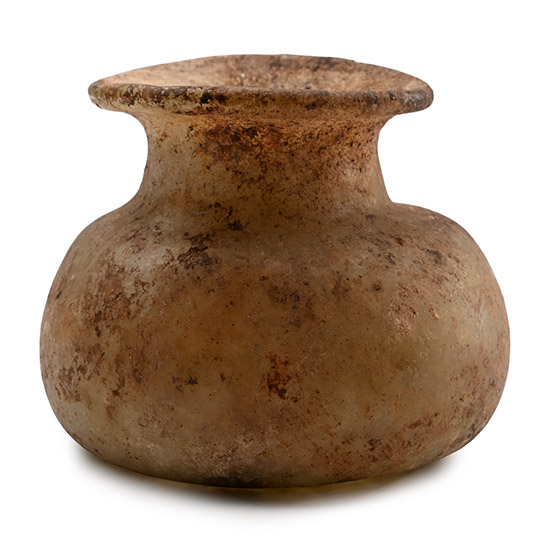
Roman Glass Flask
3rd-4th century A.D.Estimate: £100 - 140 (+bp*)
Opening Bid: £56
Squat in profile with trumpet-shaped neck and mouth, rolled rim, dimple base. 93 grams, 78 mm
From a London, UK, collection of glass, 1970-2000s.
