
Loading, please wait...


LOT 0100
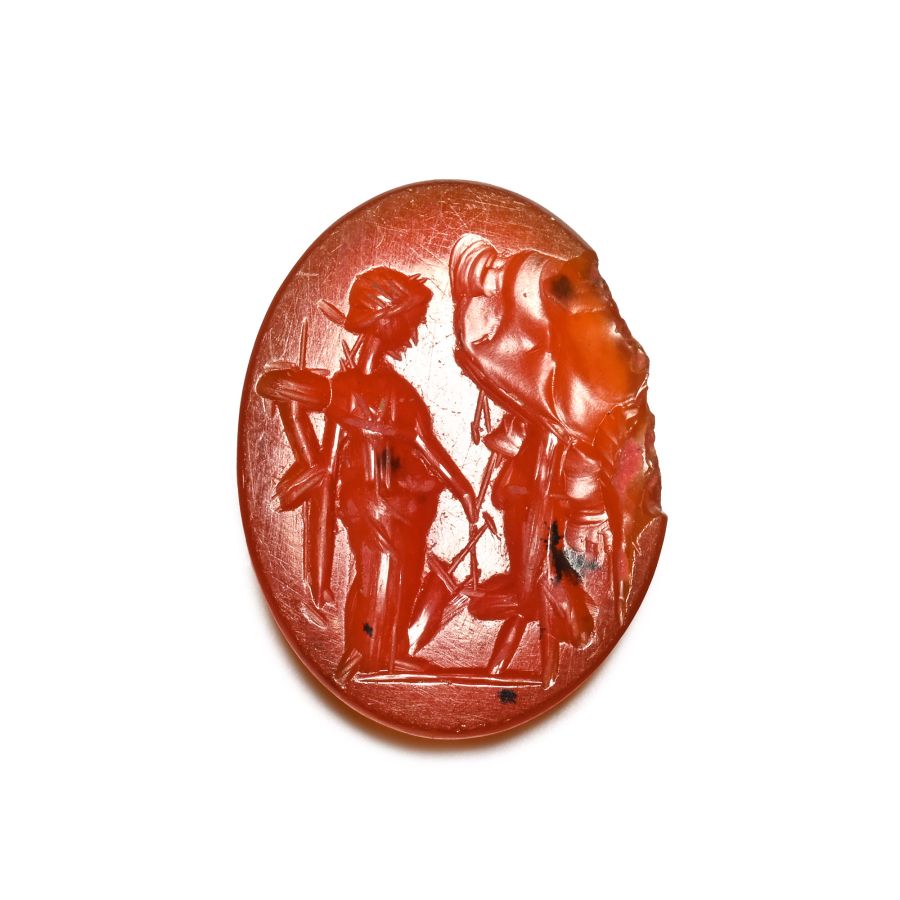
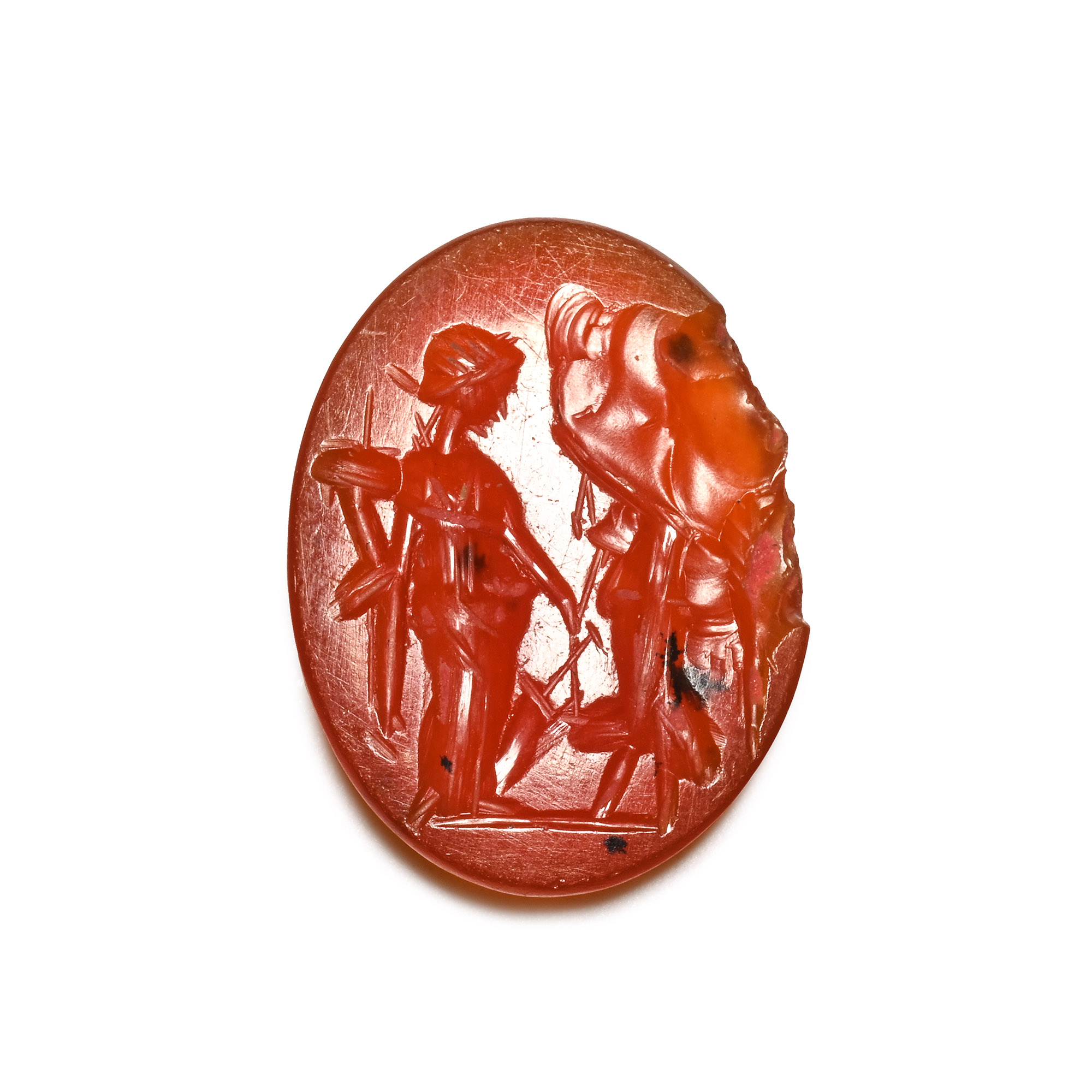
Roman Carnelian Gemstone with Goddesses
1ST-2ND CENTURY A.D.
5/8 in. (1.02 grams, 17 mm).
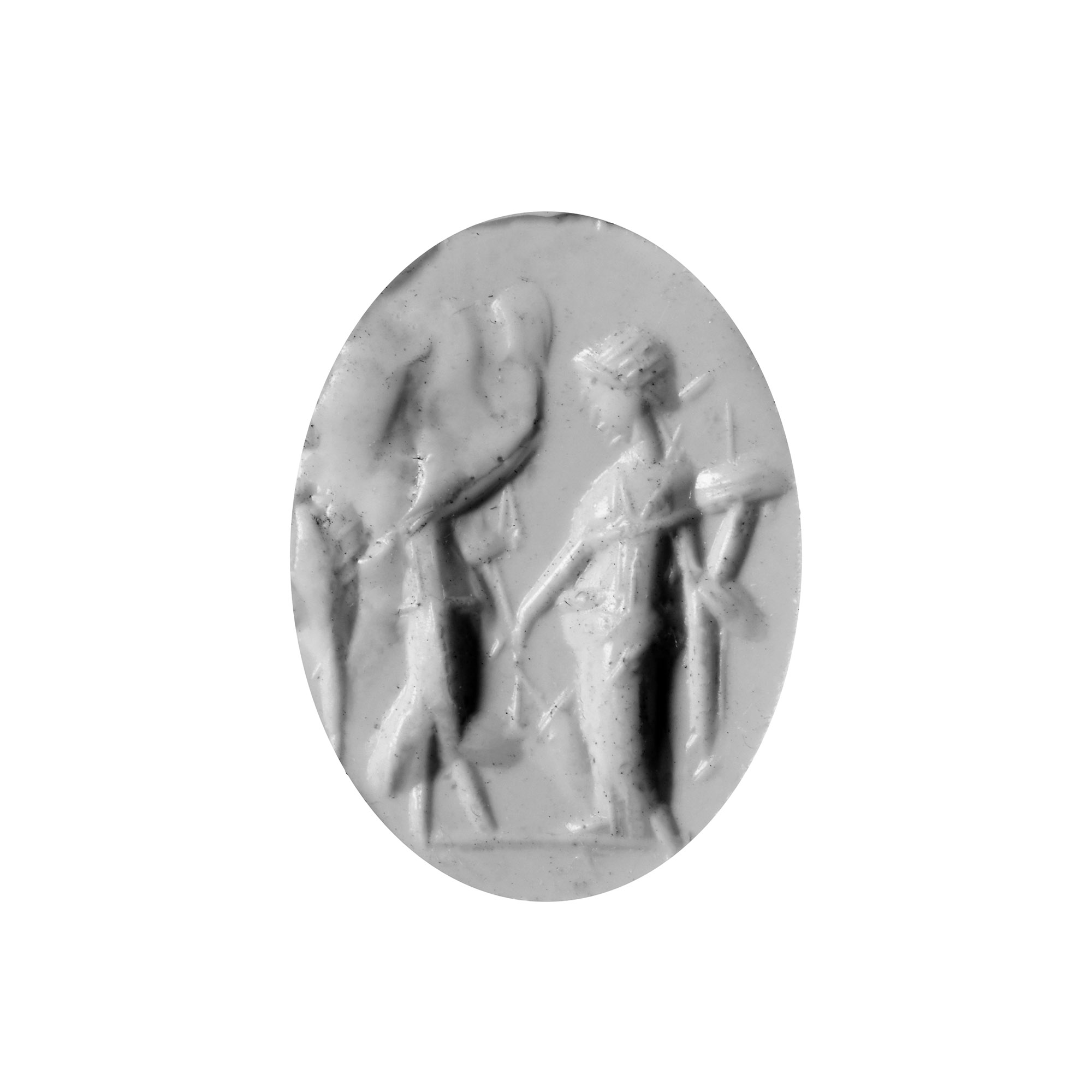
Tabular type with incuse design of Fortuna standing with a cornucopia and rudder, goddess Victory before her holding tainia, the tips of her wings visible; edge chipped; supplied with a museum-quality impression. [No Reserve]
ProvenanceFrom the private collection of a European gentleman (1942-2024), formed since the 1970s.
LiteratureCf. similar gemstone in Laing, J., Art and society in Roman Britain, Stroud, 2000, colour pl.6.
FootnotesA group of carnelian intaglios found in the Snettisham Hoard, Norfolk, comprised subjects like Fortuna, Diana, Spes, a modius with corn, a bird and a dolphin, from the mid-2nd century A.D.
CONDITIONTimeLine Auctions follows a vetting process to ensure the authenticity and legality of all items, reinforcing our commitment to integrity and responsible trading. Each antiquity, antique, and coin lot undergoes thorough examination by a vetting committee of at least ten external specialists, professional trade association members, scientists, and archaeologists: Our Vetting Process
AUCTIONS:
TimeLine is a leading auction house specialising in antiquities, ancient art, collectables, natural history, coins, medals, and books. Our auctions offer museums, collectors, historians, and enthusiasts the opportunity to acquire unique and historically significant pieces.
-
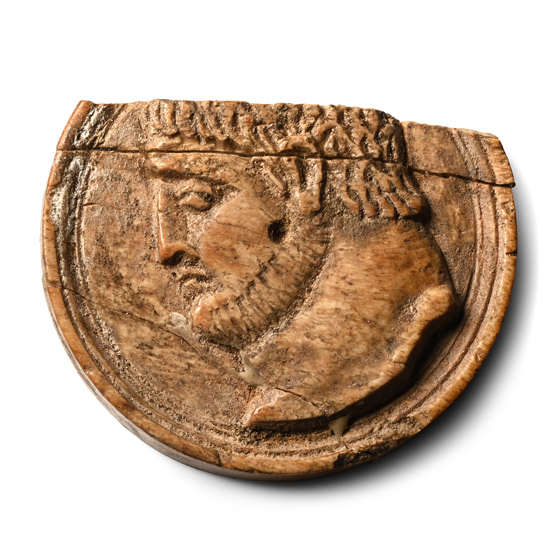
Roman Bone Bifacial Roundel with Imperial Bust of Maximinus II Daia and Inscription
3rd-4th century A.D.Sold for (Inc. bp): £208
Large section of a roundel with a profile bust of an emperor (Maximinus II Daia ?) with a short, dressed beard and hair, the reverse with an inscription '□PωTAC' and letter Z (or N) below. 3.84 grams, 29 mm
From the private collection of a European gentleman (1942-2024), formed since the 1970s. -
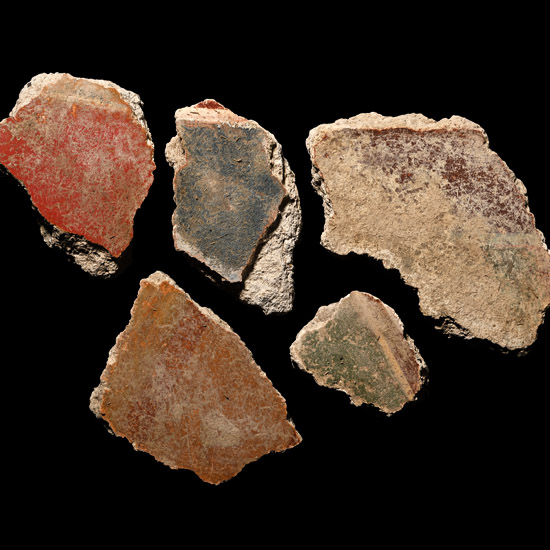
Roman Fresco Wall Plaster Collection
1st century A.D.Sold for (Inc. bp): £312
Fragments of wall plaster with rendered surface painted with mainly Pompeii red, pale blue, brown and white detailing; some with an impression of timber laths to the reverse. 897 grams total, 6.8-16 cm
Acquired in the 19th century. Ex Jeger collection, Switzerland. UK gallery, early 2000s.
These small fragments, for analogies with the fragments of Pompeii, seem to belong to the second style of Roman painting, red panels representing highlight and shadow, decorated with vegetal interlaces. A red grenade fillet probably framed some panels. A fragment shows alternate blue and red colours over a cream background, maybe pertinent to a socle. -
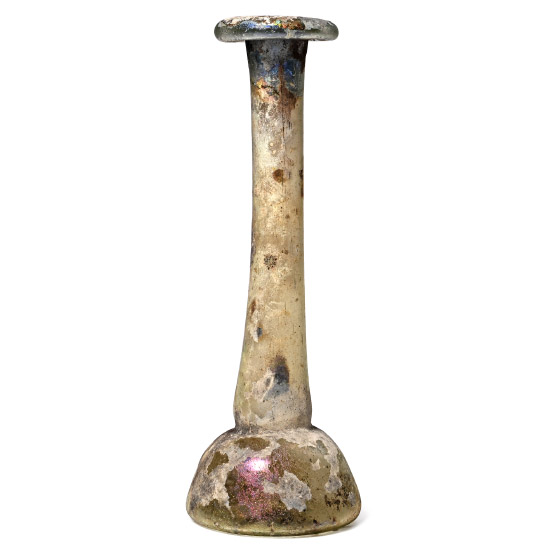
Roman Glass Candlestick Vial
1st-3rd century A.D.Sold for (Inc. bp): £234
With a low conical body and slightly convex wall, dimple base; tall cylindrical neck flaring to a thick everted rim. 24 grams, 14 cm
Acquired in the 1990s from London dealerships and auction houses. From the Lonson collection.
