
Loading, please wait...
LOT 0120
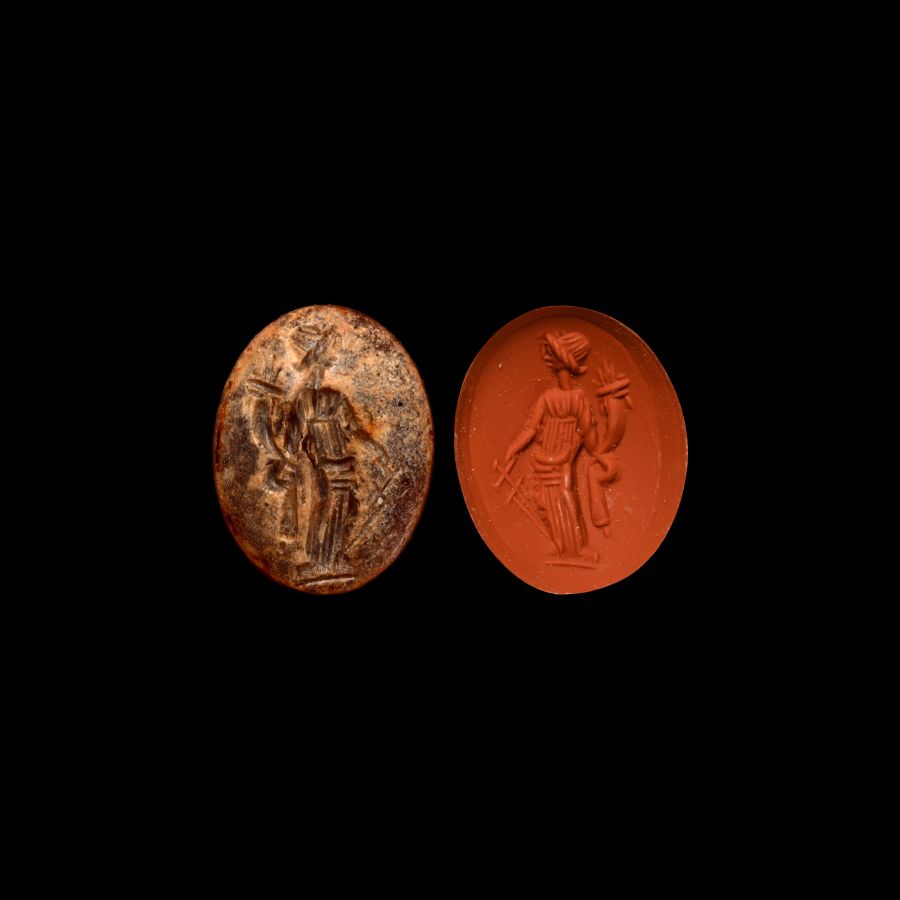
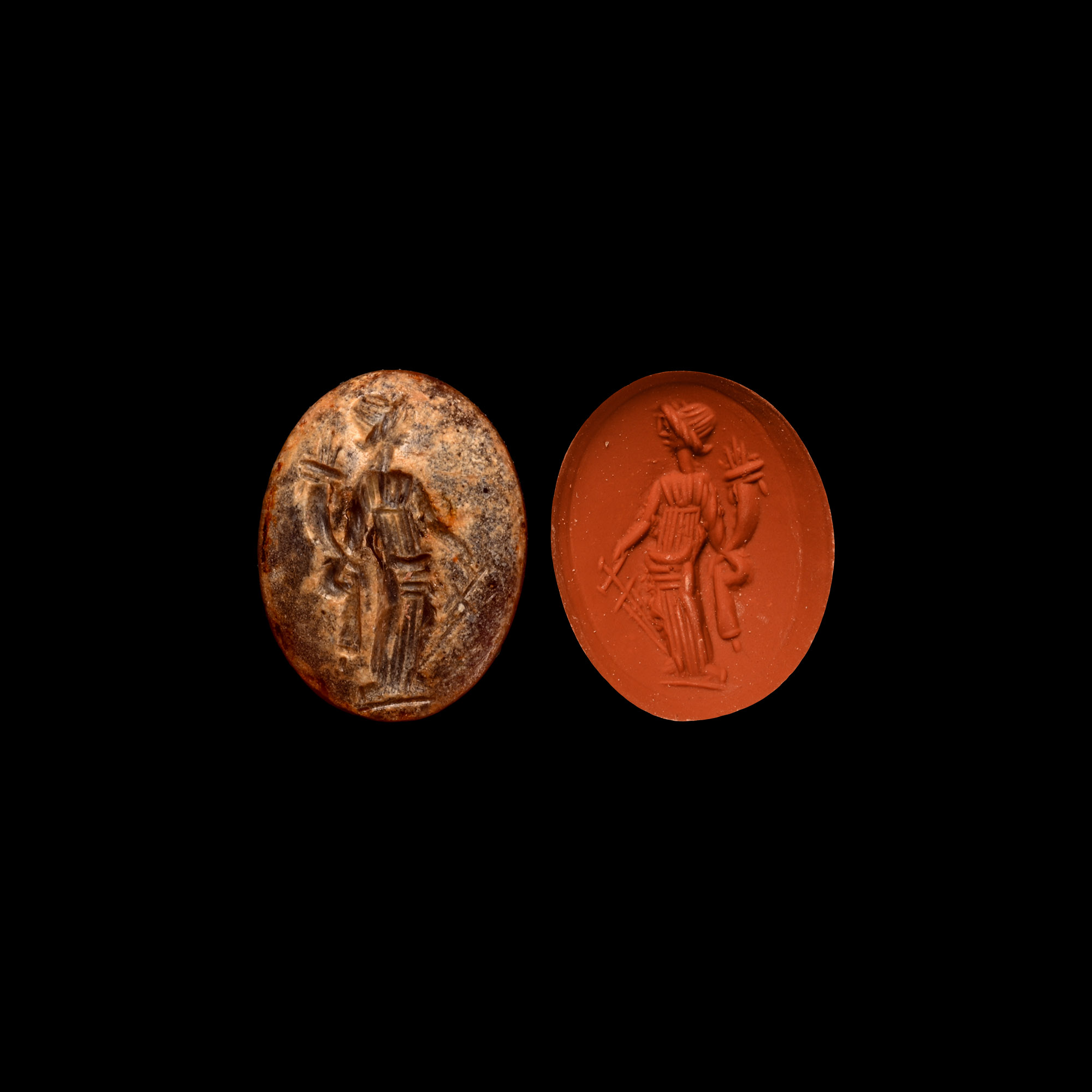
Roman Carnelian Gemstone with Fortuna
1ST-2ND CENTURY A.D.
5/8 in. (1.33 grams, 16 mm).
The oval intaglio depicting the goddess standing, facing right, dressed in peplos, holding a steering-oar and cornucopia.
ProvenanceAcquired in the late 1980s-early 1990s.
Important North West London collection.
Cf. Walters, H.B., Catalogue of Engraved Gems & Cameos, Greek, Etruscan & Roman in the British Museum, London, 1926, no.1749.
FootnotesFortuna was the Roman equivalent of the Greek Tyche, and was the goddess of fate, chance and luck. The cornucopia symbolises the abundance of good luck that people hoped for in worshipping her and the rudder symbolises her steering the destiny of people. In the city of Rome, she had a temple in the Forum Boarium. The goddess had many aspects such as Fortuna Augusta, the luck of the emperor and the Imperial family, Fortuna Publica, the luck of the people, and Fortuna Obsequens, indulgent fortune, amongst many others.
CONDITIONTimeLine Auctions follows a vetting process to ensure the authenticity and legality of all items, reinforcing our commitment to integrity and responsible trading. Each antiquity, antique, and coin lot undergoes thorough examination by a vetting committee of at least ten external specialists, professional trade association members, scientists, and archaeologists: Our Vetting Process
AUCTIONS:
TimeLine is a leading auction house specialising in antiquities, ancient art, collectables, natural history, coins, medals, and books. Our auctions offer museums, collectors, historians, and enthusiasts the opportunity to acquire unique and historically significant pieces.
LOT 0120
Roman Carnelian Gemstone with Fortuna
Estimate £700 - 900€810 - 1,040 (for guidance only)$950 - 1,220 (for guidance only)
-
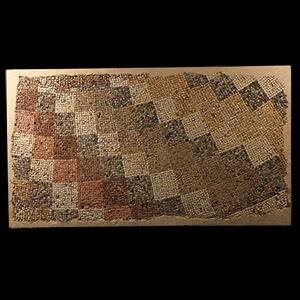
Roman Geometric Floor Mosaic
Circa 1st-4th century A.D.Sold for (Inc. bp): £8,450
Fragment or portion of floor mosaic, showing a composition of alternated patterns of different coloured squares in chequerboard pattern, combined in diagonal rows of light yellow, light blue, off-white, pink, red, light violet, again off-white, light grey, light grey, dark grey, off-white, light yellow (repeated two times) light blue and off-white shadows; on the lower part a red line is edging the composition over an off-white band. 82.5 kg, 156 cm wide including frame
Acquired 1970s-1996. Property of a North American collector. London collection, 2016. This lot has been checked against the Interpol Database of stolen works of art and is accompanied by search certificate number no.11822-207409.
The square-decorated mosaics had a strong presence in the Hispanic provinces, with some 1st century A.D. examples in the houses of Ampurias, up to the late imperial examples of the Villa of Palencia (archaeological site of La Tejada) where the main rooms show wall paintings with geometric, vegetal or decorations imitating marbles, and mosaics with simple geometric decorations alternating with elegant decorative motifs such as swastikas, chequered motifs or ropes, and Solomonic symbols. The chequerboard motif was widespread, and it is visible also in the 3rd-4rd century mosaic of the Roman Villa of Brading or in the house found under the Museum of Lincoln, in Britain. -
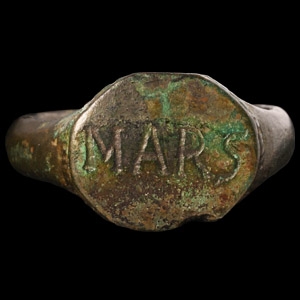
Roman Bronze Ring with Inscription
1st-4th century A.D.Sold for (Inc. bp): £494
The hoop with convex outer face and rounded octagonal bezel, later inscribed 'MARS'. 4.54 grams, 23.00 mm overall, 16.93 mm internal diameter (approximate size British N, USA 6 1/2, Europe 13.72, Japan 13)
Acquired on the German art market around 2000s. From the collection of an EU gentleman living in the UK. -
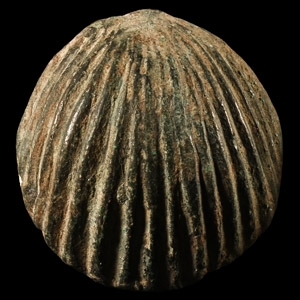
Roman Bronze Scallop Shell Mount
1st-4th century A.D.Sold for (Inc. bp): £104
Modelled in the half-round with naturalistic detailing. 52 grams, 35 mm
‘The Ancient Menagerie Collection’ formerly the property of a Cambridgeshire lady, collected since the 1990s and acquired from auctions and dealers throughout Europe and the USA, now ex London collection.
