
Loading, please wait...
Details
LOT 254552
Roman Carnelian Gemstone with Figue and Animal
2ND-3RD CENTURY A.D.
1/2 in. (0.72 grams, 15 mm).
Ellipsoid type with incuse design to the underside of a crouching figure extending both arms towards a mule, on a baseline; supplied with a museum-quality impression. [No Reserve]
Provenance
From the private collection of a European gentleman (1942-2024), formed since the 1970s.
CONDITIONVETTING:
TimeLine Auctions follows a vetting process to ensure the authenticity and legality of all items, reinforcing our commitment to integrity and responsible trading. Each antiquity, antique, and coin lot undergoes thorough examination by a vetting committee of at least ten external specialists, professional trade association members, scientists, and archaeologists: Our Vetting Process
AUCTIONS:
TimeLine is a leading auction house specialising in antiquities, ancient art, collectables, natural history, coins, medals, and books. Our auctions offer museums, collectors, historians, and enthusiasts the opportunity to acquire unique and historically significant pieces.
LOT 254552
Roman Carnelian Gemstone with Figue and Animal
Estimate £300 - 400€350 - 460 (for guidance only)$410 - 540 (for guidance only)
Opening Bid
£5 (EUR 6; USD 7) +BP*
RELATED LOTS
-
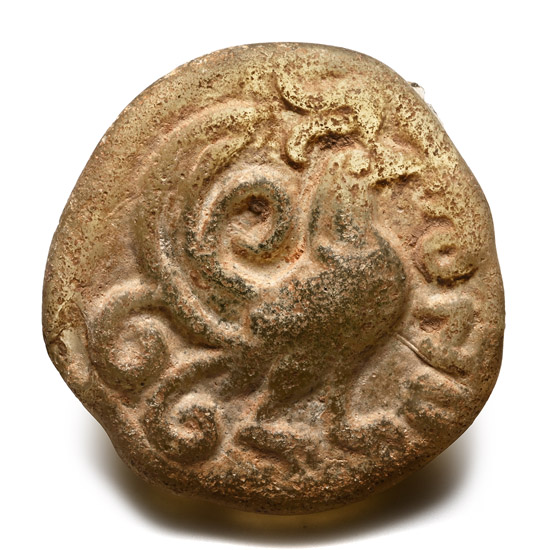
Eastern Roman Glass Roundel with Peacock
Circa 4th-6th century A.D.Estimate: £60 - 80 (+bp*)
Opening Bid: £5
Pale yellow roundel featuring a standing peacock with curling tail feathers, three symbols before. 13.7 grams, 36 mm
From the private collection of a European gentleman (1942-2024), formed since the 1970s. -
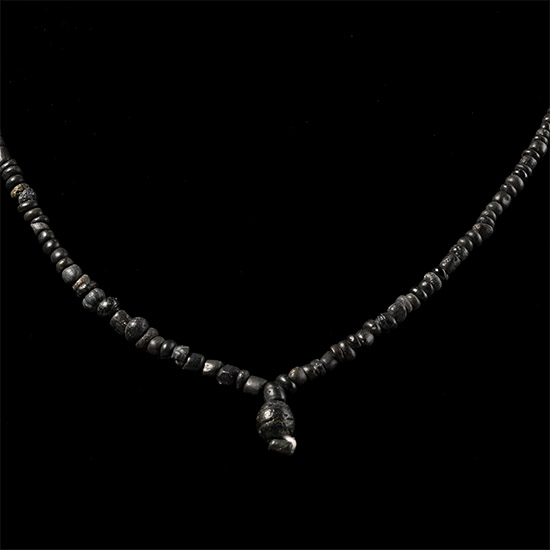
Roman Black Glass Bead Necklace String
1st-4th century A.D. and laterEstimate: £50 - 70 (+bp*)
Opening Bid: £5
Composed mainly of oblate beads with a larger bead as a central feature, restrung. 8.1 grams, 44.7 cm
Acquired in the 1990s. Ex London, UK, collection. -
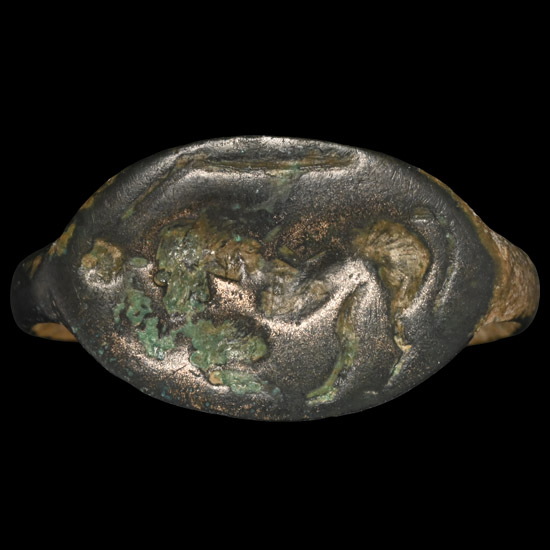
Roman Bronze Ring with Lion
1st-2nd century A.D.Estimate: £30 - 40 (+bp*)
Opening Bid: £5
Featuring a D-section hoop and a lentoid bezel with a standing lion, possibly with a small prey animal in its jaws. 4.57 grams, 23.72 mm overall, 19.59 x 17.86 mm internal diameter (approximate size British R, USA 8 1/2, Europe 18 3/4, Japan 18)
From the private collection of a European gentleman (1942-2024), formed since the 1970s.
