
Loading, please wait...


LOT 1022
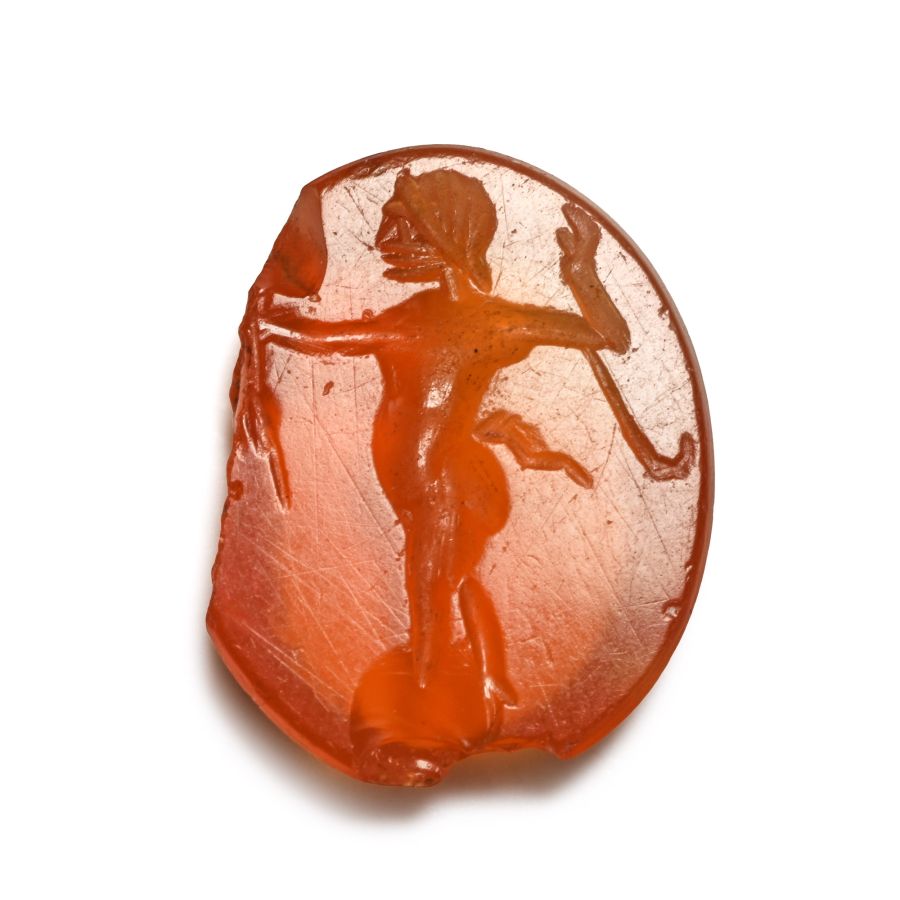
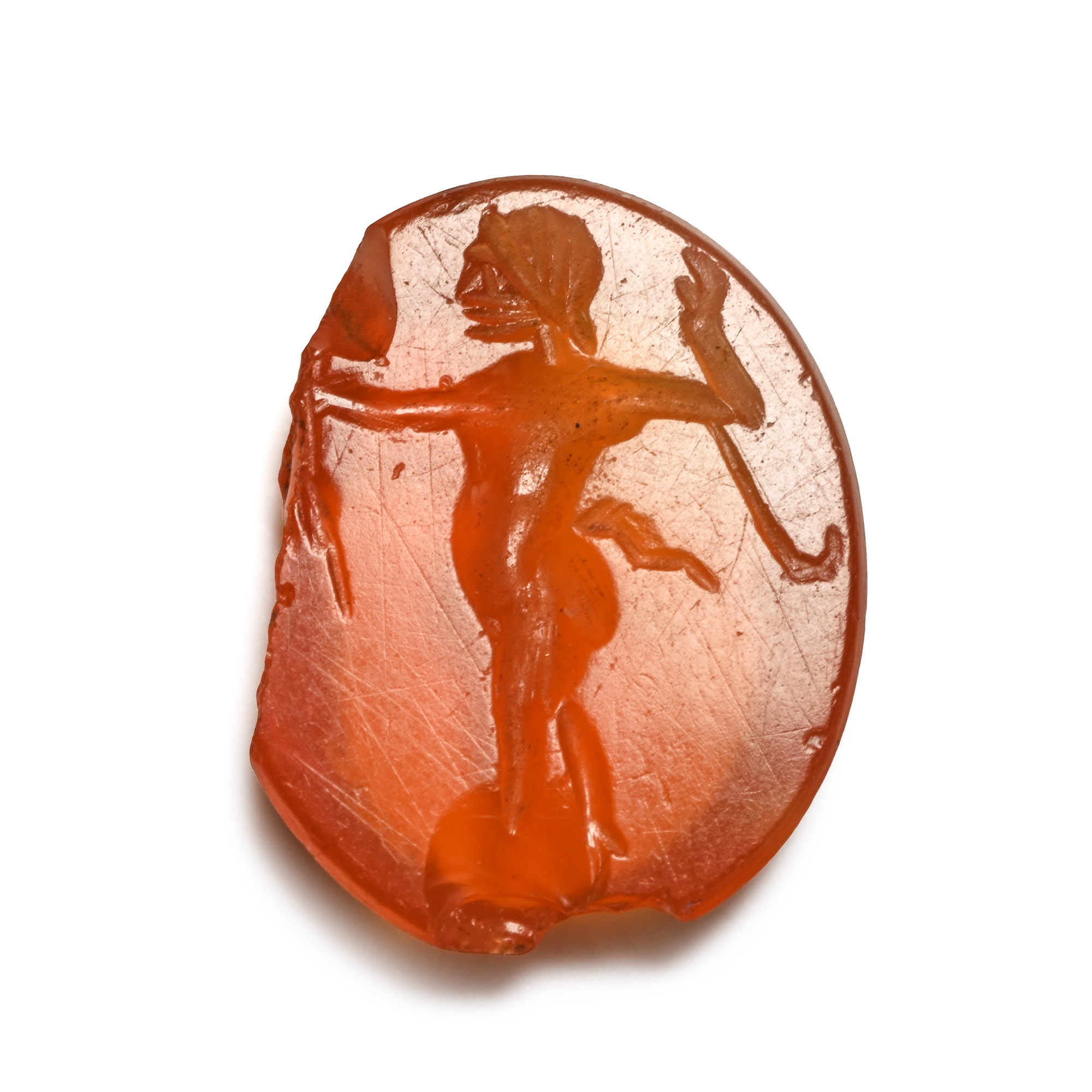
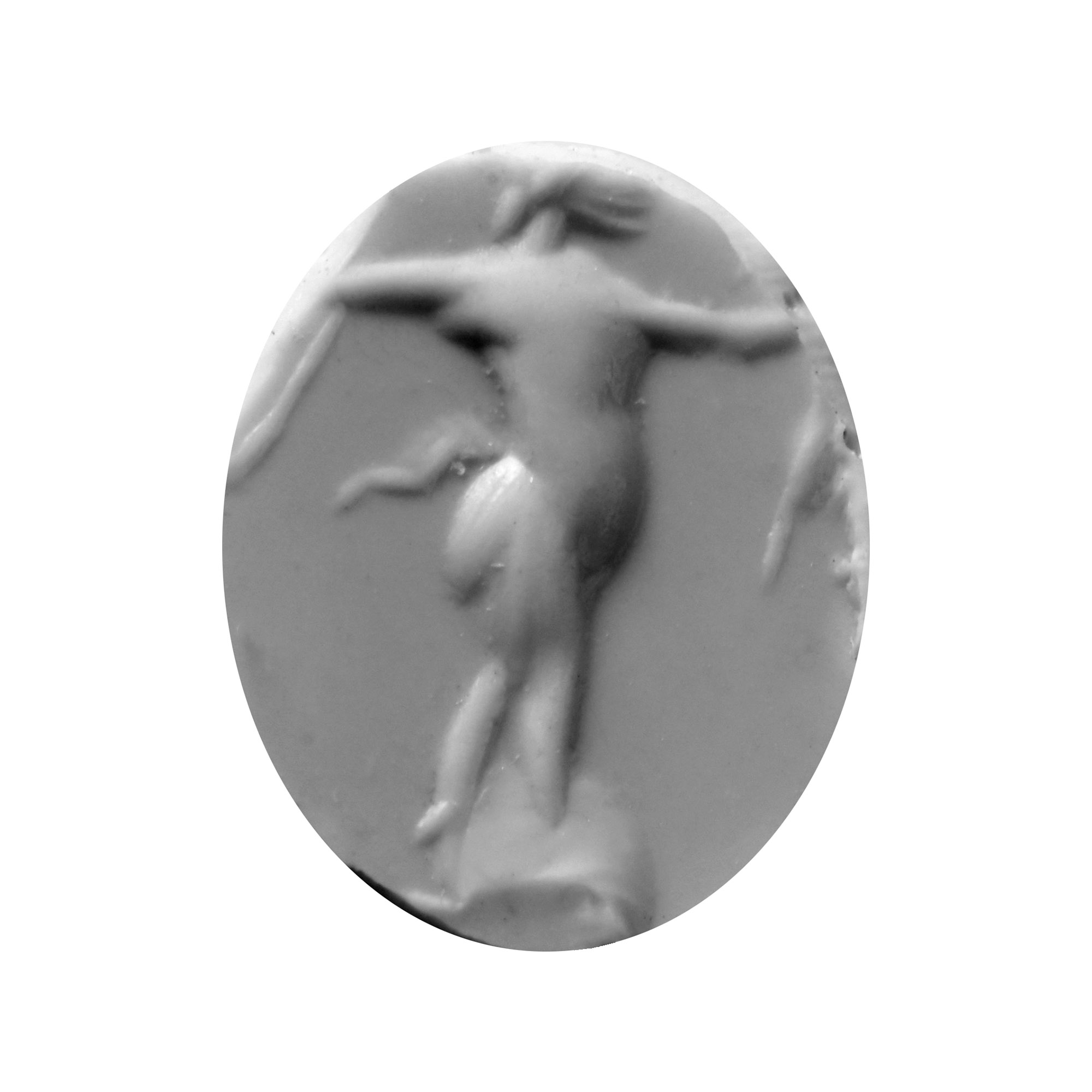
Roman Carnelian Gemstone with Faun
2ND-3RD CENTURY A.D.
3/8 in. (0.45 grams, 11 mm).
Ellipsoid type with incuse design of a faun advancing with small dorsal tail and garlands round the wrists; supplied with a museum-quality impression. [No Reserve]
ProvenanceFrom the private collection of a European gentleman (1942-2024), formed since the 1970s.
CONDITIONTimeLine Auctions follows a vetting process to ensure the authenticity and legality of all items, reinforcing our commitment to integrity and responsible trading. Each antiquity, antique, and coin lot undergoes thorough examination by a vetting committee of at least ten external specialists, professional trade association members, scientists, and archaeologists: Our Vetting Process
AUCTIONS:
TimeLine is a leading auction house specialising in antiquities, ancient art, collectables, natural history, coins, medals, and books. Our auctions offer museums, collectors, historians, and enthusiasts the opportunity to acquire unique and historically significant pieces.
-
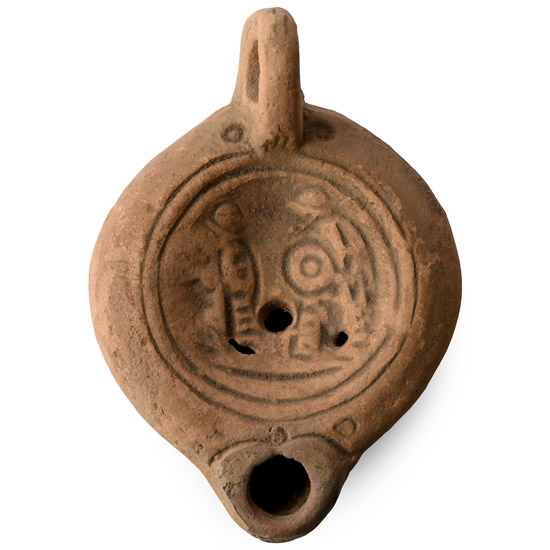
Roman Terracotta Oil Lamp with Gladiators
Circa 2nd century A.D.Sold for (Inc. bp): £143
The discus with two opposing gladiators, one holding a round shield, loop handle to the rear. 47 grams, 98 mm
From the collection of a Cambridge, UK, gentleman, by direct descent from his father, who acquired the items in London in circa 1960. -
.jpg)
Roman Jasper Gemstone with Mithraic Tauroctony in Gold Ring
3rd century A.D.Sold for (Inc. bp): £3,900
An oval intaglio depicting Mithras, a snake and a dog killing a bull, six stars on the field; set in a later gold ring; supplied with a museum-quality impression. 9.93 grams, 23.61 mm overall, 18.88 mm internal diameter (approximate size British R 1/2, USA 8 3/4, Europe 19.38, Japan 18)
English private collection. Reportedly acquired several decades ago in Covent Garden, London, still mounted in its original, heavily corroded iron ring; removed from this setting and remounted in a gold ring in recent years by the owner, a commercial airline pilot. This lot has been checked against the Interpol Database of stolen works of art and is accompanied by search certificate number no.13325-28218.
The interpretation of the Mithraic tauroctony has long been the subject of scholarly debate. The Belgian historian of religions and orientalist Franz Cumont (1868–1947) was the first to propose that the scene should be understood as an astral allegory rather than a purely mythological episode. More recently, David Ulansey developed this hypothesis by interpreting the tauroctony as a symbolic representation of the precession of the equinoxes. In his reading, Mithras—identified with the constellation Perseus—embodies the supreme cosmic power capable of moving the sphere of the fixed stars, while the slaying of the bull symbolises the transition from one cosmic age to another, expressing Mithras' dominion over the celestial order itself. -
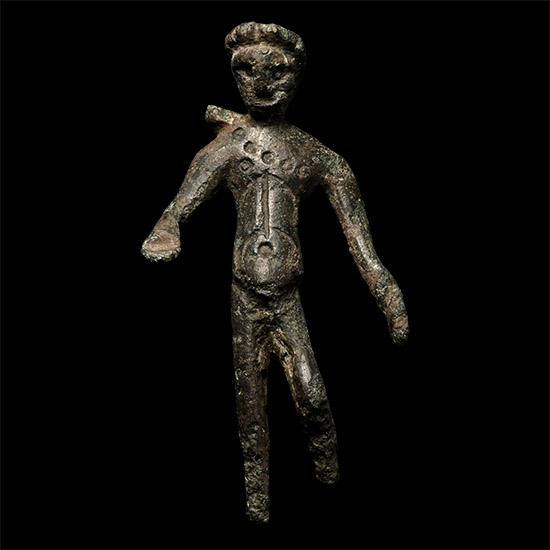
Romano-Celtic Bronze Statuette of the God Apollo
2nd-4th century A.D.Sold for (Inc. bp): £286
Depicted nude and wearing a quiver on his back, the strap for the quiver indicated by stamped roundels, detailing on the abdomen. 29.7 grams, 66 mm
From the private collection of a European gentleman (1942-2024), formed since the 1970s.
