
Loading, please wait...
LOT 0674
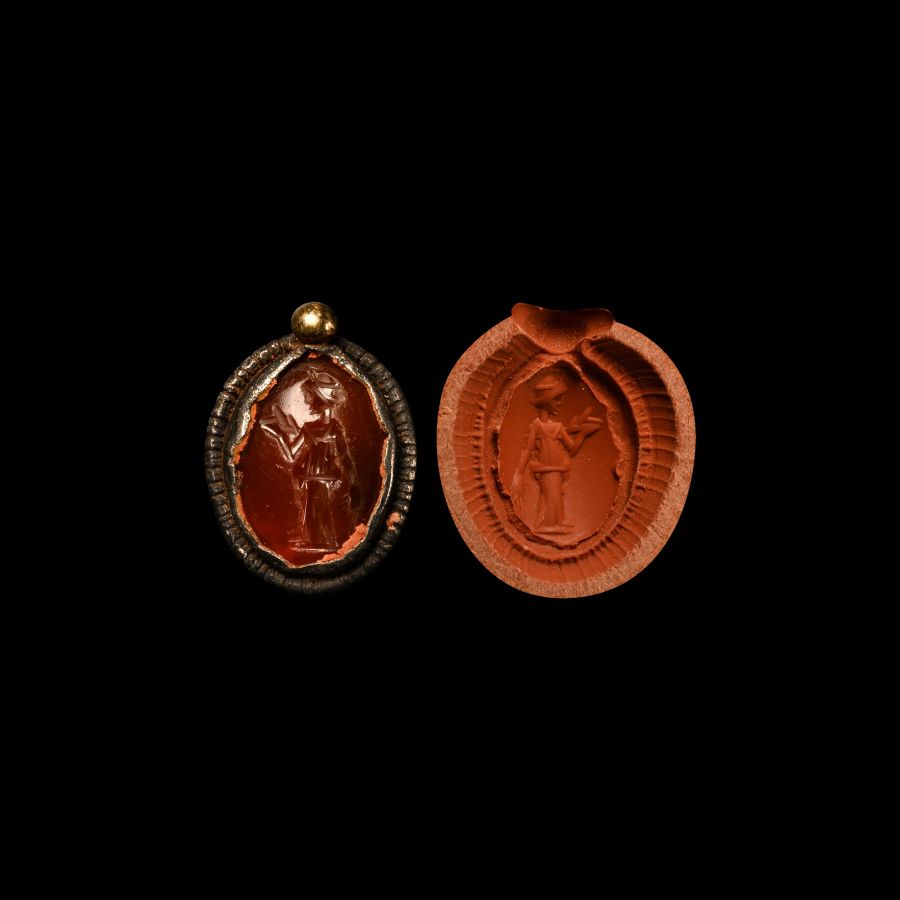
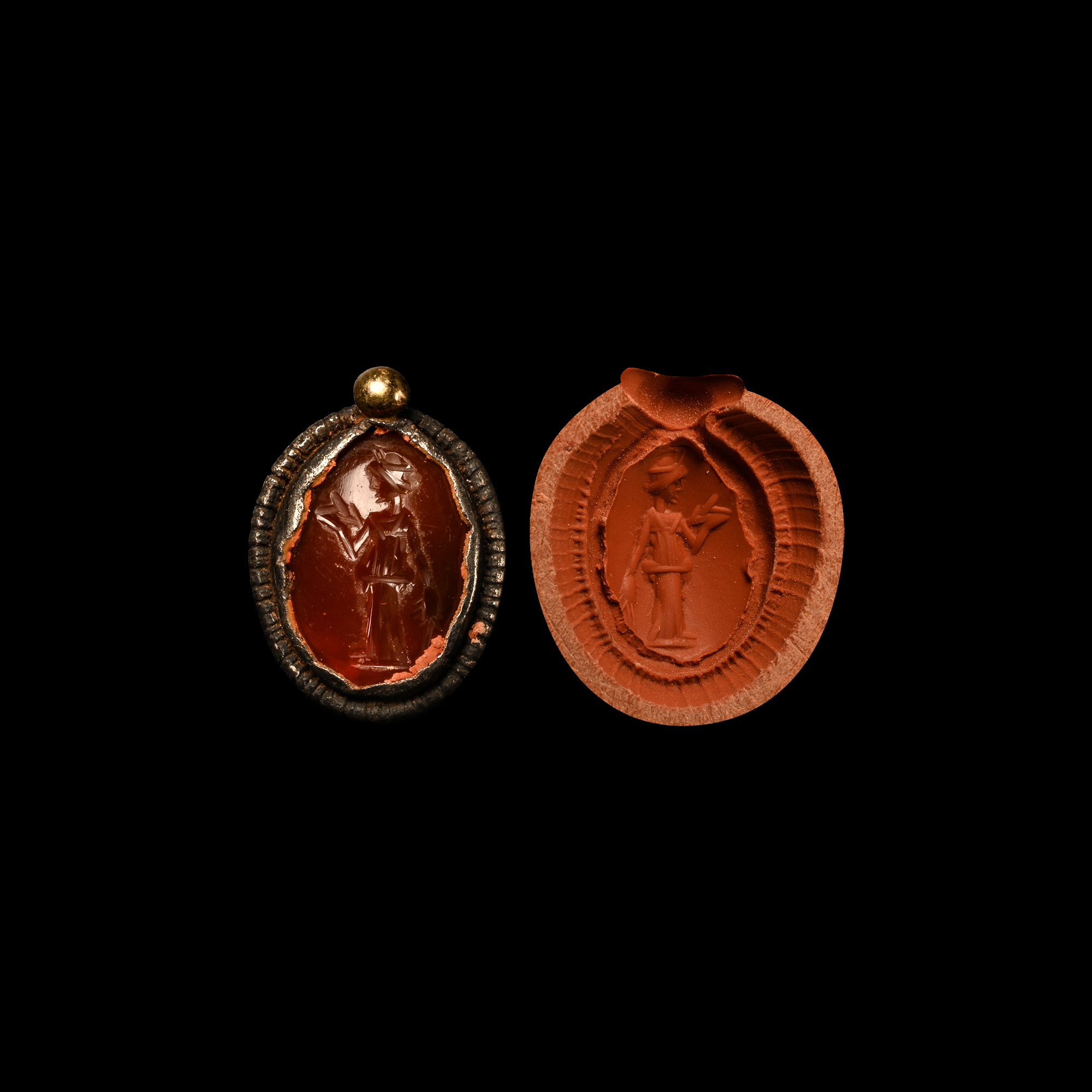
Roman Carnelian Gemstone with Demeter Holding Ear of Corn
1ST-2ND CENTURY A.D.
3/4 in. (2.21 grams, 19 mm).
Set in a silver mount with beaded edge; the intaglio depicting Demeter draped, advancing left and holding ear of corns in her right hand.
ProvenanceAcquired in the late 1980s-early 1990s.
Important North West London collection.
Cf. Walters, H.B., Catalogue of Engraved Gems & Cameos, Greek, Etruscan & Roman in the British Museum, London, 1926, no.3342, for similar.
FootnotesDemeter and Hecate were linked to the afterlife cult, so it is possible that the ring to which the bezel belonged was a funerary gift. Demeter (Ceres for the Romans) was the Greek goddess of the harvest, the cycle of life and death and sacred law.
CONDITIONTimeLine Auctions follows a vetting process to ensure the authenticity and legality of all items, reinforcing our commitment to integrity and responsible trading. Each antiquity, antique, and coin lot undergoes thorough examination by a vetting committee of at least ten external specialists, professional trade association members, scientists, and archaeologists: Our Vetting Process
AUCTIONS:
TimeLine is a leading auction house specialising in antiquities, ancient art, collectables, natural history, coins, medals, and books. Our auctions offer museums, collectors, historians, and enthusiasts the opportunity to acquire unique and historically significant pieces.
LOT 0674
Roman Carnelian Gemstone with Demeter Holding Ear of Corn
Estimate £500 - 700€580 - 810 (for guidance only)$680 - 950 (for guidance only)
-
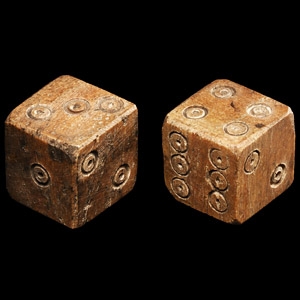
Roman Bone Dice Pair
1st-4th century A.D.Sold for (Inc. bp): £546
Each with ring-and-dot spots arranged: 1:6; 2:5; 3:4; 1:6; 2:5; 3:4. 8.85 grams total, 13-14 mm
Acquired on the German art market around 2000s. From the collection of an EU gentleman living in the UK. -
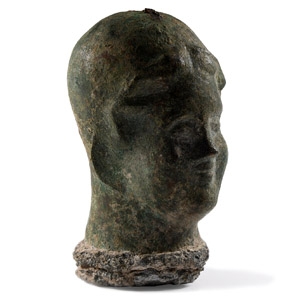
Large Eastern Roman Bronze Bust-Shaped Steelyard Weight
Circa 3rd-4th century A.D. or laterEstimate: £800 - 1,000 (+bp*)
Opening Bid: £400
Modelled in the round as a facing female with head turned slightly right, with semi-naturalistic facial detailing and dressed hair; lead-filled. 4.2 kg, 13.5 cm high
Acquired 1990s-early 2000s. East Anglian private collection.
Steelyard weights in the form of human or deities faces were not uncommon in the Roman period (see SWYOR-DA4426, OXON-4391B5, HAMP-BD4D67 and NARC-7A7B81 on the PAS). These were generally filled with lead and had iron or copper suspension loops projecting from the top of the head. -
.jpg)
Roman Bronze Head of a Dolphin
1st-4th century A.D.Estimate: £200 - 300 (+bp*)
Opening Bid: £111
Modelled in the round, solid with stylised high-quality detailing. 98 grams, 60 mm
‘The Ancient Menagerie Collection’ formerly the property of a Cambridgeshire lady, collected since the 1990s and acquired from auctions and dealers throughout Europe and the USA, now ex London collection.
