
Loading, please wait...
LOT 0180
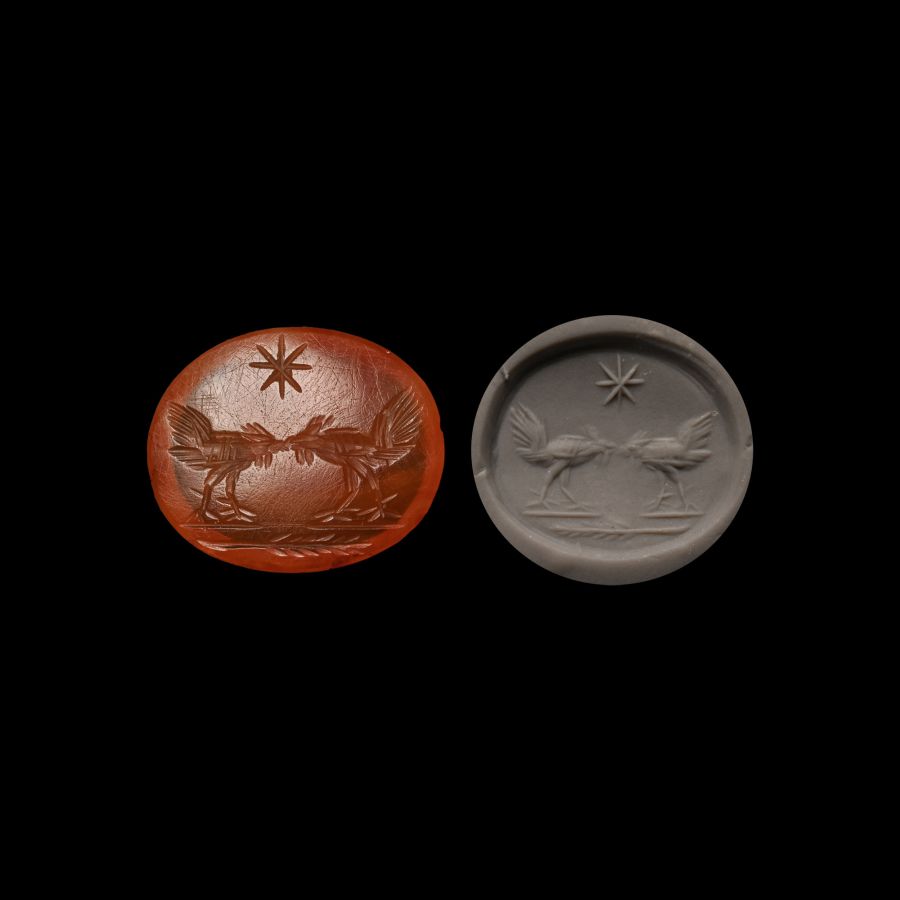
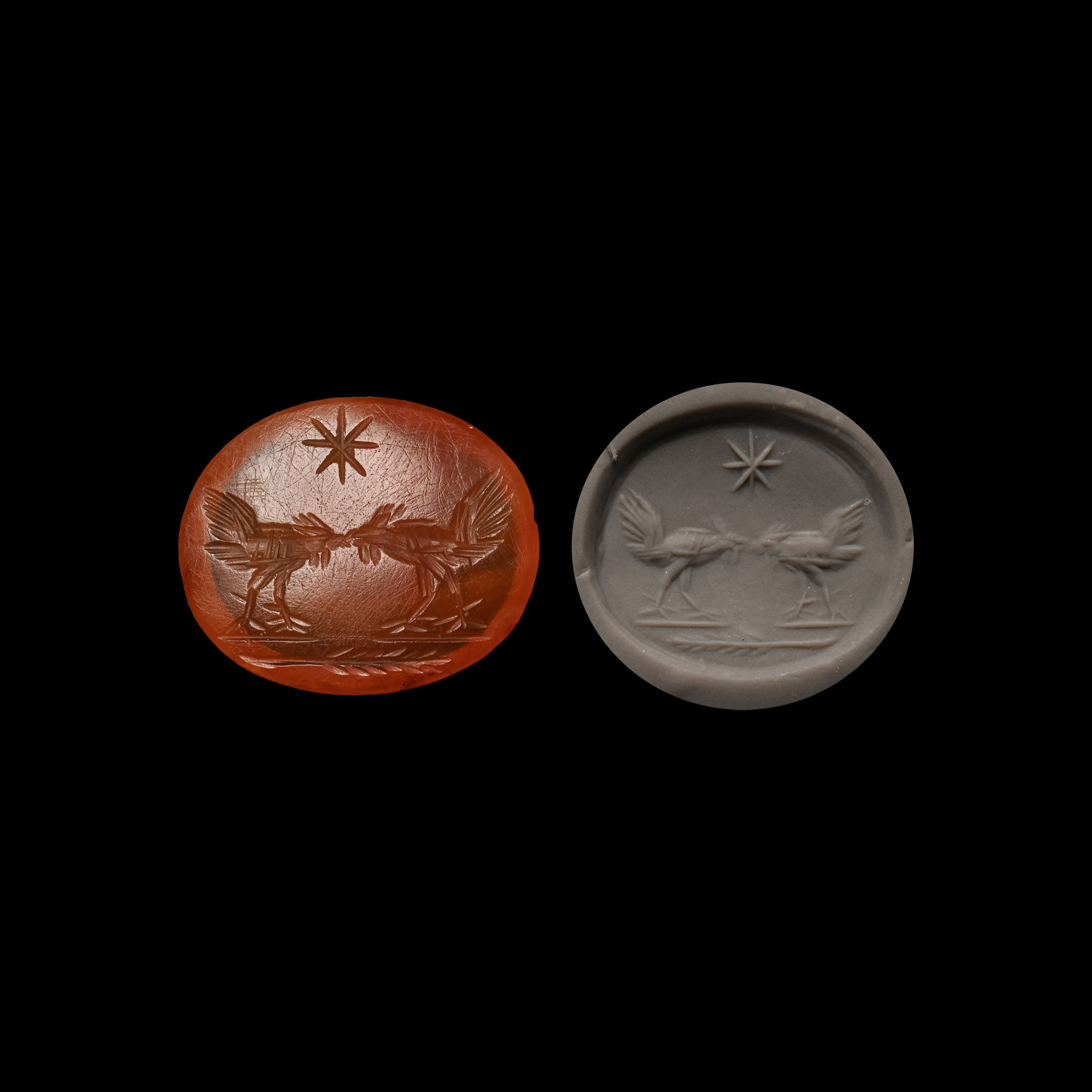
Roman Carnelian Gemstone with Cock Fight
CIRCA 2ND CENTURY A.D.
5/8 in. (1.11 grams, 16 mm).
With two cockerels fighting beneath a starburst, all on a baseline; supplied with a museum-quality impression.
ProvenanceFrom the collection of a Swiss gentleman formed in Europe from 1970-1980s; thence by descent from the family in London.
CONDITIONTimeLine Auctions follows a vetting process to ensure the authenticity and legality of all items, reinforcing our commitment to integrity and responsible trading. Each antiquity, antique, and coin lot undergoes thorough examination by a vetting committee of at least ten external specialists, professional trade association members, scientists, and archaeologists: Our Vetting Process
AUCTIONS:
TimeLine is a leading auction house specialising in antiquities, ancient art, collectables, natural history, coins, medals, and books. Our auctions offer museums, collectors, historians, and enthusiasts the opportunity to acquire unique and historically significant pieces.
-
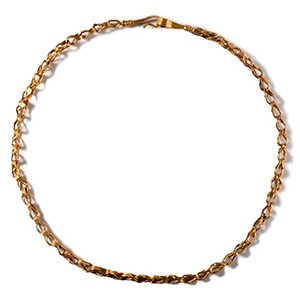
Roman Gold Linked Chain
1st-2nd century A.D.Estimate: £15,000 - 20,000 (+bp*)
Opening Bid: £7,500
Loop-in-loop chain, each link formed from two strands of thick gold wire; thick hook with the end coiled about the shank; eye with ribbed detailing and coiled end; housed in a custom-made display case. 28.15 grams, 46.5 cm long
Excellent condition
Acquired in the late 1980s-early 1990s. Important North West London collection. Accompanied by an academic report by Dr Raffaele D’Amato. This lot has been checked against the Interpol Database of stolen works of art and is accompanied by search certificate no.11937-210478.
Among the necklaces manufactured from gold mesh (hormoi or chains), there are two recognisable fundamental types: the first, shorter and with endings suitable for being fixed on fabric, was used to adorn clothes, hooked at shoulder height. The second type (like our specimen) was worn around the neck and was generally fitted with a simple hook-and-eyelet closure. -
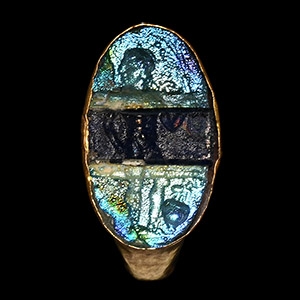
Roman Gold Ring with Banded Glass
1st century B.C.Sold for (Inc. bp): £910
Hollow-formed with ellipsoid bezel, inset panel of banded iridescent glass bearing an image of a nude Greek hero with long hair, the head turned back, carrying branches, an amphora or jug at his feet. 1.18 grams, 18.29 mm overall, 15.66 mm internal diameter (approximate size British G, USA 3 1/4, Europe 4.92, Japan 4)
Acquired early 1990s. Ex private American collection; thence by descent. Private Swiss collection since 1998.
The inset glass bezel is probably archaic Greek or Etruscan and reused in Roman times. The traits of the man point to Archaic Hellenic features, especially the oval eyes and the long hair, and the pointed beard reminiscence of the Achaean heroes. -
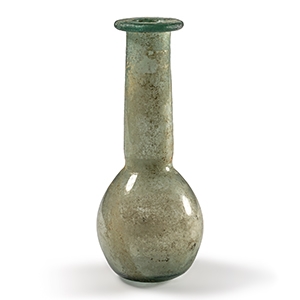
Roman Tall Pale Blue Glass Vial
3rd century A.D.Sold for (Inc. bp): £117
Bulbous with flat base, tall stem neck, splayed rim with an in-folded lip. 46 grams, 12.7 cm high
Acquired 1980-2015. Ex Abelita family collection.
During the early Roman period the glass-making techniques used by the Greeks were continued. Much of the glass was buried and as a result acquired an attractive lustrous patination. Roman glass became a medium for the promotion of the emperor and imperial propaganda, as well as having utilitarian purposes. Glass blowing, a new technique, meant that quantities of identical bottles could be produced.
