
Loading, please wait...
LOT 0950
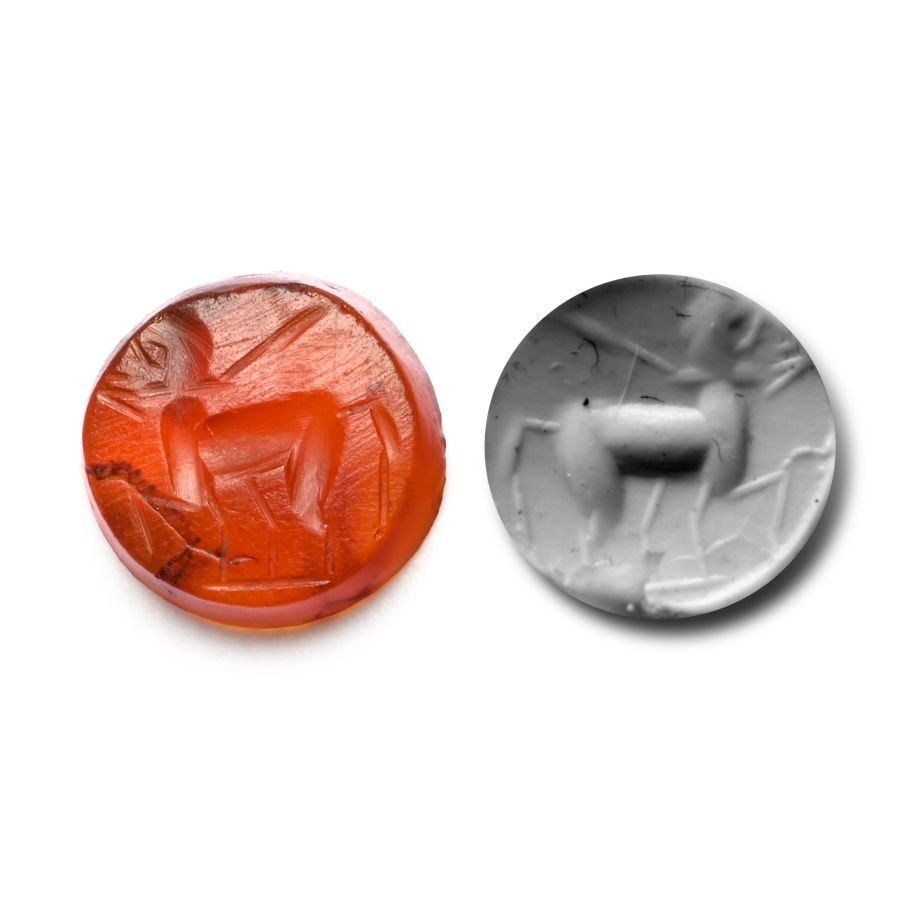
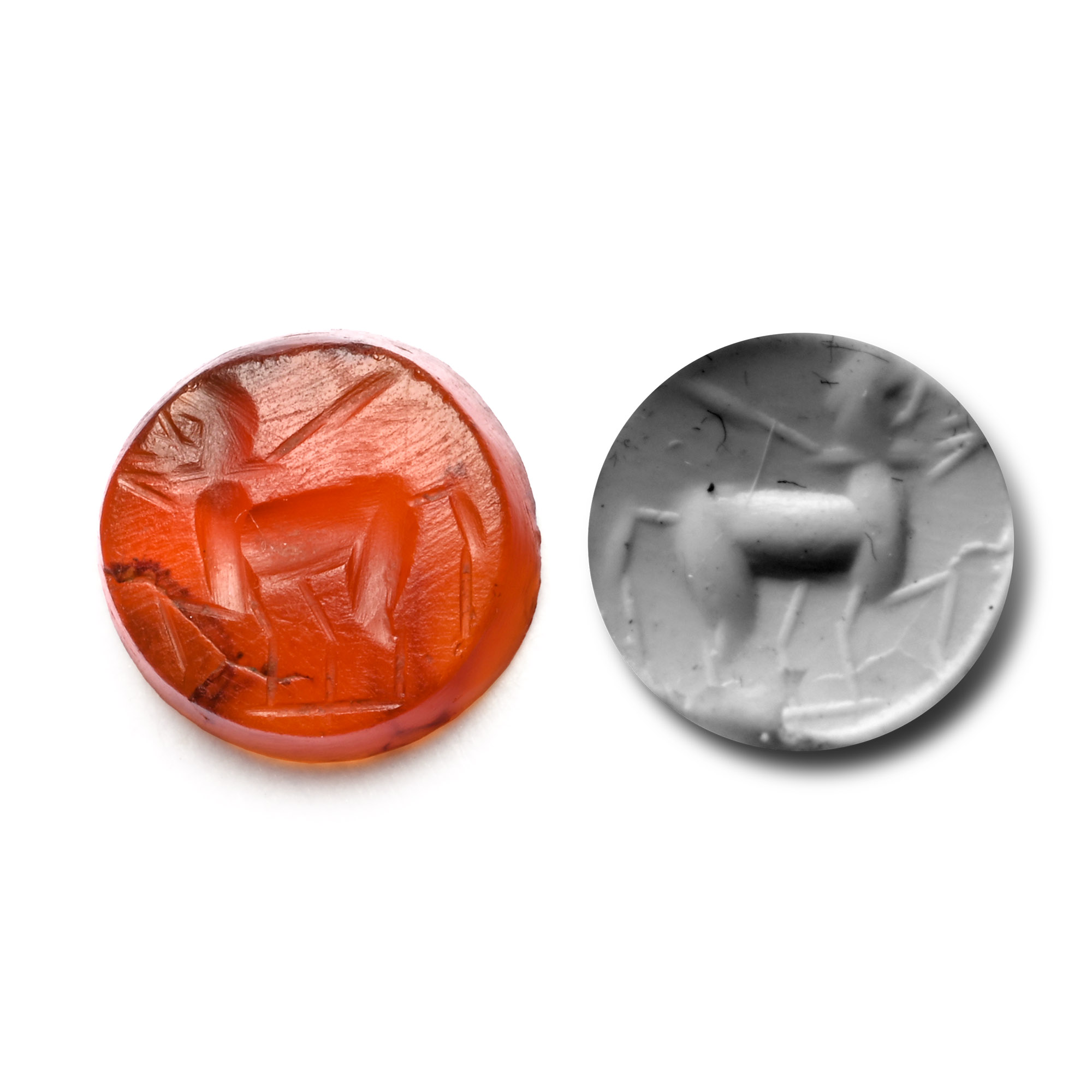
Roman Carnelian Gemstone with Centaur
2ND-3RD CENTURY A.D.
3/8 in. (0.60 grams, 10.03 mm).
With intaglio centaur advancing with staff; supplied with a museum-quality impression. [No Reserve]
ProvenanceFrom the private collection of a European gentleman (1942-2024), formed since the 1970s.
CONDITIONTimeLine Auctions follows a vetting process to ensure the authenticity and legality of all items, reinforcing our commitment to integrity and responsible trading. Each antiquity, antique, and coin lot undergoes thorough examination by a vetting committee of at least ten external specialists, professional trade association members, scientists, and archaeologists: Our Vetting Process
AUCTIONS:
TimeLine is a leading auction house specialising in antiquities, ancient art, collectables, natural history, coins, medals, and books. Our auctions offer museums, collectors, historians, and enthusiasts the opportunity to acquire unique and historically significant pieces.
-
.jpg)
Roman Gold Ring with Sardonyx Gemstone
1st-2nd century A.D.Estimate: £2,000 - 3,000 (‡+bp*)
Opening Bid: £1,000
Hollow-formed shank with inset cabochon, flattened top. 6.41 grams, 27.10 mm overall, 18.42 x 15.45 mm internal diameter (approximate size British M, USA 6, Europe 12.46, Japan 12)
Private collection, acquired on the German art market in 1993; thence by descent. This lot has been checked against the Interpol Database of stolen works of art and is accompanied by search certificate number no.13182-249298.
The heavy proportions of the ring can date it to the late 1st century A.D. The gem could be contemporary, considering the wide use of the sardonyx in the Roman rings of the early two centuries of the Empire. -
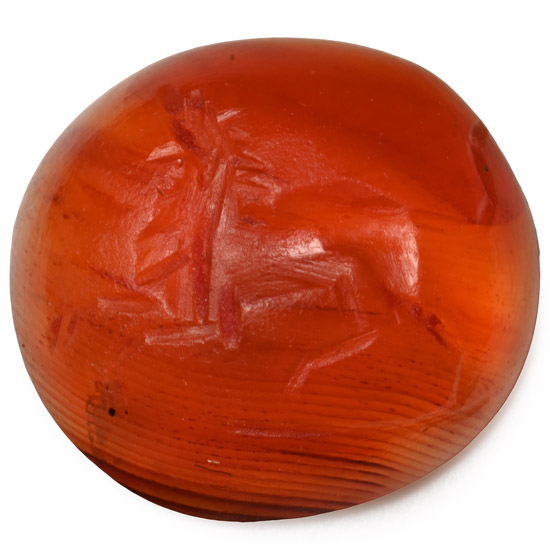
Roman Carnelian Gemstone with Lion
2nd-3rd century A.D.Sold for (Inc. bp): £78
With intaglio lion resting with forepaws extended. 0.44 grams, 10.16 mm
From the private collection of a European gentleman (1942-2024), formed since the 1970s. -
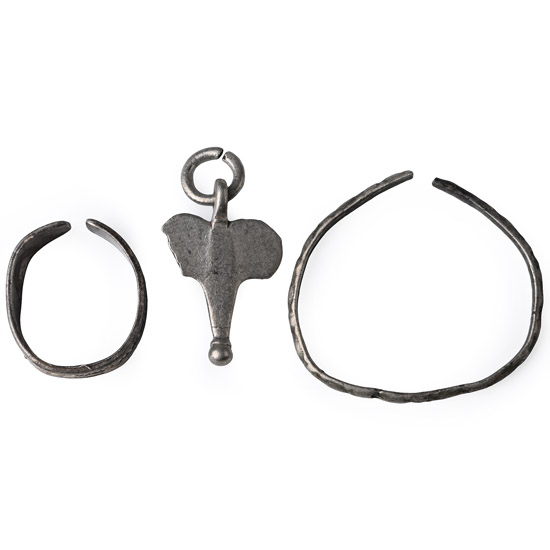
Roman Silver Artefact Group
1st-4th century A.D.Sold for (Inc. bp): £78
Comprising: a penannular child's bracelet; a penannular ring with braided decoration; a lobed pendant with knop finial. 8.1 grams total, 21-34 mm
Ex German art market, 2000s. Acquired from an EU collector living in London. From the collection of a Surrey, UK, gentleman.
