
Loading, please wait...
_900x900.jpg "Roman Carnelian Gemstone with Bearded Mask")
_200x200.jpg "Roman Carnelian Gemstone with Bearded Mask")
.jpg "Roman Carnelian Gemstone with Bearded Mask")
LOT 1023
Roman Carnelian Gemstone with Bearded Mask
2ND-3RD CENTURY A.D.
1/2 in. (0.36 grams, 13.48 mm).
With intaglio bearded facing mask forming the body of an insect; supplied with a museum-quality impression. [No Reserve]
ProvenanceFrom the private collection of a European gentleman (1942-2024), formed since the 1970s.
CONDITIONTimeLine Auctions follows a vetting process to ensure the authenticity and legality of all items, reinforcing our commitment to integrity and responsible trading. Each antiquity, antique, and coin lot undergoes thorough examination by a vetting committee of at least ten external specialists, professional trade association members, scientists, and archaeologists: Our Vetting Process
AUCTIONS:
TimeLine is a leading auction house specialising in antiquities, ancient art, collectables, natural history, coins, medals, and books. Our auctions offer museums, collectors, historians, and enthusiasts the opportunity to acquire unique and historically significant pieces.
-
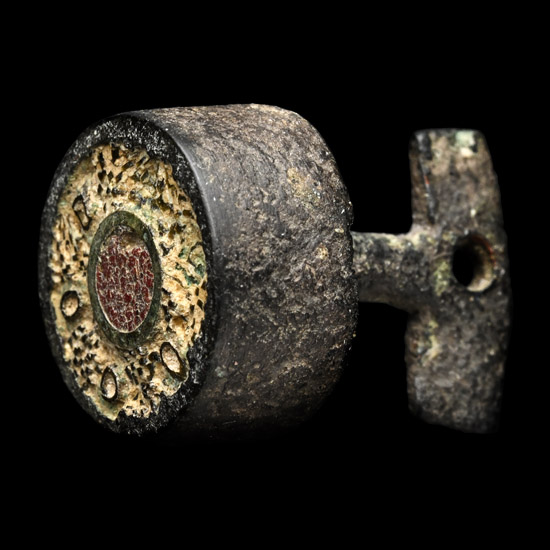
Roman Enamelled Bronze Cloak Fastener
1st-2nd century A.D.Sold for (Inc. bp): £130
Comprising a T-shaped hook and drum-shaped body with central enamelled roundel and surrounding annular cell with reserved pellets. 7.63 grams, 22.8 mm
From the private collection of a European gentleman (1942-2024), formed since the 1970s. -
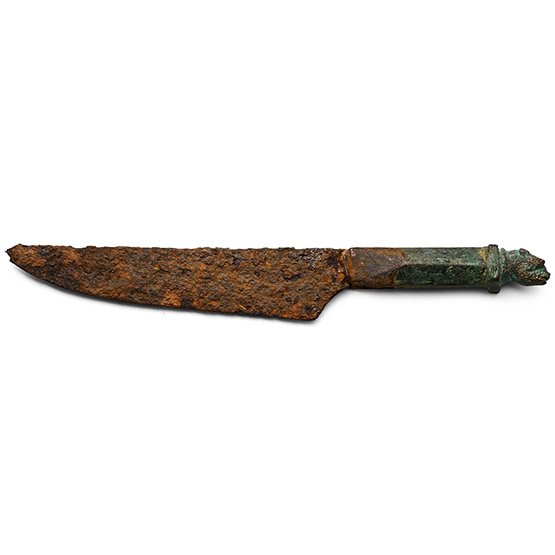
Roman Iron Knife with Bronze Dog's Head Handle
1st-4th century A.D.Sold for (Inc. bp): £260
Comprising a single-edged iron blade with a short facetted bronze handle, the pommel formed as a stylised dog head. 36.2 grams, 14.1 cm
Ex German art market, 2000s. Acquired from an EU collector living in London. From the collection of a Surrey, UK, gentleman. -
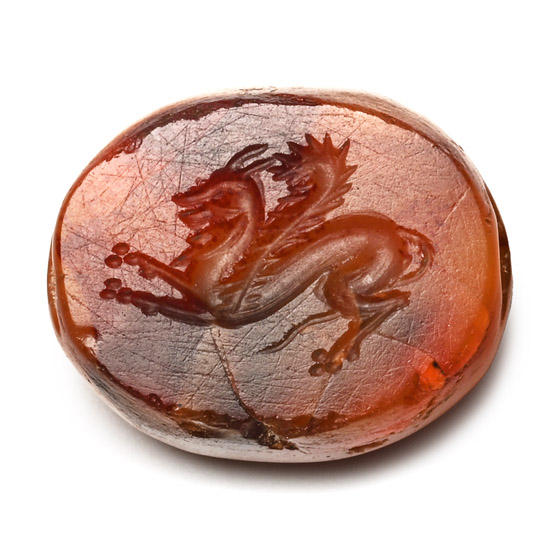
Roman Carnelian Gemstone with Chimera
2nd-3rd century A.D.Sold for (Inc. bp): £715
With intaglio winged beast, forelegs extended; supplied with a museum-quality impression. 1.57 grams, 13.84 mm
From the private collection of a European gentleman (1942-2024), formed since the 1970s.
