
Loading, please wait...
LOT 0167
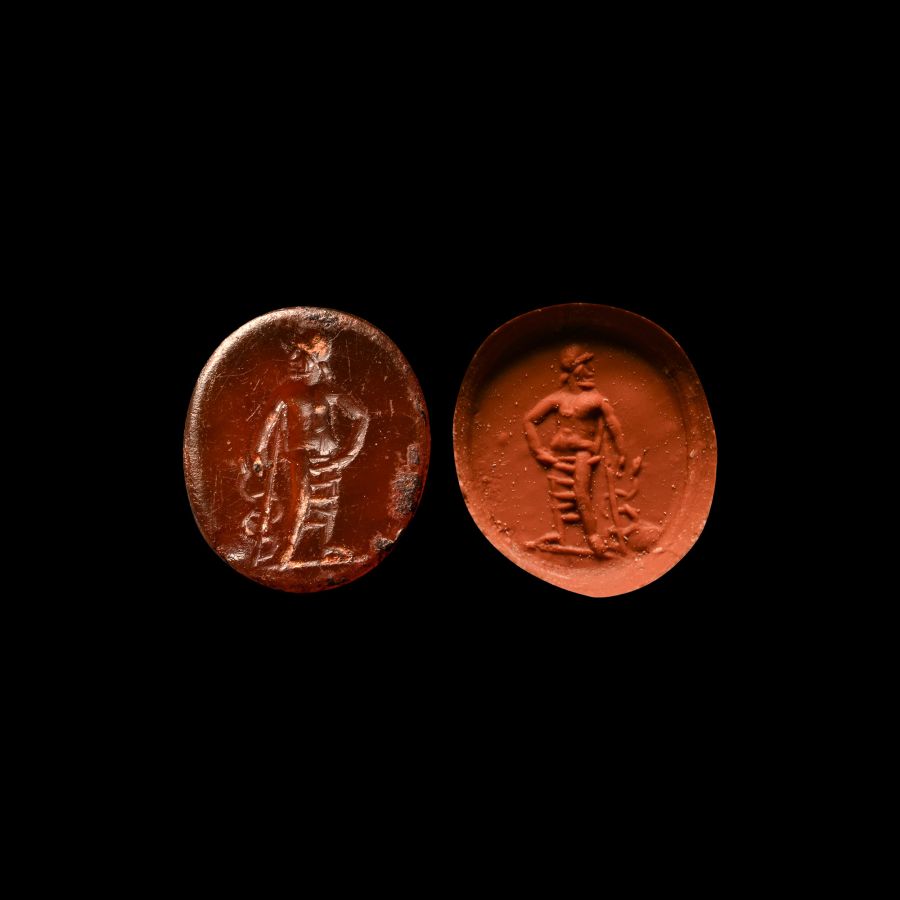
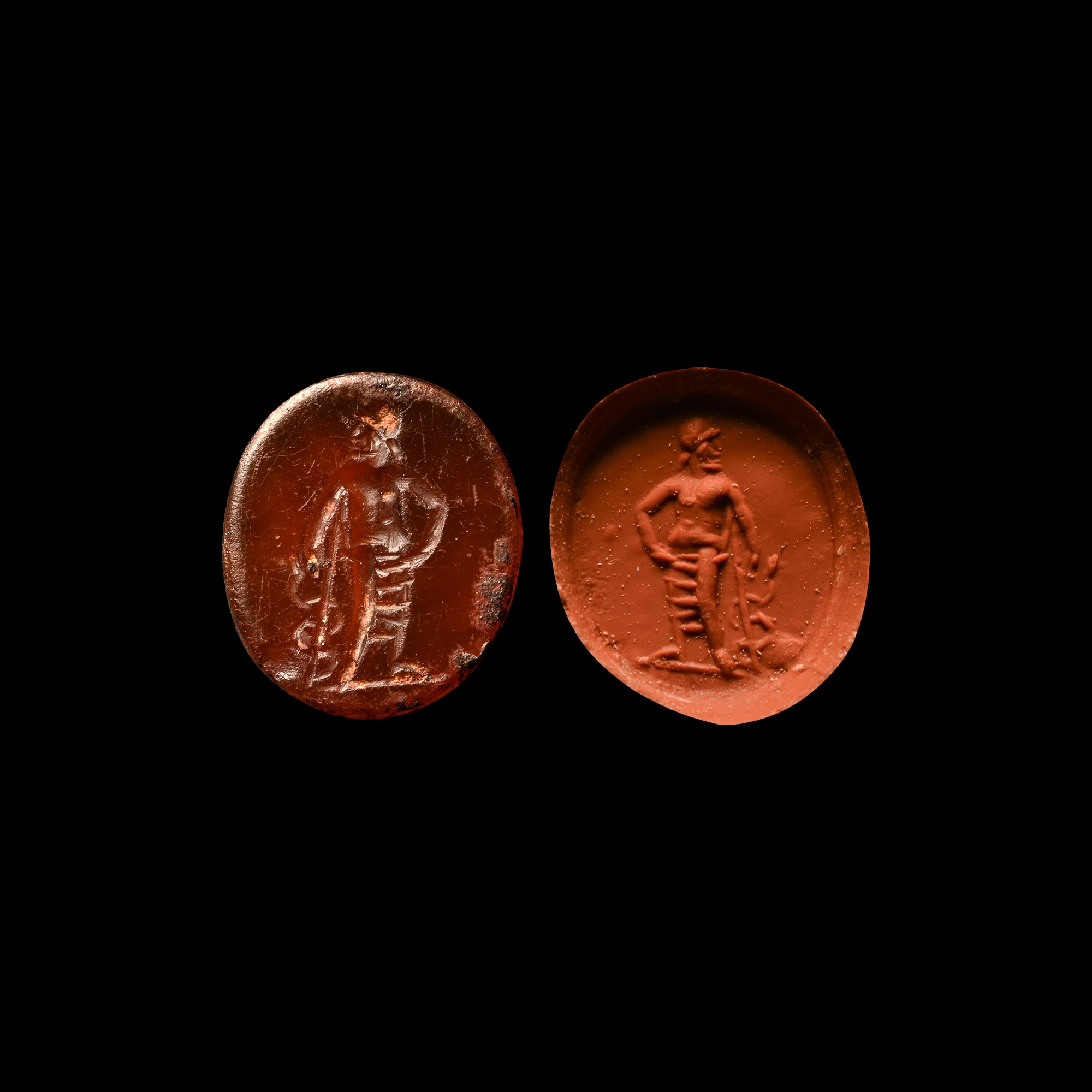
Roman Carnelian Gemstone with Asclepius
2ND-3RD CENTURY A.D.
1/2 in. (0.69 grams, 12 mm).
The oval intaglio engraved with Asclepius standing with head turned to the right, naked upper body, himation draped around his lower body, holding a caduceus with his right hand.
ProvenanceAcquired in the late 1980s-early 1990s.
Important North West London collection.
Cf. for similar Nardelli, B., 'Late Roman Gems from Tilurium in Croatia' in Entwistle, C., Adams, N., Gems of Heaven, recent research on engraved Gemstones in Late Antiquity, c. AD 200-600, London, 2011, pp.130-134, pl.3.
FootnotesAesclepius (Latin Esculapius) was the god of the health and protector of doctors. The serpent‐wreathed rod is well detailed, a rendition which finds a direct parallel in a carnelian intaglio in Carnuntum, Austria.
CONDITIONTimeLine Auctions follows a vetting process to ensure the authenticity and legality of all items, reinforcing our commitment to integrity and responsible trading. Each antiquity, antique, and coin lot undergoes thorough examination by a vetting committee of at least ten external specialists, professional trade association members, scientists, and archaeologists: Our Vetting Process
AUCTIONS:
TimeLine is a leading auction house specialising in antiquities, ancient art, collectables, natural history, coins, medals, and books. Our auctions offer museums, collectors, historians, and enthusiasts the opportunity to acquire unique and historically significant pieces.
LOT 0167
Roman Carnelian Gemstone with Asclepius
Estimate £600 - 800€700 - 930 (for guidance only)$810 - 1,080 (for guidance only)
-
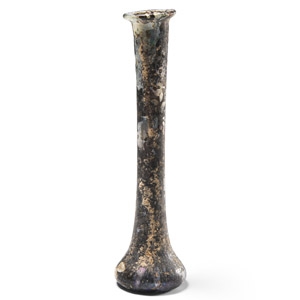
Roman Glass Candlestick Unguentarium
2nd-3rd century A.D.Sold for (Inc. bp): £117
Tall thin iridescent vessel with wide base and flared rim. 29 grams, 13.1 cm high
Acquired 1980-2015. Ex Abelita family collection. -
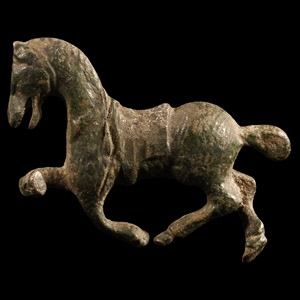
Roman Bronze Horse Statuette
1st-4th century A.D.Sold for (Inc. bp): £156
Modelled with naturalistic detailing; wearing a saddle and head collar. 13 grams, 34 mm wide
‘The Ancient Menagerie Collection’ formerly the property of a Cambridgeshire lady, collected since the 1990s and acquired from auctions and dealers throughout Europe and the USA, now ex London collection. -
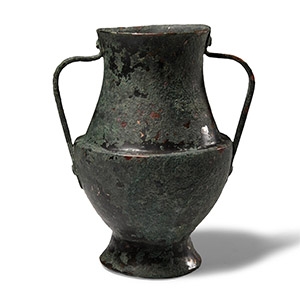
Roman Bronze Amphora
1st-2nd century A.D.Sold for (Inc. bp): £208
With carinated profile to the shoulder and tapering neck, two riveted strap handles. 169 grams, 13 cm
Ex old English collection. London art market, 1980s.
