
Loading, please wait...
LOT 0601
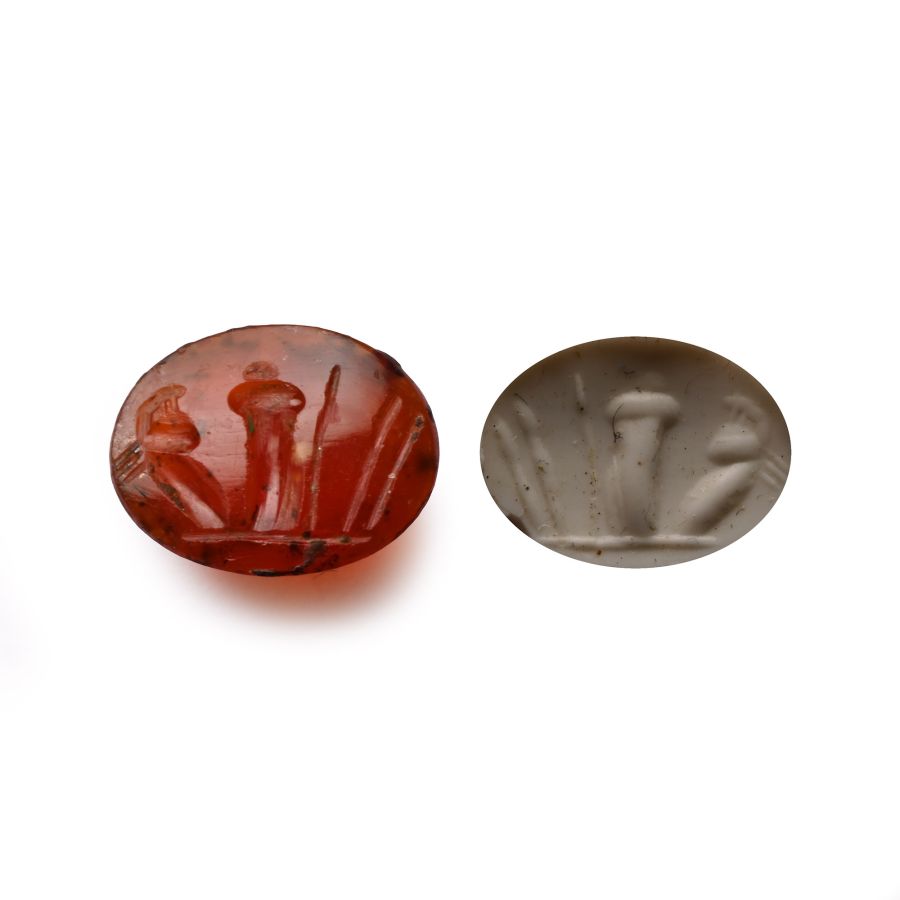
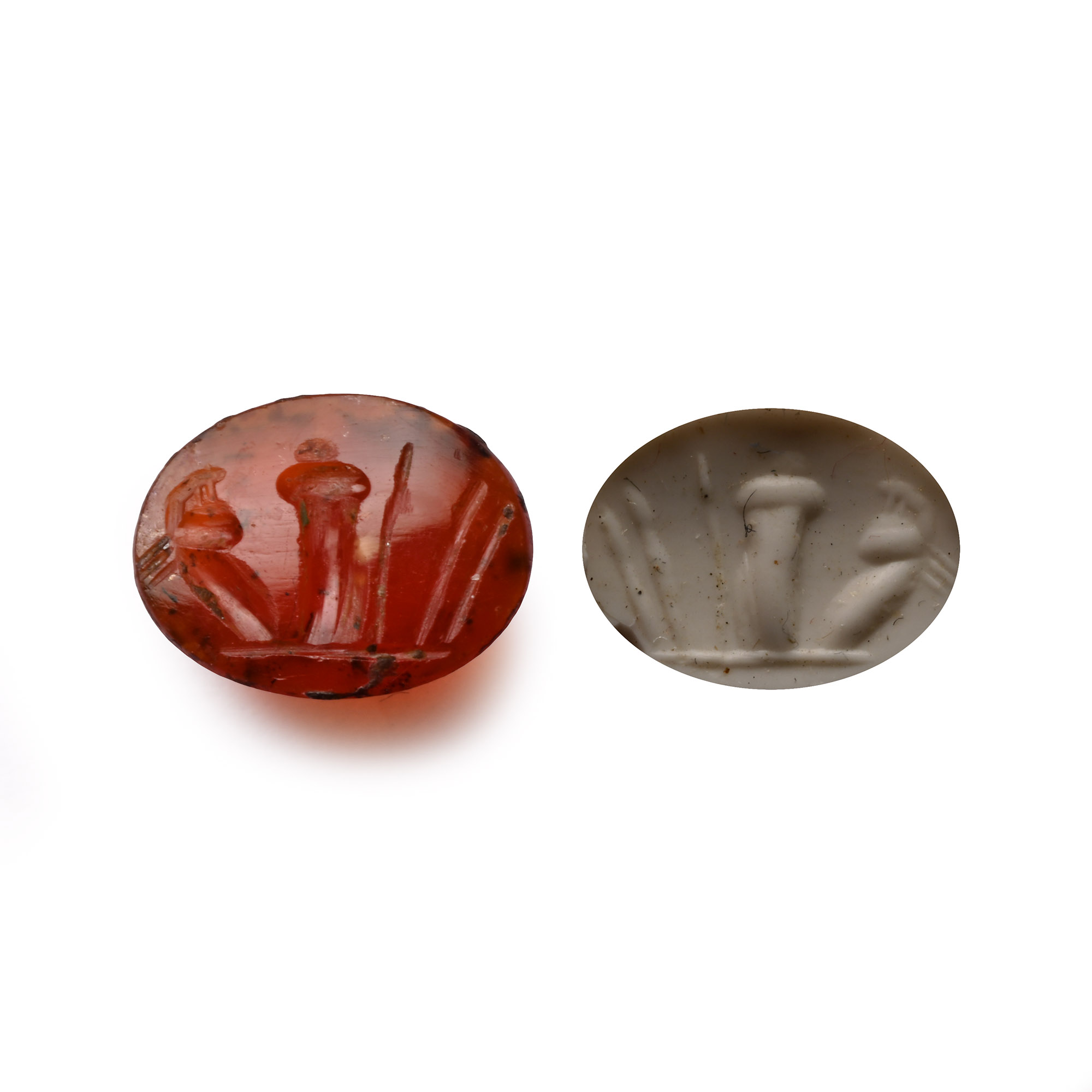
Roman Carnelian Gemstone with Altar
2ND-3RD CENTURY A.D.
3/8 in. (0.37 grams, 10.15 mm).
With intaglio altar; supplied with a museum-quality impression. [No Reserve]
ProvenanceFrom the private collection of a European gentleman (1942-2024), formed since the 1970s.
CONDITIONTimeLine Auctions follows a vetting process to ensure the authenticity and legality of all items, reinforcing our commitment to integrity and responsible trading. Each antiquity, antique, and coin lot undergoes thorough examination by a vetting committee of at least ten external specialists, professional trade association members, scientists, and archaeologists: Our Vetting Process
AUCTIONS:
TimeLine is a leading auction house specialising in antiquities, ancient art, collectables, natural history, coins, medals, and books. Our auctions offer museums, collectors, historians, and enthusiasts the opportunity to acquire unique and historically significant pieces.
-
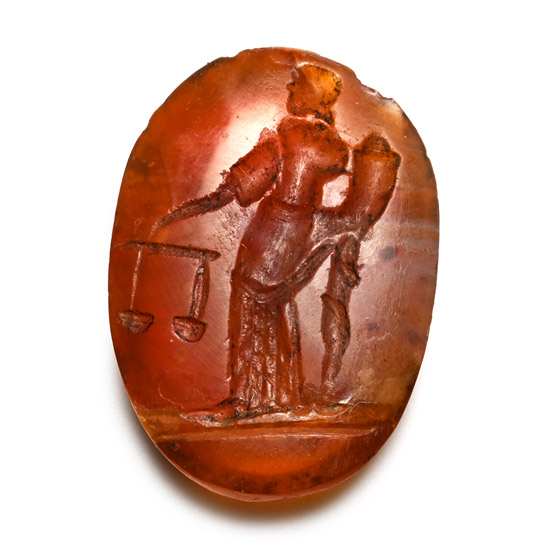
Roman Carnelian Gemstone with the Goddess Fortuna
2nd-3rd century A.D.Sold for (Inc. bp): £130
Intaglio profile figure of Fortuna in draped robe with cornucopia and scales; supplied with a museum-quality impression. 1.06 grams, 17.28 mm
From the private collection of a European gentleman (1942-2024), formed since the 1970s. -
.jpg)
Roman White Gemstone with Alexander the Great and Philosopher Diogenes of Sinope
2nd-3rd century A.D.Sold for (Inc. bp): £169
Frieze depicting a seated Alexander the Great holding a ring or collar towards a philosopher emerging from a cauldron; supplied with a museum-quality impression. 1.24 grams, 16.27 mm
From the private collection of a European gentleman (1942-2024), formed since the 1970s.
Diogenes of Sinope (c. 412-323 BCE) was an ancient Greek philosopher and one of the founders of Cynicism. He became famous for rejecting wealth, comfort, and social rules, choosing instead to live with very few possessions. He is often said to have lived in a large ceramic jar in Athens, sometimes described as a barrel or tub. Known for his sharp wit and simple way of life, he is also remembered for telling Alexander the Great to step out of his sunlight. -
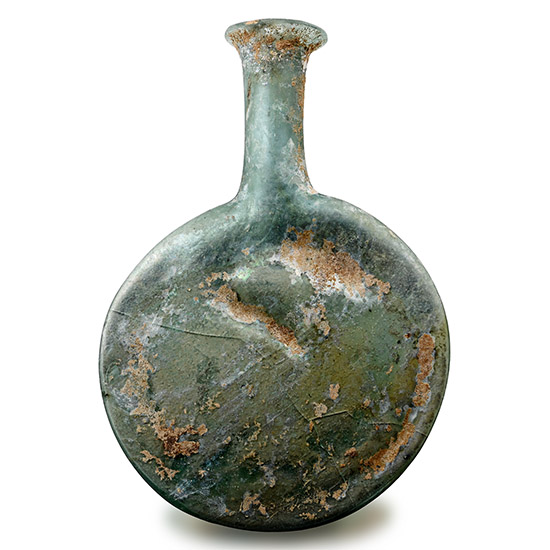
Large Roman Flattened Form Glass Pilgrim's Flask
2nd-3rd century A.D.Sold for (Inc. bp): £286
With flattened discoid body, tubular neck with everted rolled rim, iridescent surface. 86 grams, 16.2 cm
From a specialist collection of glass, acquired from dealerships during the 1990s.
