
Loading, please wait...


LOT 0192
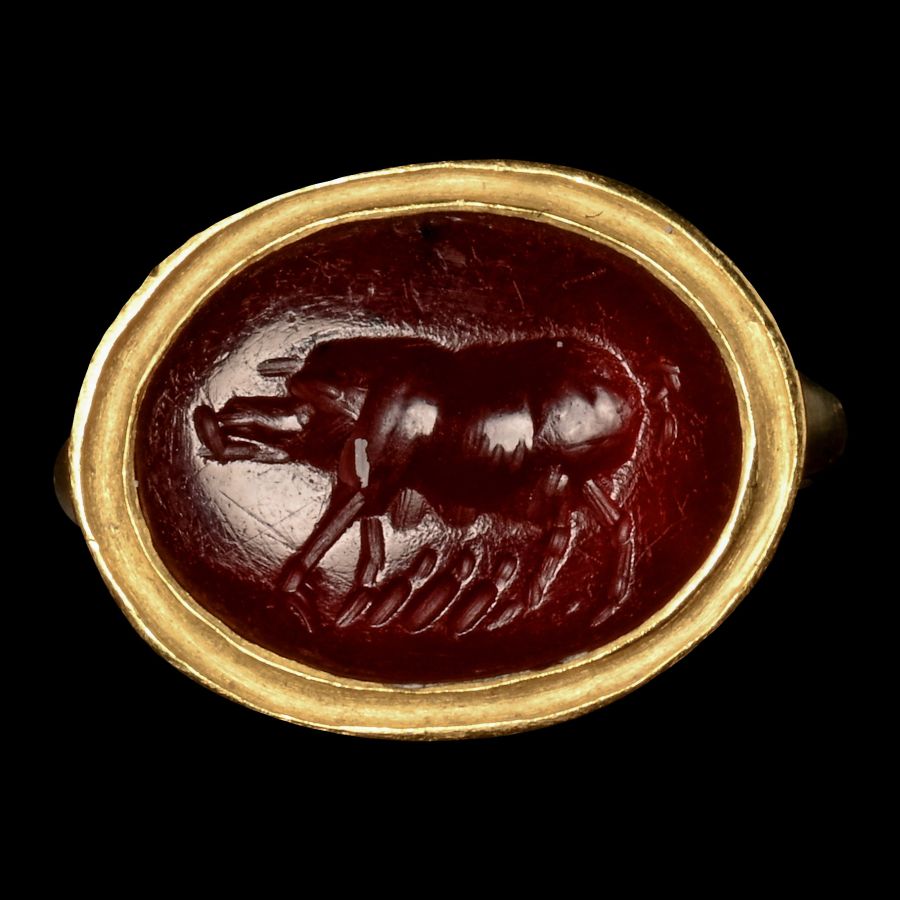
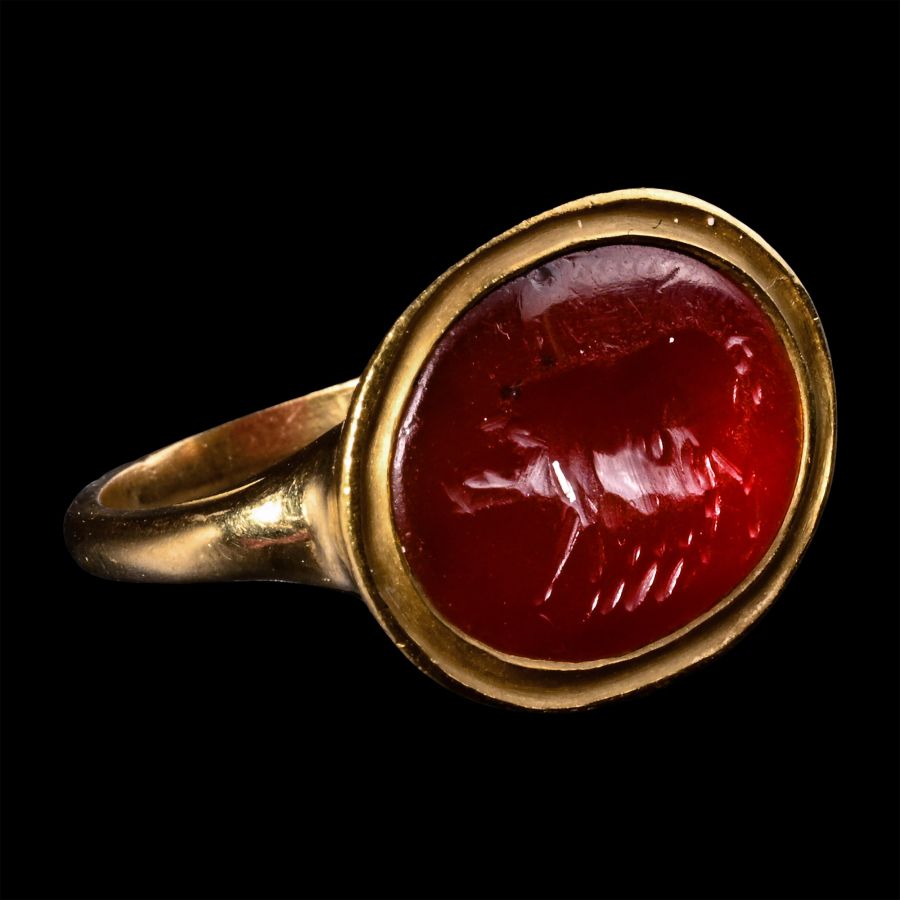
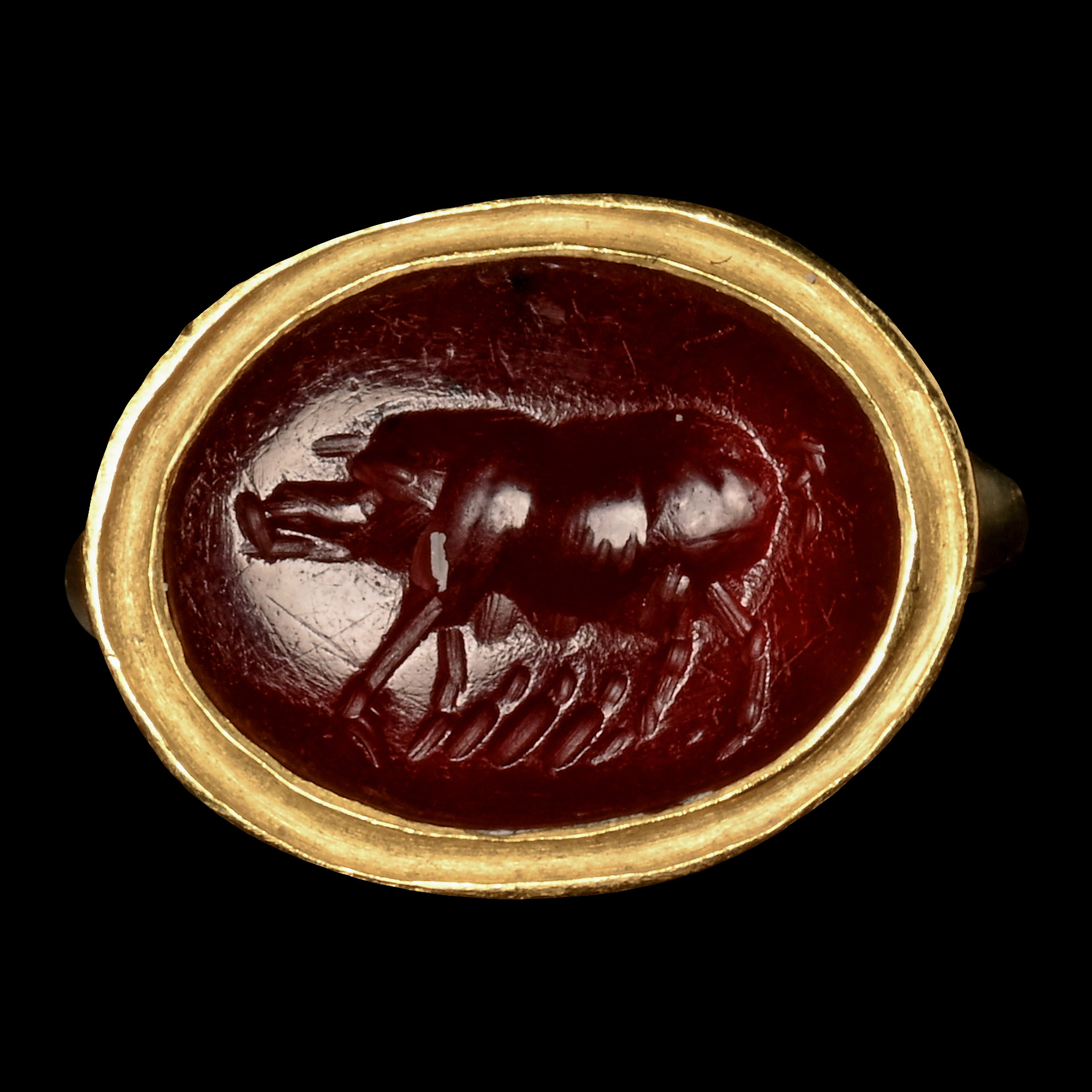
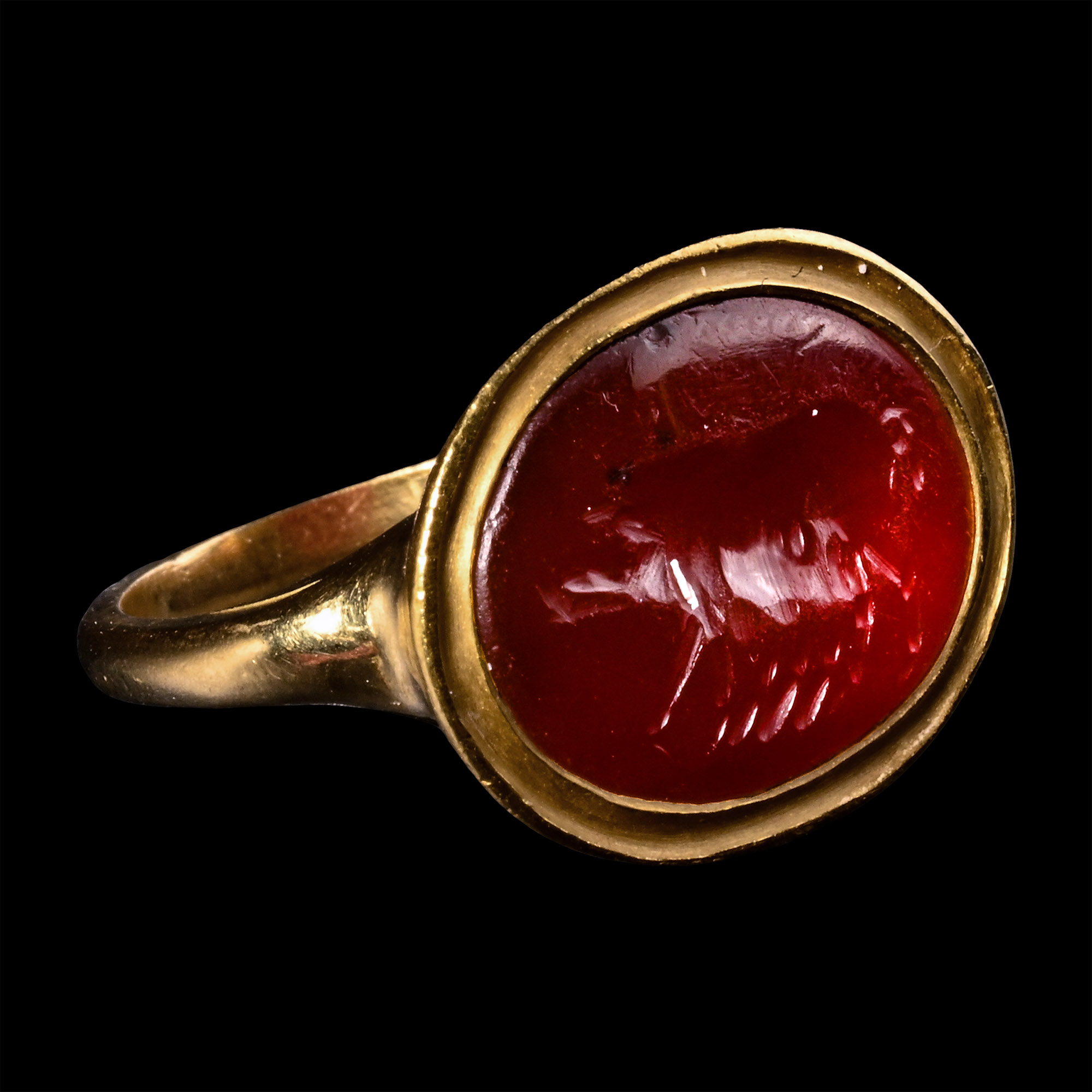
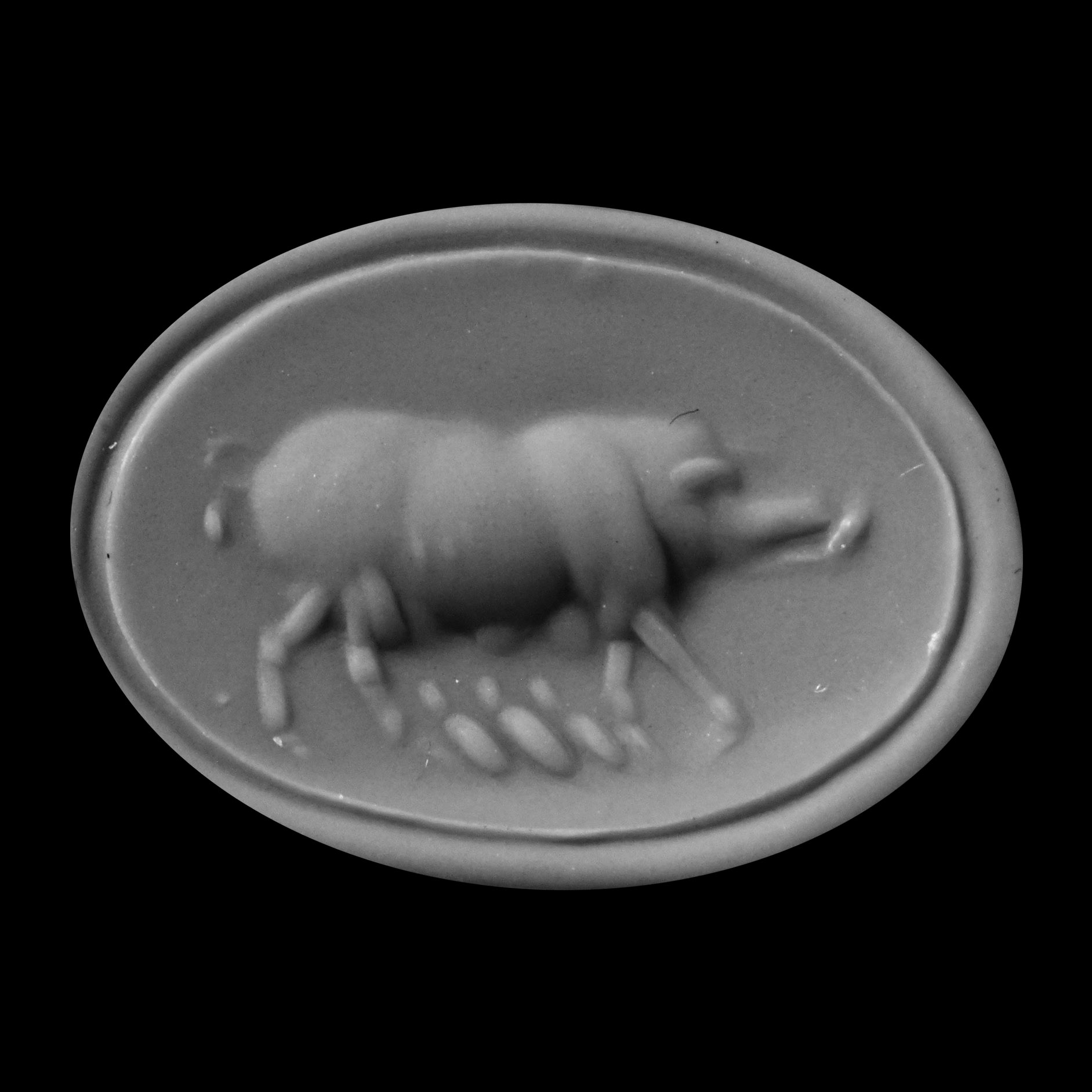
Roman Carnelian Gemstone with a Sow in Gold Ring
2ND CENTURY A.D. AND LATER
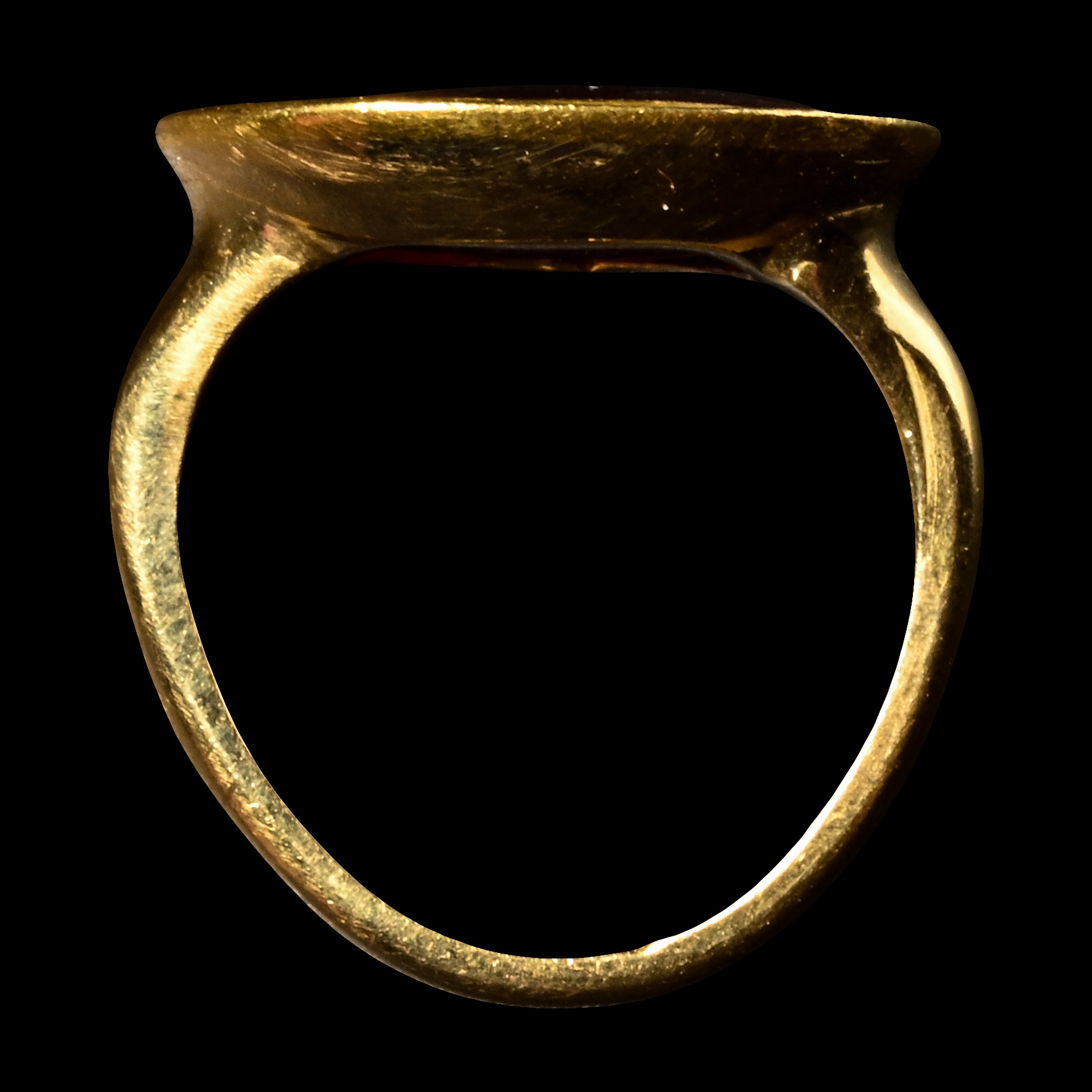
7/8 in. (6.83 grams, 22.85 mm overall, 17.78 x 16.88 mm internal diameter (approximate size British N, USA 6 1/2, Europe 13.72, Japan 13)).
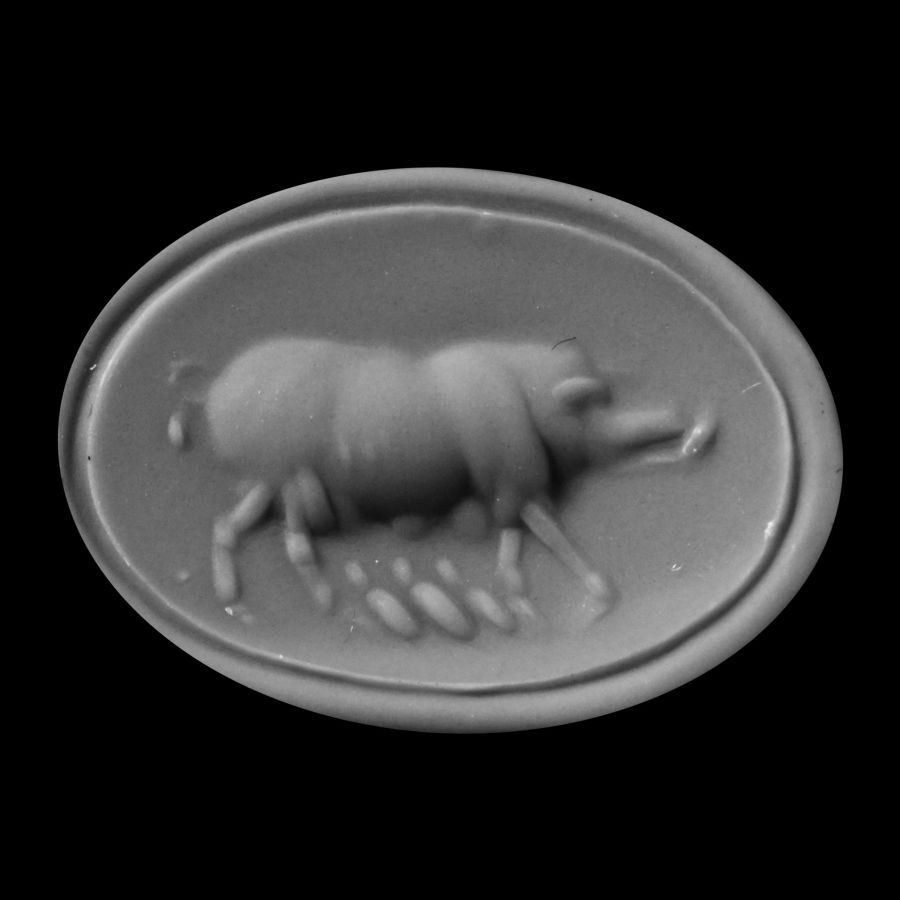
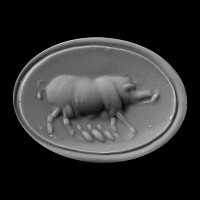
Red carnelian intaglio featuring a sow laying on its side with three stylised piglets resting between its legs; set in a modern gold ring.
ProvenancePrivate collection, London.
This lot has been checked against the Interpol Database of stolen works of art and is accompanied by search certificate no.13553-263671.
Cf. Brandt, E. et al., Antike Gemmen in Deutschen Sammlungen, I. Staatliche Münzsammlung, München, München, 1972, for a gemstone representing a sow (no.2896, inv.no. A. 2359).
FootnotesThe depiction of boars and sows on ancient intaglios, sometimes accompanied by piglets, was a recurring motif in Greek and Roman iconography. The pig was associated with the Greek goddess Demeter (Roman Ceres), deity of harvest, agriculture, and fertility. The sow depicted on this intaglio could be interpreted as a symbol of fertility and prosperity, expressing a wish for abundance bestowed upon the wearer.
CONDITIONTimeLine Auctions follows a vetting process to ensure the authenticity and legality of all items, reinforcing our commitment to integrity and responsible trading. Each antiquity, antique, and coin lot undergoes thorough examination by a vetting committee of at least ten external specialists, professional trade association members, scientists, and archaeologists: Our Vetting Process
AUCTIONS:
TimeLine is a leading auction house specialising in antiquities, ancient art, collectables, natural history, coins, medals, and books. Our auctions offer museums, collectors, historians, and enthusiasts the opportunity to acquire unique and historically significant pieces.
LOT 0192
Roman Carnelian Gemstone with a Sow in Gold Ring
Estimate £2,000 - 3,000€2,320 - 3,480 (for guidance only)$2,700 - 4,050 (for guidance only)
Opening Bid
£1,000 (EUR 1,160; USD 1,350) +BP*
-

Roman Gold Ring with Engraved Agate Gemstone
1st century A.D.Estimate: £1,500 - 2,000 (‡+bp*)
Opening Bid: £750
Hollow-formed with inset banded agate cloison, intaglio vine-leaf motif. 3.26 grams, 23.66 mm overall, 18.15 x 14.73 mm internal diameter (approximate size British J 1/2, USA 5, Europe 9.32, Japan 9)
Private collection, acquired on the German art market in 1993; thence by descent. This lot has been checked against the Interpol Database of stolen works of art and is accompanied by search certificate no.13184-249301.
These rings were characterised by an oval opening with a flat rim for a banded agate gem, which tapered towards the top. -
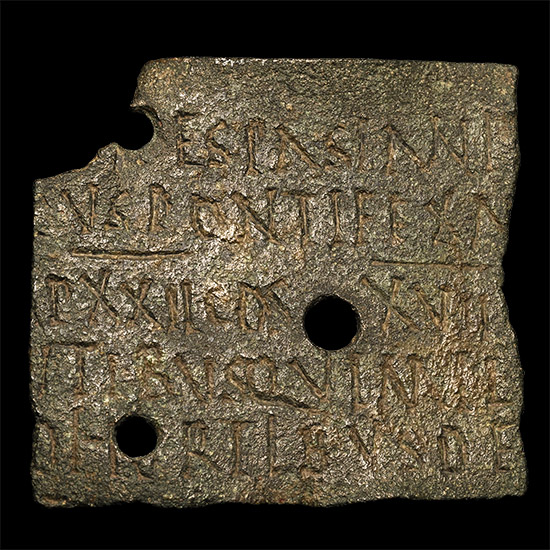
Fragment of a Roman Bronze Military Diploma Granted by Emperor Domitian
95-96 A.D.Estimate: £500 - 700 (+bp*)
Bids: 6 | Current Bid: £60
A rectangular plaque with three holes, one original one and two from later reuse; obverse with five lines of text with well engraved letters: (1) [IMP(erator) CAESAR DIVI] VESPASIANI [F(ilius) DOMITIANVS] / (2) [AVGVSTVS GERMANI]CVS PONTIFEX M[AXIMVS TRIB(unicia) / (3) [POTESTAT(e) XV I]MP(erator) XXII CO(n)S(ul) XVII [CENSOR PERPETVVS P(ater) P(atriae)] / (4) [EQVITIBVS ET PED]ITIBVS QVO MIL[ITANT IN ---] / (5) [--- ET C]OHORTIBVS DE[CEM ---]. 17 grams, 48 mm
From the collection of a European gentleman, formed since the 1990s, acquired on the German art market.
Issued for a member of a cohors, an auxiliary unit probably from the province of Moesia superior; granted by Domitian between 1 January AD 95 and his death at 18 September 96. -
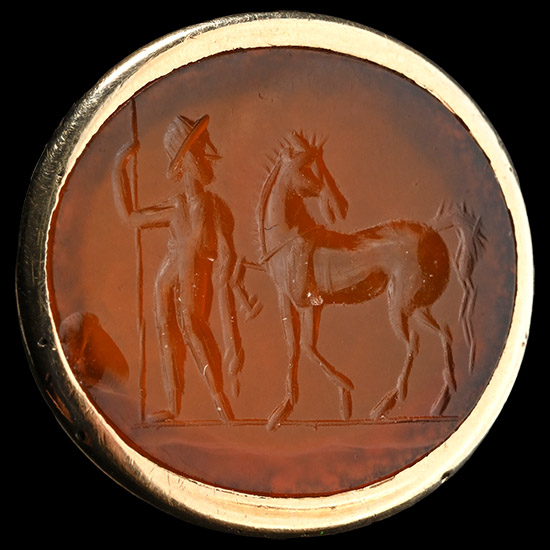
Roman Carnelian Intaglio of a Warrior and Horse in a Later Gold Ring
Circa 1st-2nd century A.D. and laterEstimate: £1,500 - 2,000 (+bp*)
Opening Bid: £700
Engraved with a standing male figure wearing a pointed cap and holding a long upright spear beside a horse, the horse with its head turned back and one foreleg raised; both figures standing upon a ground line; set in a later gold ring with a plain oval bezel, divided shoulders and a slender hoop. 2.43 grams, 20.04 mm overall, 17.19 x 16.57 mm internal diameter (approximate size British N 1/2, USA 6 3/4, Europe 14.35, Japan 13)
Acquired on the European art market. UK, private collection.
The combination of the cap, spear, drapery and horse supports identification as one of the Dioscuri, Castor or Pollux. The same combination of attributes appears in Roman representations of a Dioscurus, including an example in the London Museum.
