
Loading, please wait...
_900x900.jpg "Roman Carnelian Gemstone of the Young God Hercules Fighting Snakes")
_200x200.jpg "Roman Carnelian Gemstone of the Young God Hercules Fighting Snakes")
.jpg "Roman Carnelian Gemstone of the Young God Hercules Fighting Snakes")
LOT 0009
Roman Carnelian Gemstone of the Young God Hercules Fighting Snakes
2ND-3RD CENTURY A.D.
1/2 in. (0.70 grams, 13 mm).
Intaglio image of Hercules kneeling on a baseline holding a snake aloft in one hand and gripping another in the other hand; supplied with a museum-quality impression.
ProvenancePrivate English collection, formed between the late 1970s and early 1990s.
Private collection, London, UK.
According to legend, Hera wanted to rid herself of the infant Hercules and placed snakes in his crib. So strong was he even at that young age that he managed to overcome and kill them. The artist has represented the hero as a fully-grown young man.
CONDITIONTimeLine Auctions follows a vetting process to ensure the authenticity and legality of all items, reinforcing our commitment to integrity and responsible trading. Each antiquity, antique, and coin lot undergoes thorough examination by a vetting committee of at least ten external specialists, professional trade association members, scientists, and archaeologists: Our Vetting Process
AUCTIONS:
TimeLine is a leading auction house specialising in antiquities, ancient art, collectables, natural history, coins, medals, and books. Our auctions offer museums, collectors, historians, and enthusiasts the opportunity to acquire unique and historically significant pieces.
LOT 0009
Roman Carnelian Gemstone of the Young God Hercules Fighting Snakes
Sold for (Inc. bp): £416
-
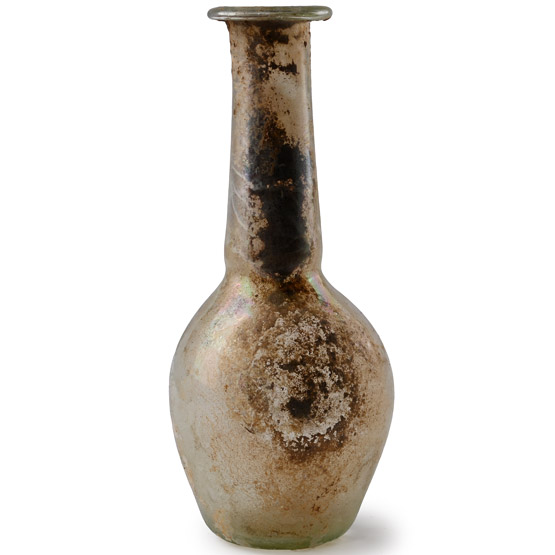
Roman Glass Flask
Circa 1st-4th century A.D.Estimate: £120 - 170 (+bp*)
Opening Bid: £60
Comprising a piriform body with dimple at the base, tubular neck and everted rolled rim. 39 grams, 14.5 cm
From a London, UK, collection of glass, 1970-2000s. -
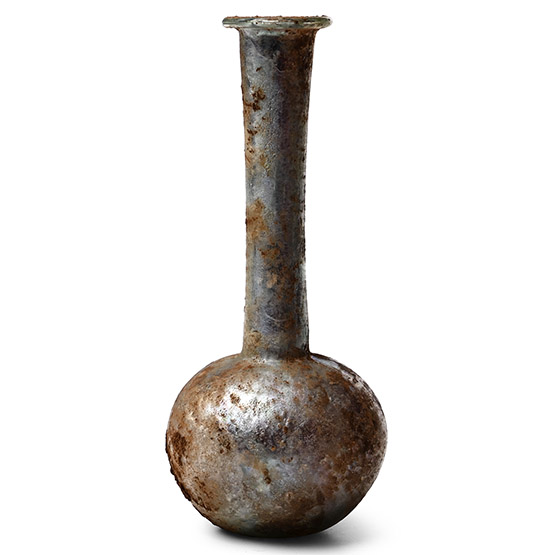
Roman Blue Glass Flask
Circa 1st-4th century A.D.Sold for (Inc. bp): £117
Bulbous body and a long tubular neck with rolled rim. 14 grams, 10.3 cm
From a London, UK, collection of glass, 1970-2000s. -
.jpg)
Roman Nicolo Gemstone of a Grazing Horse in Gold Ring
1st-2nd century A.D.Estimate: £2,000 - 3,000 (+bp*)
Opening Bid: £1,000
Ellipsoid with chamfered edge, incuse grazing horse image on a baseline; set into a later gold ring; supplied with a museum-quality impression. 7.72 grams, 23.21 mm overall, 18.46 x 18.02 mm internal diameter (approximate size British Q, USA 8, Europe 17.49, Japan 16)
Private collection, Europe. Acquired on the English art market. This lot has been checked against the Interpol Database of stolen works of art and is accompanied by search certificate number no.13165-248341.
