
Loading, please wait...
LOT 0186
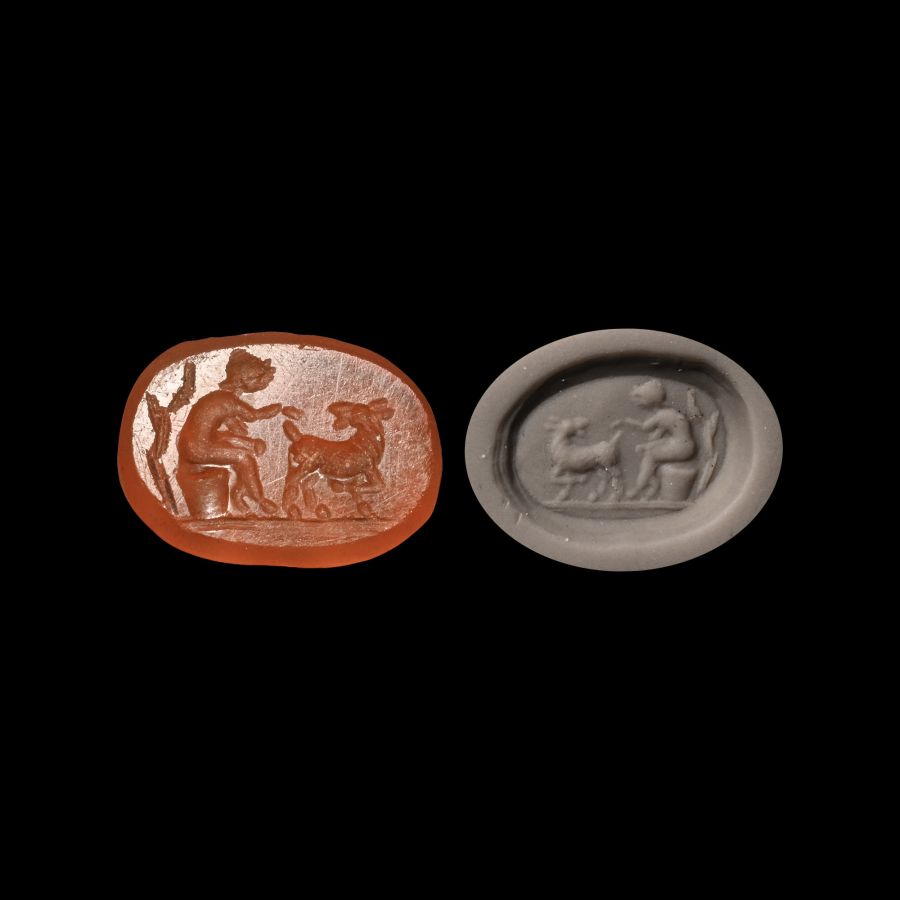
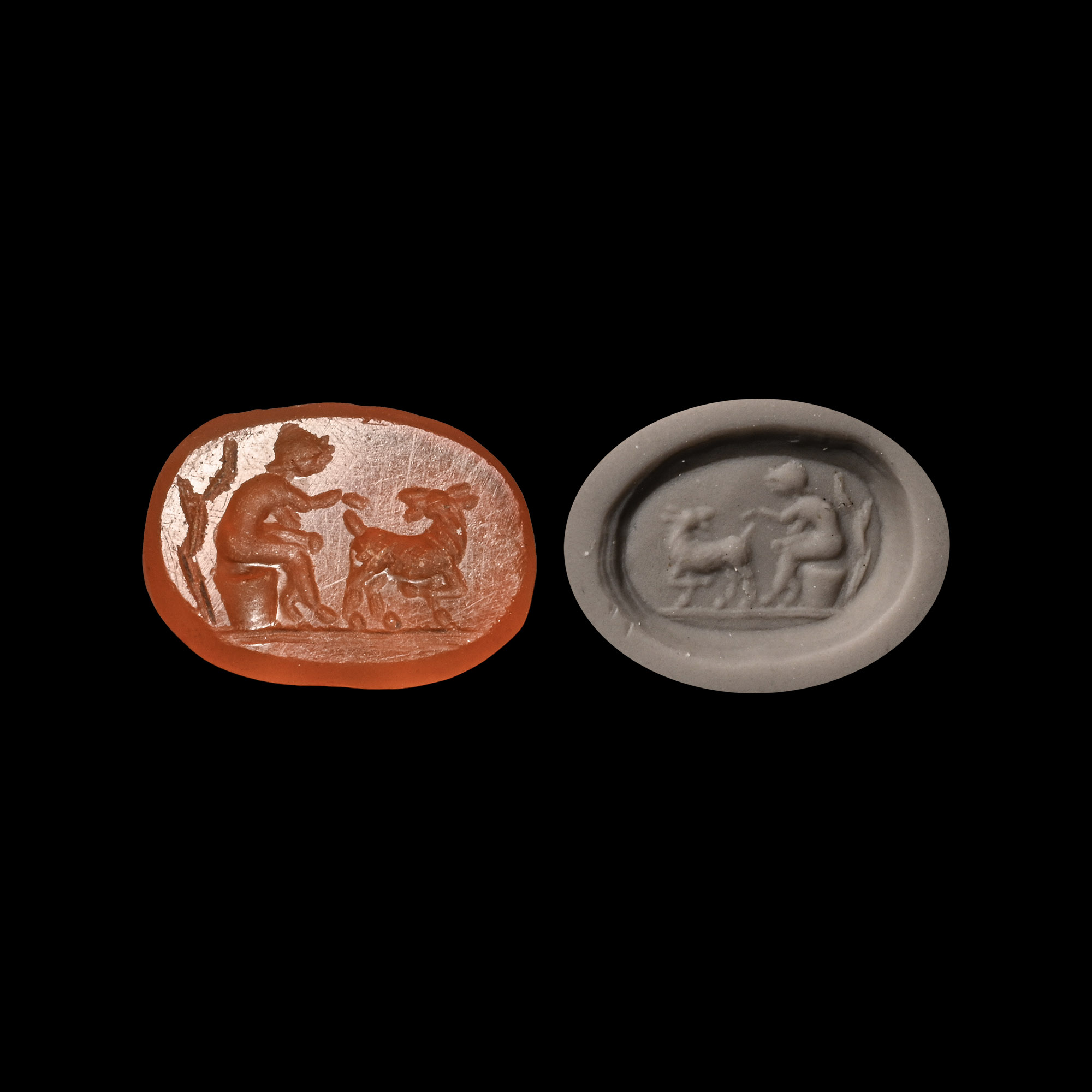
Roman Carnelian Figural Gemstone
CIRCA 2ND-3RD CENTURY A.D.
5/8 in. (0.58 grams, 12 mm).
With a seated female and goat, tree to the rear, all on a baseline; supplied with a museum-quality impression.
ProvenanceFrom the collection of a Swiss gentleman formed in Europe from 1970-1980s; thence by descent from the family in London.
CONDITIONTimeLine Auctions follows a vetting process to ensure the authenticity and legality of all items, reinforcing our commitment to integrity and responsible trading. Each antiquity, antique, and coin lot undergoes thorough examination by a vetting committee of at least ten external specialists, professional trade association members, scientists, and archaeologists: Our Vetting Process
AUCTIONS:
TimeLine is a leading auction house specialising in antiquities, ancient art, collectables, natural history, coins, medals, and books. Our auctions offer museums, collectors, historians, and enthusiasts the opportunity to acquire unique and historically significant pieces.
LOT 0186
Roman Carnelian Figural Gemstone
Estimate £300 - 400€350 - 460 (for guidance only)$410 - 540 (for guidance only)
-
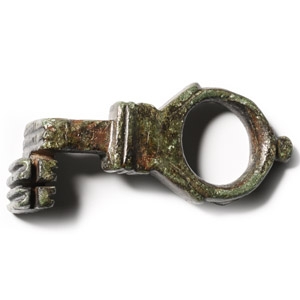
Roman Bronze Casket Key
Circa 1st-4th century A.D.Sold for (Inc. bp): £111
With large loop handle and short shank, knop above the loop. 33.2 grams, 58 mm
Acquired on the UK art market before 2000. Property of a Surrey, UK, collector. -
.jpg)
Roman Glass Intaglio Showing Two Gryphons Attacking a Deer
2nd-3rd century A.D.Sold for (Inc. bp): £416
Ellipsoid glass cloison with incuse image of two gryphons attacking a deer; set in a later silver ring. 18.57 grams, 30.95 mm overall, 22.99 mm internal diameter (approximate size British N 1/2, USA 6 3/4, Europe 14.35, Japan 13)
From the collection of a North American gentleman, formed in the 1990s.
The subject of griffins attacking a deer has a long history and remained popular during the Hellenistic and Roman period throughout the Mediterranean area and beyond. It may be a symbol of the inevitability of death. -
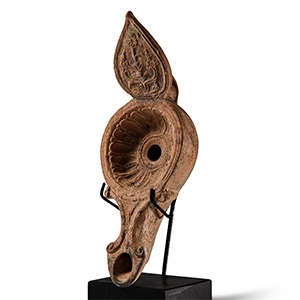
Large Roman Terracotta Oil Lamp with Reflector
1st century A.D.Sold for (Inc. bp): £780
Cup-shaped body with socketted lotiform discus and central filling hole, tapering nozzle with volute scrolls to the rim, D-shaped finial; loop handle and piriform reflector with low-relief ornament of an urn with vine scrolls and perching birds; mounted on a custom-made stand. 257 grams total, 18 cm wide including stand
From the private collection of the late Mr S.M., London, UK, 1969-1999; thence by descent.
