
Loading, please wait...
LOT 0192
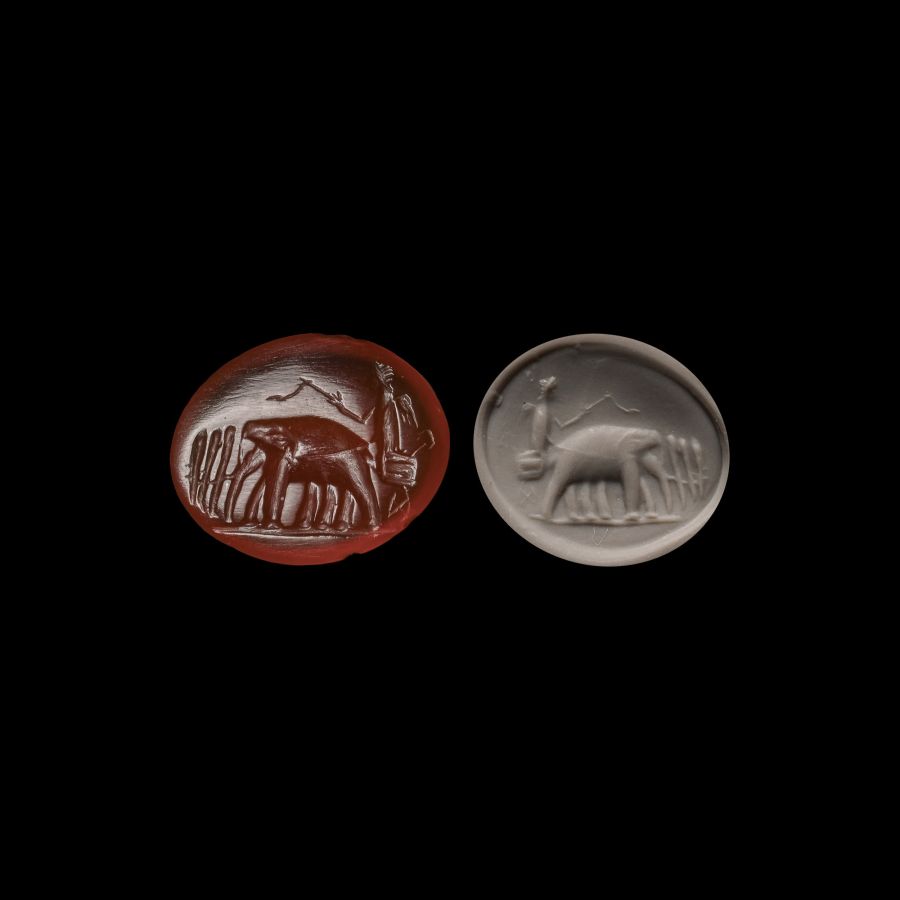
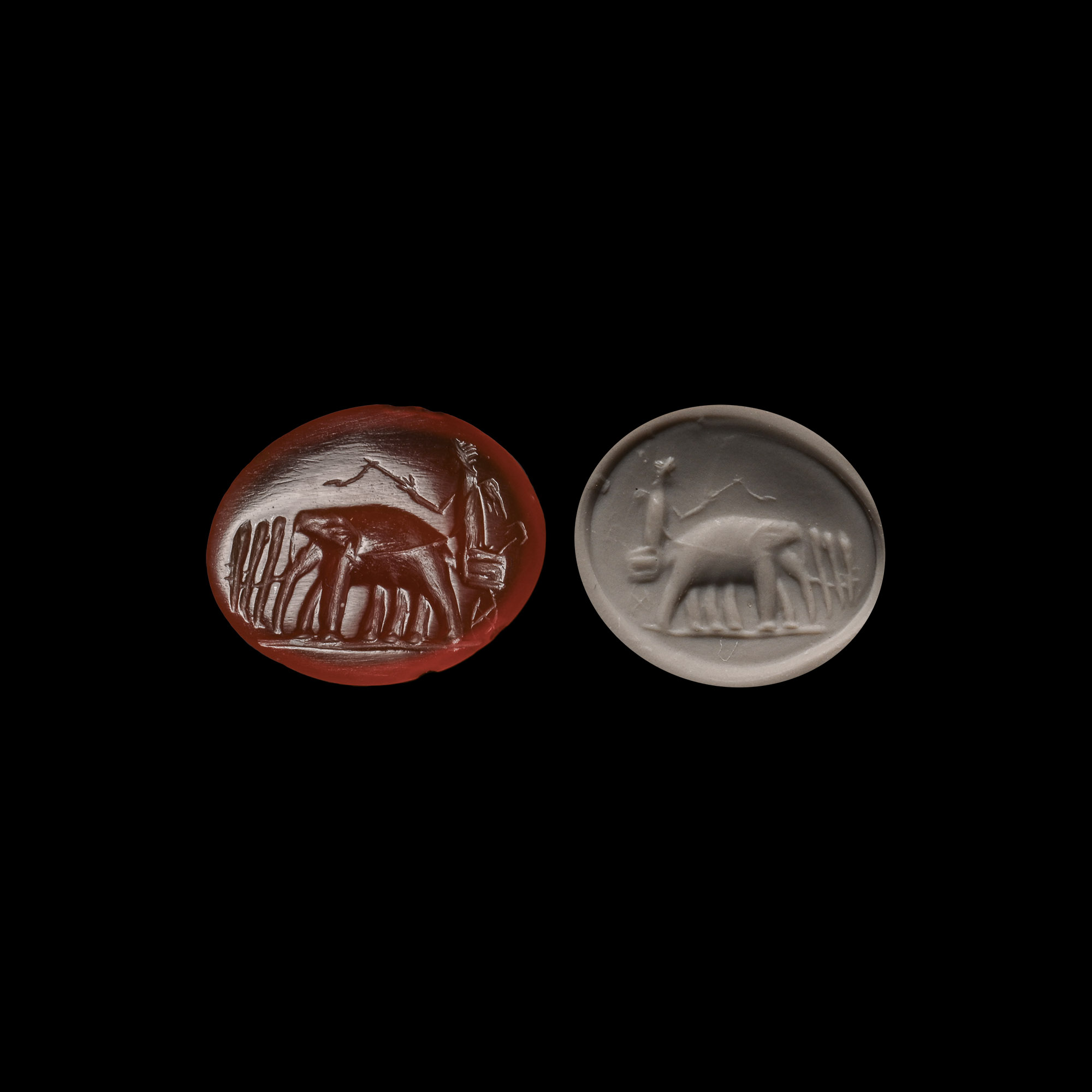
Roman Carnelian Elephant Chariot Gemstone
CIRCA 1ST-2ND CENTURY A.D.
5/8 in. (1.06 grams, 17 mm).
With elephant chariot and winged Victory in a field of vegetation; supplied with a museum-quality impression.
ProvenanceFrom the collection of a Swiss gentleman formed in Europe from 1970-1980s; thence by descent from the family in London.
CONDITIONTimeLine Auctions follows a vetting process to ensure the authenticity and legality of all items, reinforcing our commitment to integrity and responsible trading. Each antiquity, antique, and coin lot undergoes thorough examination by a vetting committee of at least ten external specialists, professional trade association members, scientists, and archaeologists: Our Vetting Process
AUCTIONS:
TimeLine is a leading auction house specialising in antiquities, ancient art, collectables, natural history, coins, medals, and books. Our auctions offer museums, collectors, historians, and enthusiasts the opportunity to acquire unique and historically significant pieces.
-
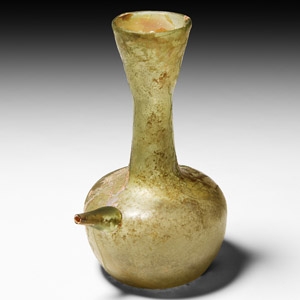
Roman Green Glass Nursing Bottle
4th-5th century A.D.Sold for (Inc. bp): £351
Composed of a squat bulbous body with broad shoulder, slender cylindrical neck with flared rim, conical spout to the shoulder; kick-up to base; iridescent surfaces. 50 grams, 13.7 cm high
Fine condition.
Paris collection, 1990s. From an important Paris gallery, France. Ex private Parisian collection. -
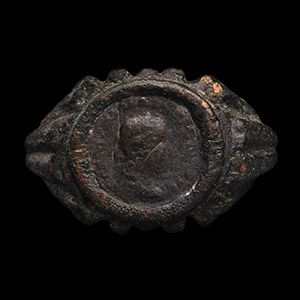
Roman Bronze Ring with Portrait
3rd century A.D.Sold for (Inc. bp): £182
Hoop composed of angled and fluted shoulders and an oval bezel displaying a portrait bust in profile right, in relief. 34.93 grams, 38.63 mm overall, 22.43 mm internal diameter (approximate size British O 1/2, USA 7 1/4, Europe 15.61, Japan 15)
Acquired 1990s-early 2000s. East Anglian private collection. -
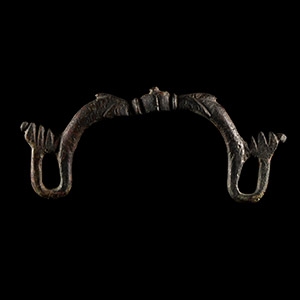
Roman Bronze Military Helmet Carry Handle with Dolphins
2nd-3rd century A.D.Sold for (Inc. bp): £59
Composed of two opposing helmets supporting the central knop with their noses, their curved tails forming the suspension loops. 37.3 grams, 95 mm
Found UK. Acquired from a private collector in 2005. Property of a Nottinghamshire gentleman. Accompanied by a typed identification card.
