
Loading, please wait...
LOT 0185
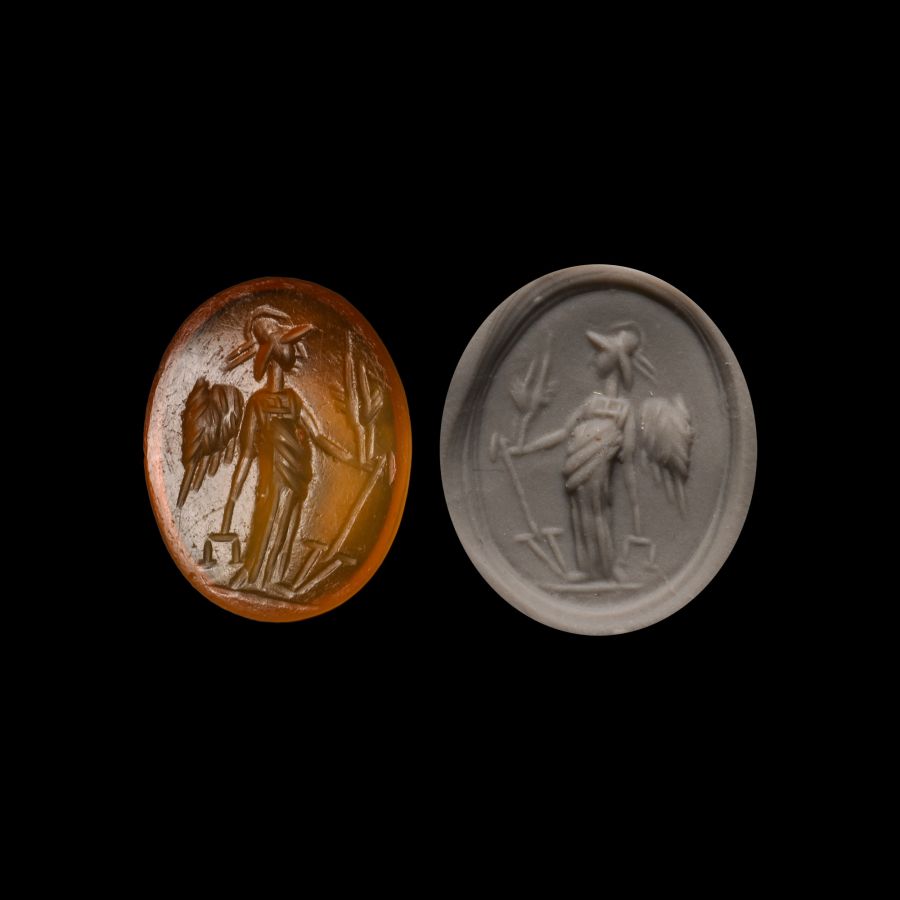
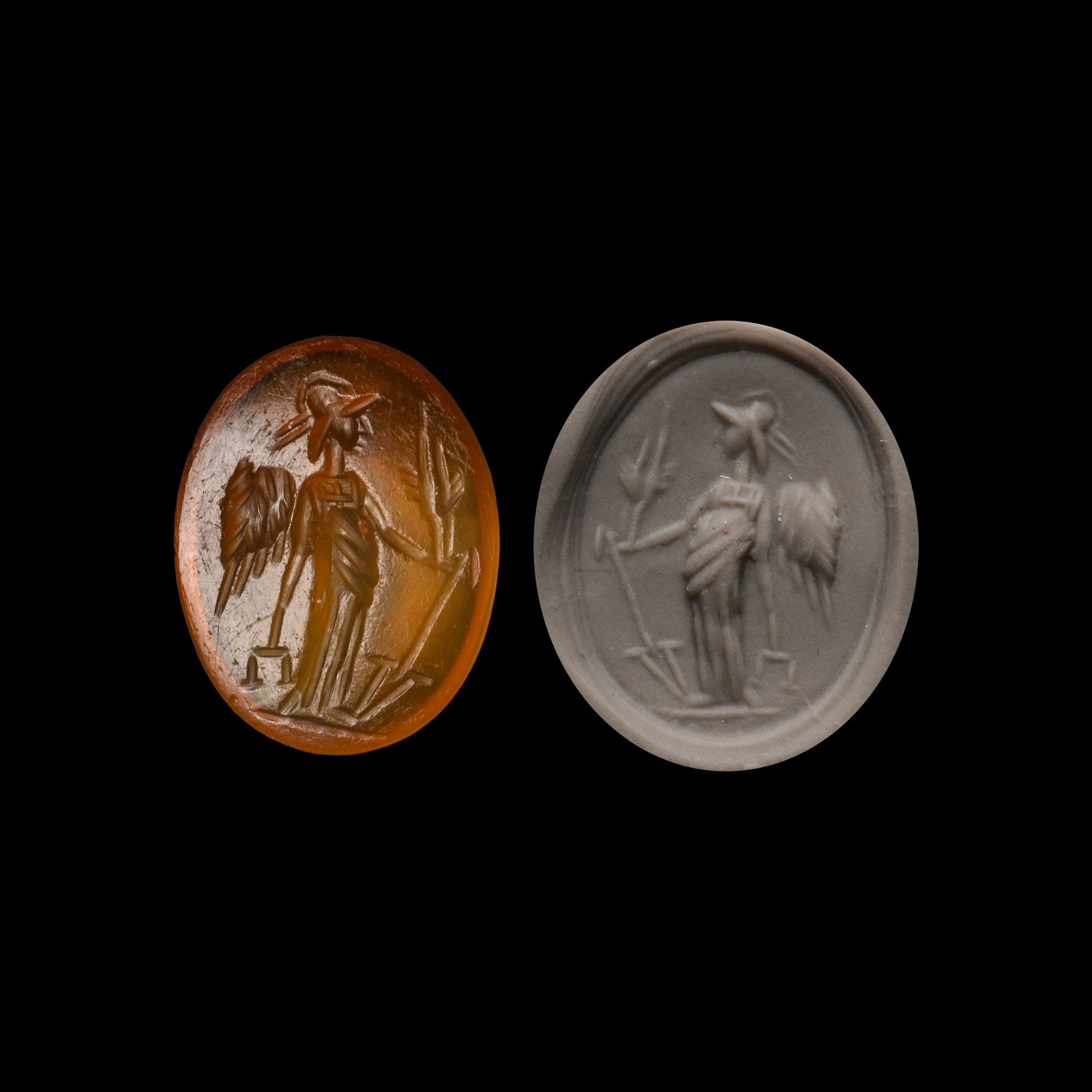
Roman Carnelian Composite Goddess Gemstone
CIRCA 2ND CENTURY A.D.
5/8 in. (1.11 grams, 17 mm).
With a goddess with the attributes of Victory, Fortuna, Ceres and Iustitia standing wearing a crested helmet and holding a spear; supplied with a museum-quality impression.
ProvenanceFrom the collection of a Swiss gentleman formed in Europe from 1970-1980s; thence by descent from the family in London.
CONDITIONTimeLine Auctions follows a vetting process to ensure the authenticity and legality of all items, reinforcing our commitment to integrity and responsible trading. Each antiquity, antique, and coin lot undergoes thorough examination by a vetting committee of at least ten external specialists, professional trade association members, scientists, and archaeologists: Our Vetting Process
AUCTIONS:
TimeLine is a leading auction house specialising in antiquities, ancient art, collectables, natural history, coins, medals, and books. Our auctions offer museums, collectors, historians, and enthusiasts the opportunity to acquire unique and historically significant pieces.
LOT 0185
Roman Carnelian Composite Goddess Gemstone
Estimate £500 - 700€580 - 810 (for guidance only)$680 - 950 (for guidance only)
-
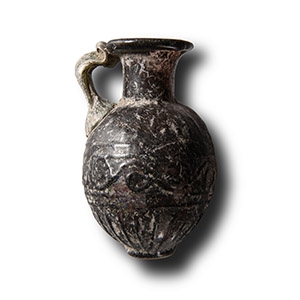
Roman Aubergine Mould Blown Amphoriskos
1st century A.D.Sold for (Inc. bp): £390
Miniature egg-shaped juglet with applied handle and integral foot, mould-blown decoration formed as a medial frieze of scrolling motifs and lines radiating upwards from the base; iridescent surfaces; chipped rim. 17.3 grams, 66 mm high
Acquired early 1990s. Ex private American collection; thence by descent. Private collection since 1998. -
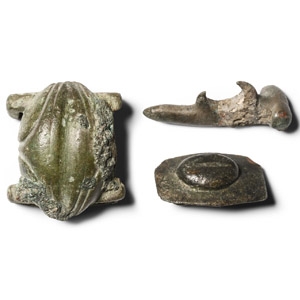
Roman Bronze Phallic Fertility Symbol Group
Circa 1st-4th century A.D.Sold for (Inc. bp): £46
The group comprising: a strap slider with the upper panel formed as a stylised vulva; a phallic pendant with part of the loop absent; a rectangular mount with a raised vulva-shaped boss to the centre, two studs on the reverse. 32.5 grams, 24-33 mm
Acquired on the UK art market before 2000. Property of a Surrey, UK, collector. -
.jpg)
Roman Glass Intaglio Showing Two Gryphons Attacking a Deer
2nd-3rd century A.D.Sold for (Inc. bp): £416
Ellipsoid glass cloison with incuse image of two gryphons attacking a deer; set in a later silver ring. 18.57 grams, 30.95 mm overall, 22.99 mm internal diameter (approximate size British N 1/2, USA 6 3/4, Europe 14.35, Japan 13)
From the collection of a North American gentleman, formed in the 1990s.
The subject of griffins attacking a deer has a long history and remained popular during the Hellenistic and Roman period throughout the Mediterranean area and beyond. It may be a symbol of the inevitability of death.
