
Loading, please wait...
LOT 0176
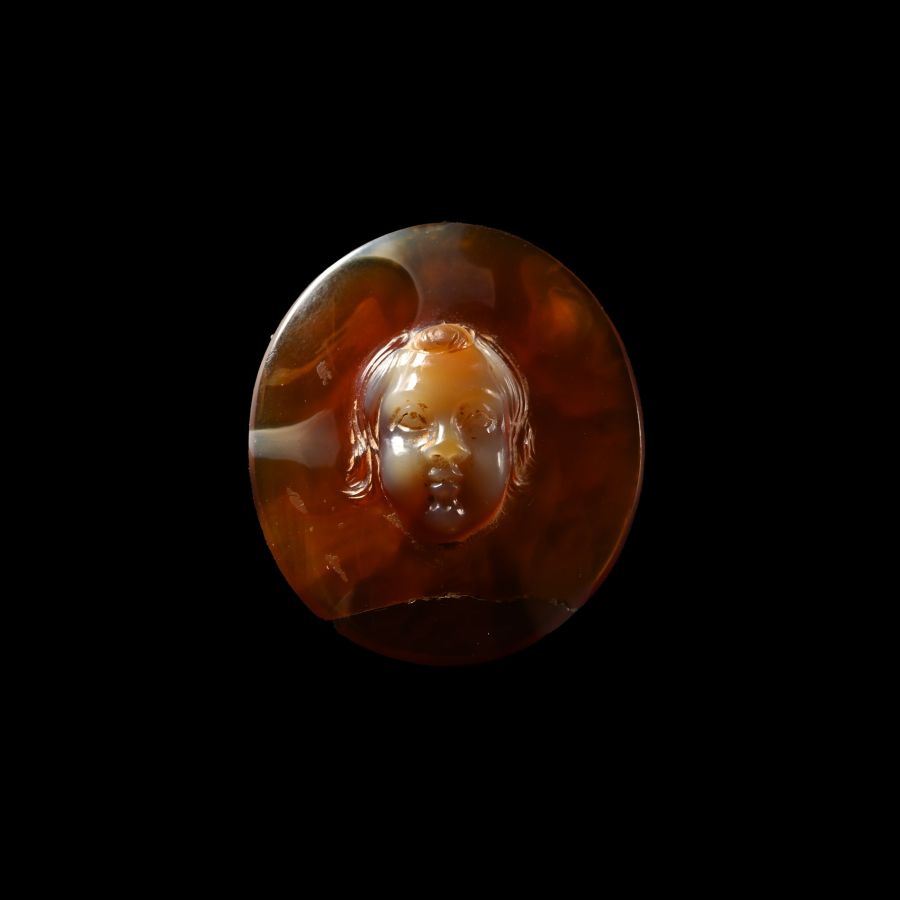
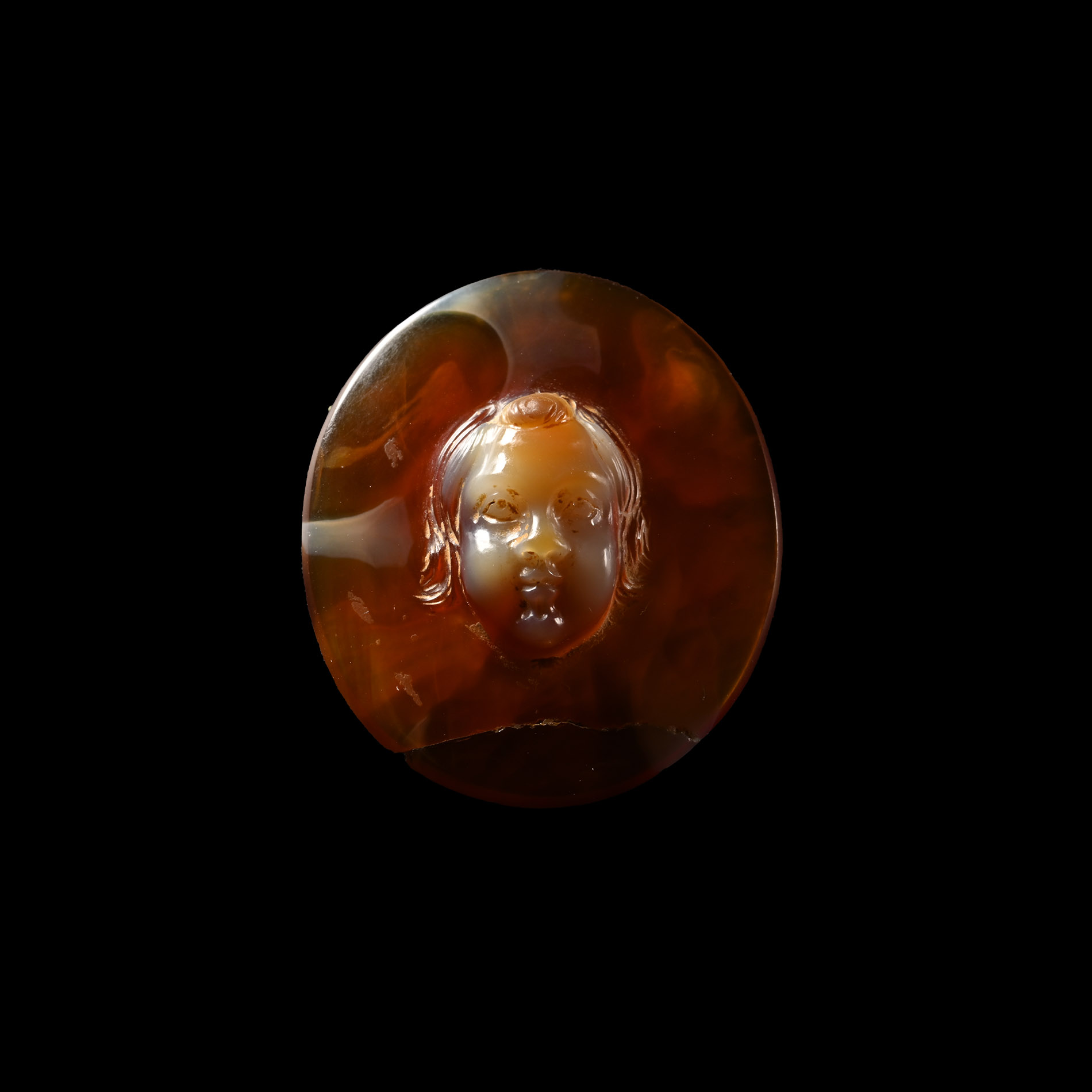
Roman Carnelian Cameo with Young Cupid
1ST-2ND CENTURY A.D.
1 1/4 in. (6.11 grams, 31 mm).
Lenticular-section disc with central recess to reverse; obverse with integral facing mask of Cupid modelled in the half-round; repaired. [No Reserve]
ProvenanceAcquired from a London gallery, 1970s.
From the collection of an London antiquarian.
Cf. similar in green glass in the collection of the British Museum under accession no.1814,0704.1797.
CONDITIONTimeLine Auctions follows a vetting process to ensure the authenticity and legality of all items, reinforcing our commitment to integrity and responsible trading. Each antiquity, antique, and coin lot undergoes thorough examination by a vetting committee of at least ten external specialists, professional trade association members, scientists, and archaeologists: Our Vetting Process
AUCTIONS:
TimeLine is a leading auction house specialising in antiquities, ancient art, collectables, natural history, coins, medals, and books. Our auctions offer museums, collectors, historians, and enthusiasts the opportunity to acquire unique and historically significant pieces.
-
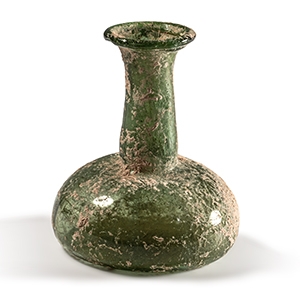
Roman Blue-Green Glass Vessel
3rd-4th century A.D.Sold for (Inc. bp): £195
Bulbous with flat base, tall neck and splayed lip. 39 grams, 77 mm high
Acquired 1980-2015. Ex Abelita family collection.
The ampulla was, in Ancient Rome, a small round vessel, usually made of glass and used for sacred purposes. The term can also refer to later flasks, often flatter and without handles, typically used as pilgrim souvenirs. Materials include glass, ceramics and metal. An unguentarium is a bottle believed to have been used to store perfume. Such vessels were often produced in Gaul. -
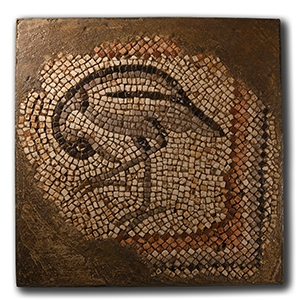
Eastern Roman Mosaic Depicting a Bird
4th century A.D.Sold for (Inc. bp): £2,860
In a rectangular matrix; cream, olive, pink and other tesserae depicting a bird advancing with head bowed, with banded frame. 10.35 kg, 40.3 x 40.3 cm
Former collection of Mr Pierre Bart (1889-1964), official of the French mandate in Syria and Lebanon (1919-1936) and delegate to the Lebanese government until 1946. Transmitted by descent. -
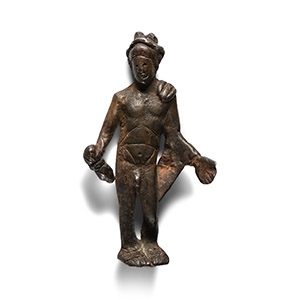
Roman Bronze Statuette of Mercury
1st century B.C.-1st century A.D.Estimate: £400 - 600 (+bp*)
Opening Bid: £200
Standing nude with winged petasos and draped mantle to the left arm and shoulder; marsupium in the right hand. 34.6 grams, 59 mm
From a private collection formed in the 1990s. Ex London, UK, gallery.
