
Loading, please wait...
LOT 0030
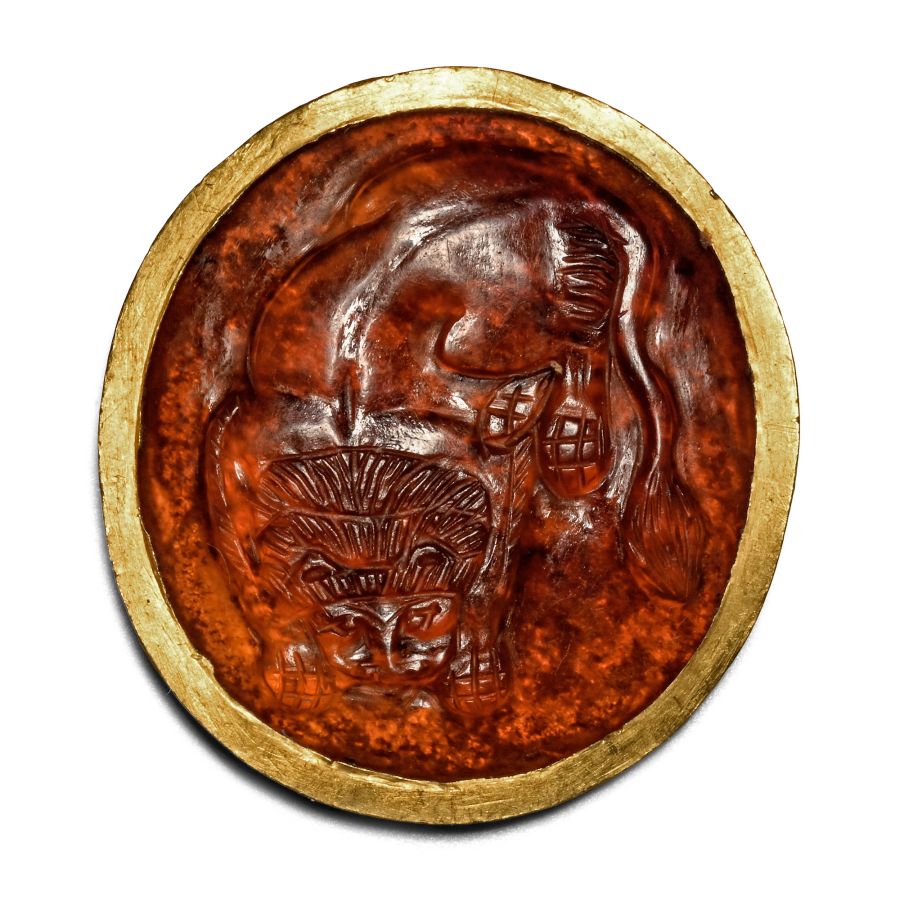
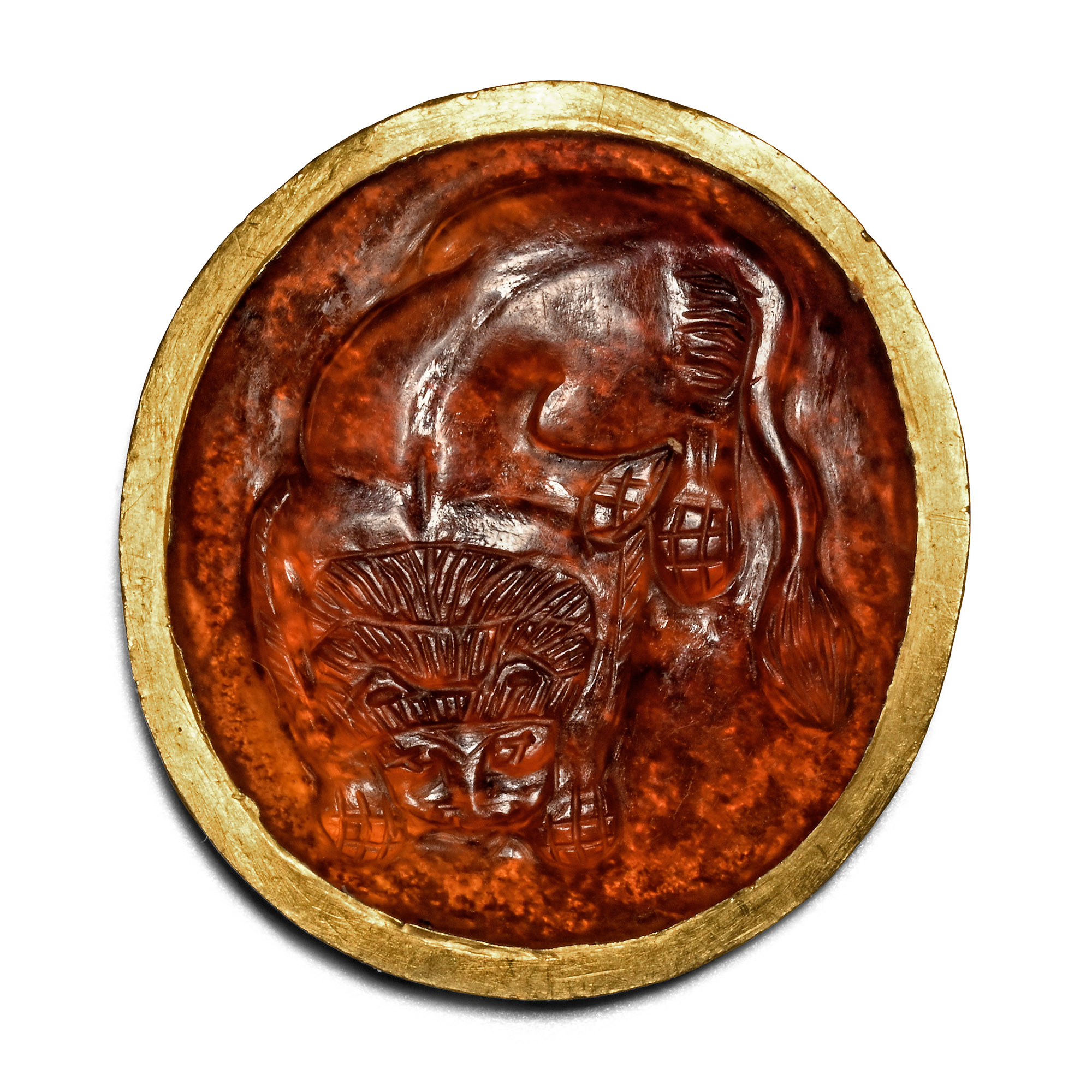
Roman Carnelian Cameo of a Crouching Lion in Gold Mount
EASTERN ROMAN, 3RD-4TH CENTURY A.D.
1 in. (2.72 grams, 25 mm).
Discoid cell with flange rim, inset convex gemstone with reserved image of a lion resting with his head on his forepaws.
ProvenancePrivate English collection, formed between the late 1970s and early 1990s.
Private collection, London, UK.
This lot has been checked against the Interpol Database of stolen works of art and is accompanied by search certificate number no.13100-248677.
TimeLine Auctions follows a vetting process to ensure the authenticity and legality of all items, reinforcing our commitment to integrity and responsible trading. Each antiquity, antique, and coin lot undergoes thorough examination by a vetting committee of at least ten external specialists, professional trade association members, scientists, and archaeologists: Our Vetting Process
AUCTIONS:
TimeLine is a leading auction house specialising in antiquities, ancient art, collectables, natural history, coins, medals, and books. Our auctions offer museums, collectors, historians, and enthusiasts the opportunity to acquire unique and historically significant pieces.
LOT 0030
Roman Carnelian Cameo of a Crouching Lion in Gold Mount
Sold for (Inc. bp): £4,680
-
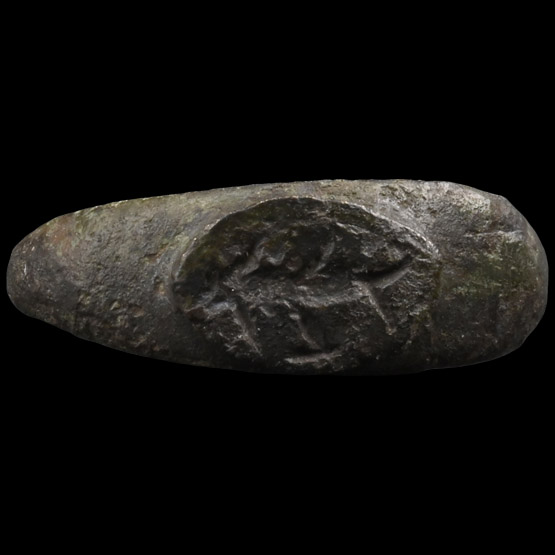
Roman Early Christian Bronze Ring with Fish
4th century A.D.Sold for (Inc. bp): £72
Ellipsoid bezel with incuse fish motif, broad shoulders. 2.93 grams, 19.68 mm overall, 15.64 mm internal diameter (approximate size British G 1/2, USA 3 1/2, Europe 5.55, Japan 5)
Ex German art market, 2000s. Acquired from an EU collector living in London. From the collection of a Surrey, UK, gentleman.
The Christian fish motif was one of the most important and widespread symbols used by early Christians during the Roman period. It served as a secret sign of identity and a shorthand declaration of faith, primarily to avoid persecution by Roman authorities. -
.jpg)
Roman Carnelian Gemstone with Portrait of Hercules
1st century B.C.-2nd century A.D.Sold for (Inc. bp): £1,300
Discoid in plan with intaglio profile bust of Hercules sporting a browband and thick beard; supplied with a museum-quality impression. 0.83 grams, 14 mm
Private English collection, formed between the late 1970s and early 1990s. Private collection, London, UK. -
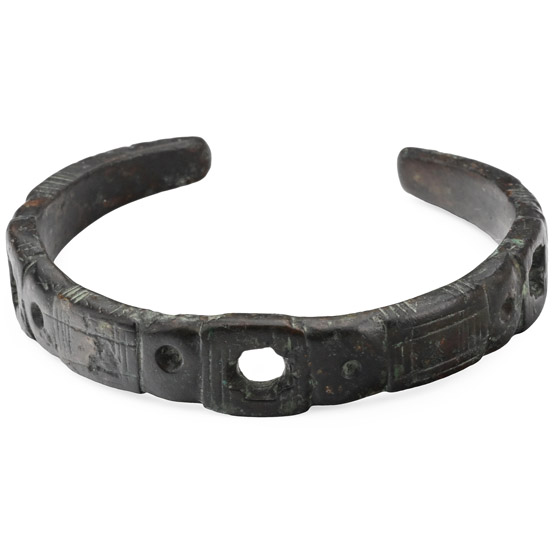
Roman Bronze Decorated Military Bracelet
1st-4th century A.D.Sold for (Inc. bp): £195
Penannular with pointed ends, the outer face with sockets to accept inset gemstones. 36.5 grams, 59 mm
Ex German art market, 2000s. Acquired from an EU collector living in London. From the collection of a Surrey, UK, gentleman.
