
Loading, please wait...
_900x900.jpg "Roman Capricorn Intaglio Gemstone")
_200x200.jpg "Roman Capricorn Intaglio Gemstone")
.jpg "Roman Capricorn Intaglio Gemstone")
LOT 0666
Roman Capricorn Intaglio Gemstone
CIRCA 1ST CENTURY A.D.
3/8 in. (0.6 grams, 10 mm).
Cabochon garnet with intaglio capricorn engraved on an earlier gemstone; supplied with a museum-quality impression.
ProvenanceFrom the collection of a Swiss gentleman formed in Europe from 1970-1980s; thence by descent from the family in London.
CONDITIONTimeLine Auctions follows a vetting process to ensure the authenticity and legality of all items, reinforcing our commitment to integrity and responsible trading. Each antiquity, antique, and coin lot undergoes thorough examination by a vetting committee of at least ten external specialists, professional trade association members, scientists, and archaeologists: Our Vetting Process
AUCTIONS:
TimeLine is a leading auction house specialising in antiquities, ancient art, collectables, natural history, coins, medals, and books. Our auctions offer museums, collectors, historians, and enthusiasts the opportunity to acquire unique and historically significant pieces.
LOT 0666
Roman Capricorn Intaglio Gemstone
Estimate £150 - 200€170 - 230 (for guidance only)$200 - 270 (for guidance only)
-
.jpg)
Roman Carnelian Victory Gemstone
Circa 2nd-3rd century A.D.Sold for (Inc. bp): £234
With intaglio image of winged Victory and a perching eagle; supplied with a museum-quality impression. 0.38 grams, 11 mm
From the collection of a Swiss gentleman formed in Europe from 1970-1980s; thence by descent from the family in London. -
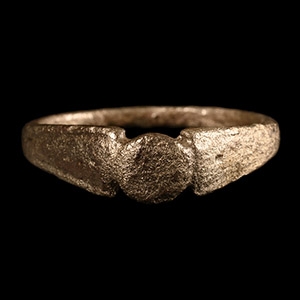
Roman Silver Ring with Expanding Shoulders
1st-4th century A.D.Sold for (Inc. bp): £33
With a D-section hoop; angular, expanding shoulders with pellet decoration supporting a round bezel. 1.43 grams, 19.68 mm overall, 17.15 mm internal diameter (approximate size British M, USA 6, Europe 12.46, Japan 12)
Acquired in the 1980s-1990s. Property of a Nottinghamshire gentleman. -
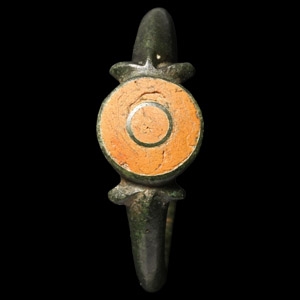
Superb Romano-British Enamelled Bronze Ring
3rd-4th century A.D.Sold for (Inc. bp): £260
With spurs to the shoulders, domed bezel with central roundel, enamel fill. 2.97 grams, 21.66 mm overall, 16.06 x 17.11 mm internal diameter (approximate size British L 1/2, USA 6, Europe 11.87, Japan 11)
Found Norfolk, Southern England. Acquired on the UK art market in the 1980s. From an East Anglian private collection. Accompanied by an old Norfolk Castle Museum record slip.
