
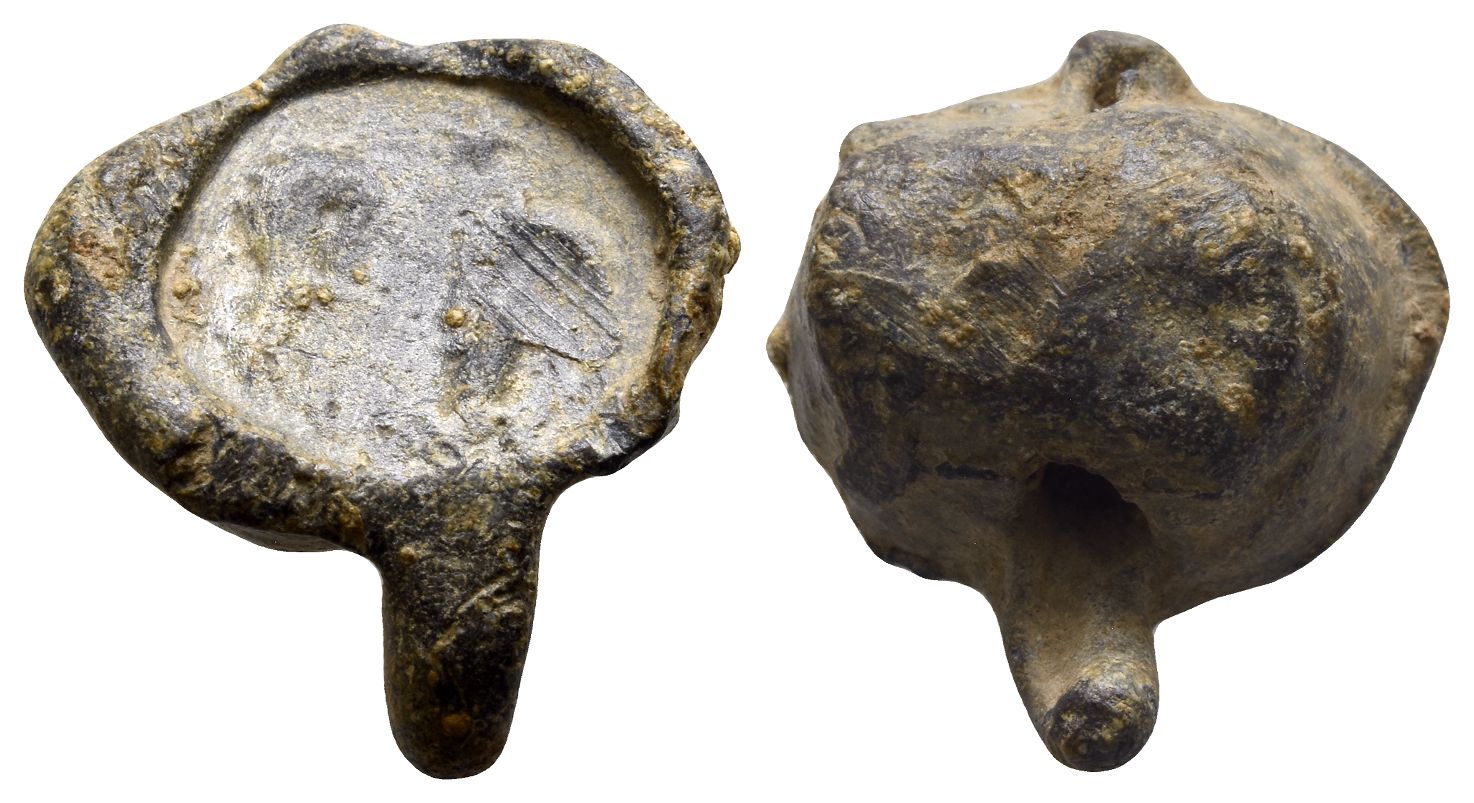
LOT 4159
Roman-Byzantine Lead Seal. Circa 3rd-5th century AD.
Confronted busts, star above / Blank. Cf. Leukel, 38-50. Condition as seen.(15.72gr, 22mm x 9mm.).
ProvenanceAcquired on the London art market in the late 1980s-1990s.
From the family collection of an East London, UK, gentleman.
TimeLine Auctions follows a vetting process to ensure the authenticity and legality of all items, reinforcing our commitment to integrity and responsible trading. Each antiquity, antique, and coin lot undergoes thorough examination by a vetting committee of at least ten external specialists, professional trade association members, scientists, and archaeologists: Our Vetting Process
AUCTIONS:
TimeLine is a leading auction house specialising in antiquities, ancient art, collectables, natural history, coins, medals, and books. Our auctions offer museums, collectors, historians, and enthusiasts the opportunity to acquire unique and historically significant pieces.
-
![Africa. Ashanti. Lot of Five [5] Brass Gold-Dust Weights.](https://timelineauctions.com/upload/images/items/small/238908-s.jpg)
Africa. Ashanti. Lot of Five [5] Brass Gold-Dust Weights. 19th century AD.
Sold for (Inc. bp): £111
Various standards. 58.41gr total.
Condition as seen.
From the private collection of Kenneth Machin (1936-2020), Buckinghamshire, UK; his collection of antiquities and natural history was formed since 1948; thence by descent. -
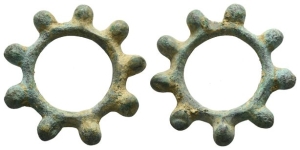
Celtic Bronze Cast Ring or Wheel Money. Circa 3rd-2nd century BC.
Sold for (Inc. bp): £46
Large ring with numerous knobs on outer surface. Cf. Victoor VII-4. 44.34gr, 55mm.
Condition as seen.
From the collection of a Somerset, UK, gentleman. -
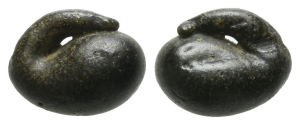
Levant & the Near East Zoomorphic Glass Weight. Late Bronze Age, circa 1500-1200 BC.
Estimate: £100 - 140 (+bp*)
Opening Bid: £50
Glass weight in shape of a duck, with head turned towards the tail. 0.92gr, 12mm.
Condition as seen.
Ex S collection, London, UK, deceased; formed 1970s-1990s.
