
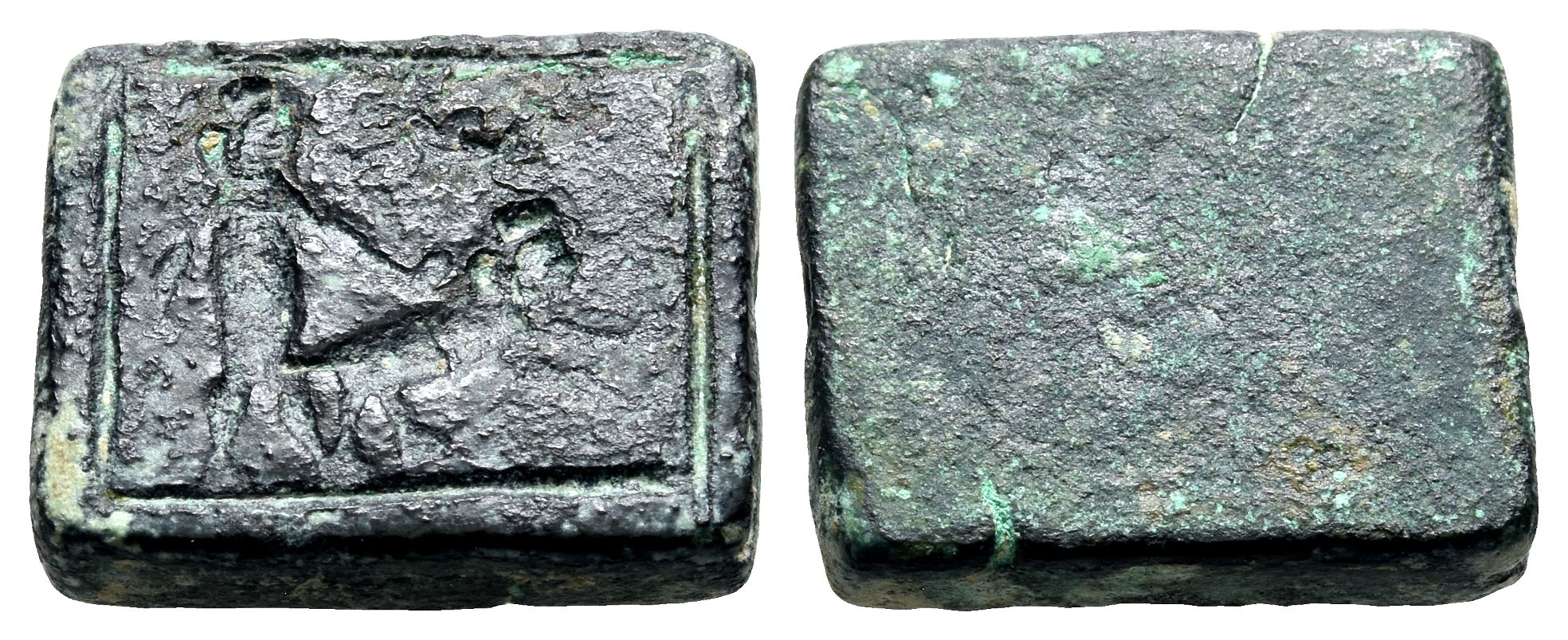
LOT 4166
Roman-Byzantine Bronze Weight. Circa 3rd-5th century AD.
Uncertain design / Blank. Condition as seen.(8.55gr, 18mm x 14mm.).
ProvenanceFrom the collection of a gentleman, acquired on the London art market in the 1990s.
TimeLine Auctions follows a vetting process to ensure the authenticity and legality of all items, reinforcing our commitment to integrity and responsible trading. Each antiquity, antique, and coin lot undergoes thorough examination by a vetting committee of at least ten external specialists, professional trade association members, scientists, and archaeologists: Our Vetting Process
AUCTIONS:
TimeLine is a leading auction house specialising in antiquities, ancient art, collectables, natural history, coins, medals, and books. Our auctions offer museums, collectors, historians, and enthusiasts the opportunity to acquire unique and historically significant pieces.
LOT 4166
Roman-Byzantine Bronze Weight.
Estimate £250 - 350€290 - 410 (for guidance only)$340 - 470 (for guidance only)
-
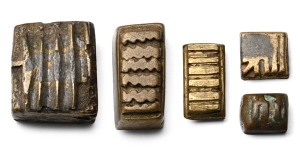
Africa. Ashanti. Lot of Five [5] Brass Gold-Dust Weights. 19th century AD.
Sold for (Inc. bp): £111
Various standards. 58.41gr total.
Condition as seen.
From the private collection of Kenneth Machin (1936-2020), Buckinghamshire, UK; his collection of antiquities and natural history was formed since 1948; thence by descent. -
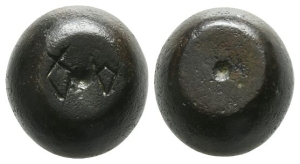
Byzantine Spherical Commercial Bronze Weight of 1 Uncia. Circa 5th-7th Century AD.
Sold for (Inc. bp): £13
ɄA (A inverted) / Blank. Bendall, Byzantine Weights 23 (A not inverted). 26.46gr, 20mm x 14mm.
Condition as seen.
Ex German art market, 2000s. Acquired from an EU collector living in London. From the collection of a Surrey, UK, gentleman. -
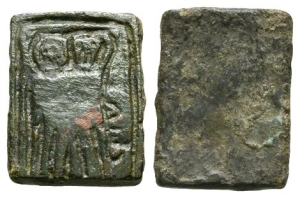
Byzantine Bronze Weight or Amulet. 7th-10th century AD.
Sold for (Inc. bp): £20
Rectangular flat-section weight with low-relief motif of a standing two-headed figure / Blank. 5.17gr, 20mm.
Condition as seen.
Property of a London collector; acquired before 1980. Property of a Cheshire, UK, gentleman.
This is probably a folk amulet depicting a schematic representation of two saints. Images of paired saints at this period are limited to a known few which would suggest that the figures could be saints.
