
Loading, please wait...
LOT 0721
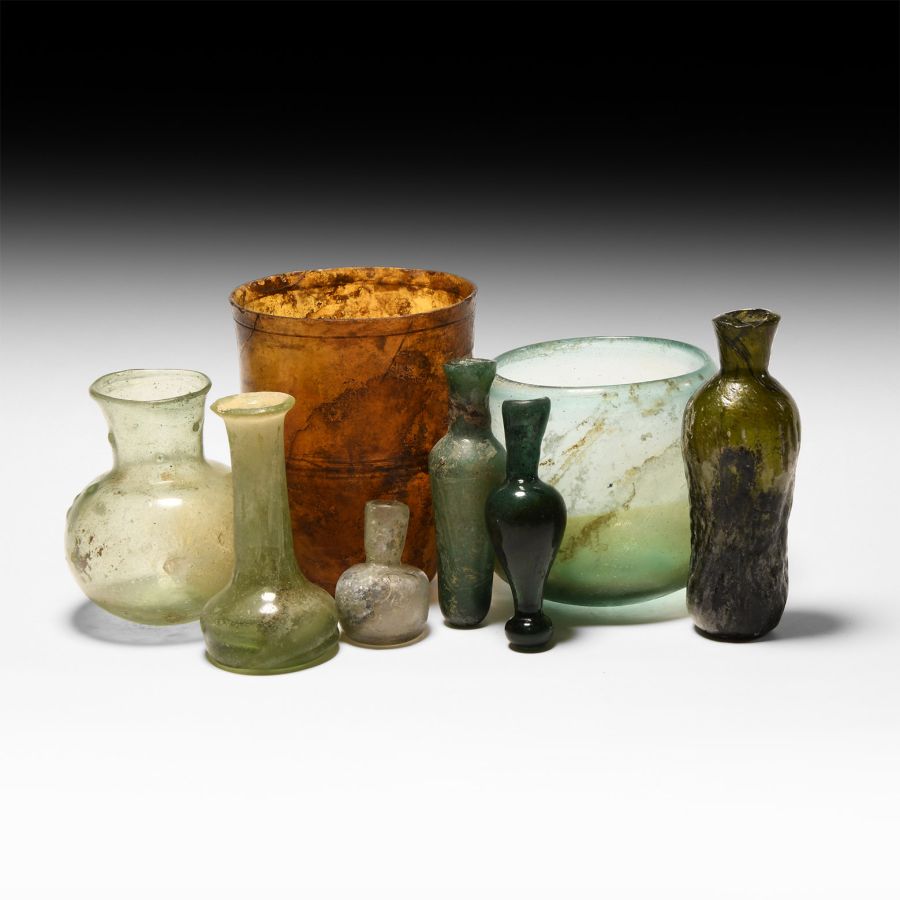
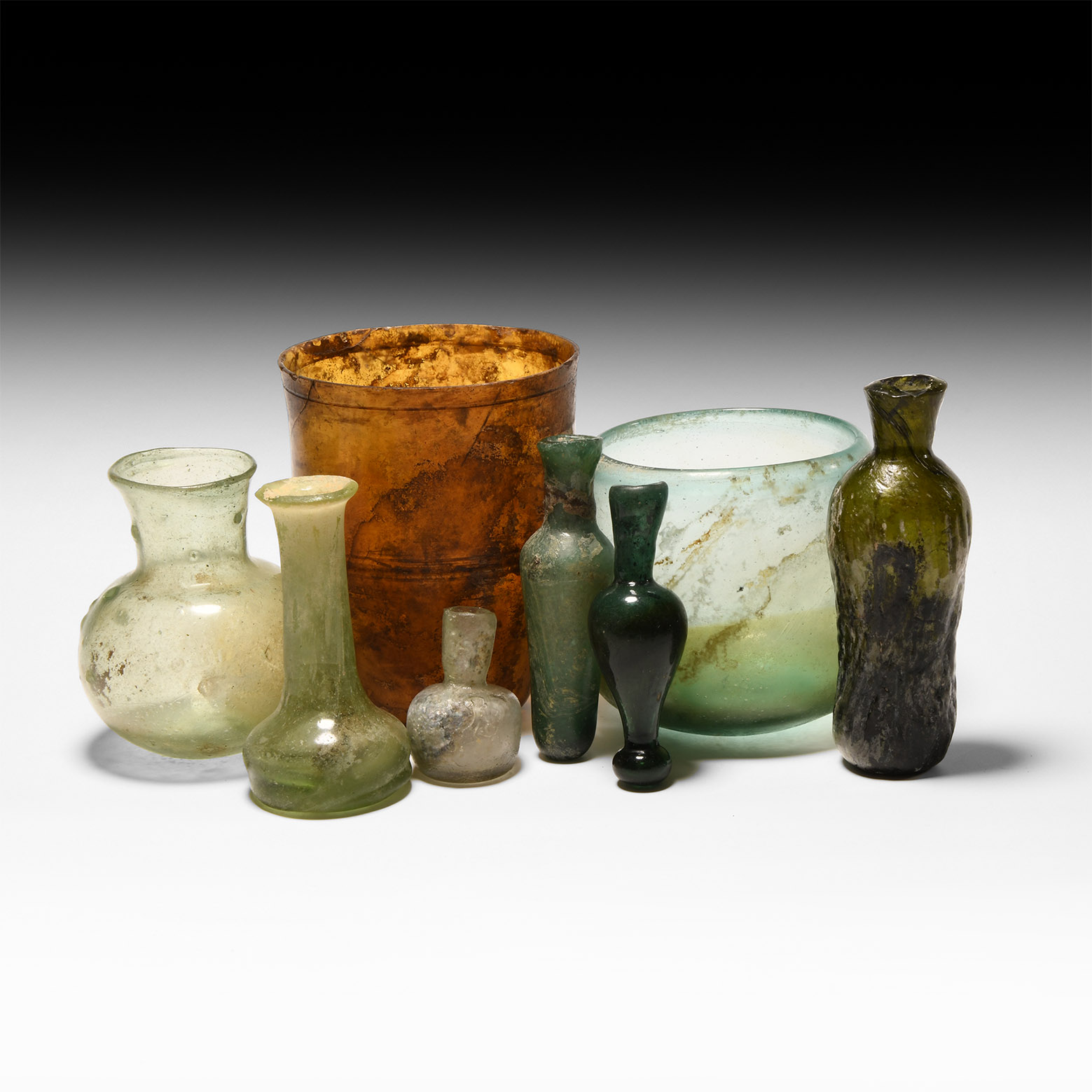
Roman Byzantine and Islamic Glass Vessel Collection
1ST CENTURY A.D. AND LATER
1 1/2 - 3 3/4 in. (387 grams total, 40-97 mm).
A group of eight glass vessels from the Roman, Byzantine and Islamic civilisations, of various types and dates: a pale green bulbous jar with a flared neck and rim, blobs to the neck and shoulder; a green bottle with waisted cylindrical body and short neck decorated with raised vertical ribs and hatching; a miniature piriform green bottle with globular foot and slightly flared neck; a clear glass miniature bottle of squat form, with a tubular neck and remains of iridescence to the internal surface; a pale green bottle with a squat body, long tubular neck and everted rim; a piriform green bottle with high shoulder and rounded base, tubular neck; a barrel-shaped pale blue vessel with inverted rim; an amber-brown coloured vessel of carinated form, wheel-cit bands to the equator and rim. [8, No Reserve]
ProvenanceAcquired 1960s-1990s.
From the late Alison Barker collection, a retired London barrister.
TimeLine Auctions follows a vetting process to ensure the authenticity and legality of all items, reinforcing our commitment to integrity and responsible trading. Each antiquity, antique, and coin lot undergoes thorough examination by a vetting committee of at least ten external specialists, professional trade association members, scientists, and archaeologists: Our Vetting Process
AUCTIONS:
TimeLine is a leading auction house specialising in antiquities, ancient art, collectables, natural history, coins, medals, and books. Our auctions offer museums, collectors, historians, and enthusiasts the opportunity to acquire unique and historically significant pieces.
-
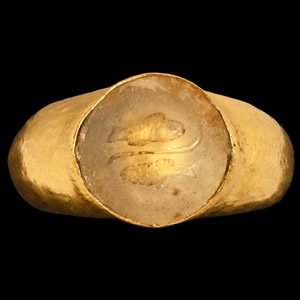
Roman Gold Ring with Fish Gemstone
3rd-4th century A.D.Sold for (Inc. bp): £1,170
A hollow-formed gold finger ring with inset glass intaglio of two fishes placed tête-bêche; the astrological symbol for the Pisces constellation. 6.11 grams, 26.55 mm overall, 20.73 mm internal diameter (approximate size British W 1/2, USA 11 1/4, Europe 25.6, Japan 24)
English private collection. -
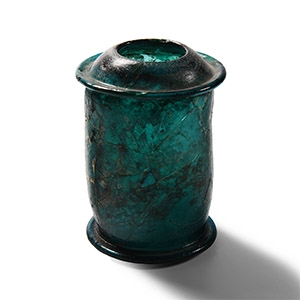
Roman Turquoise Glass Pyxis
1st-4th century A.D.Estimate: £500 - 700 (‡+bp*)
Opening Bid: £250
A vibrant green-blue glass pyxis with a broadly barrel-shaped body, everted foot and shoulder, domed inverted neck; areas of iridescence; repaired. 42 grams, 85 mm high
Acquired early 1990s. Ex private American collection; thence by descent. Private collection since 1998.
Originally used principally by women to hold cosmetics, jewellery or even poisonous substances, some pyxides have even been identified as ink pots. Most surviving examples are Green terracotta examples. -
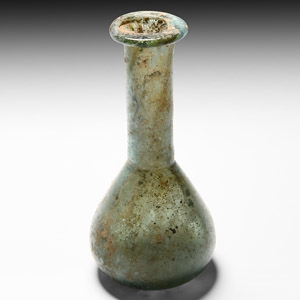
Roman Glass Unguentarium
2nd century A.D.Sold for (Inc. bp): £117
A blue glass unguentarium with a piriform body and long tubular neck with flanged rim; some iridescence to surfaces. 71.8 grams, 12 cm
Acquired 1980-2015. Ex Abelita family collection.
