
Loading, please wait...
LOT 0165
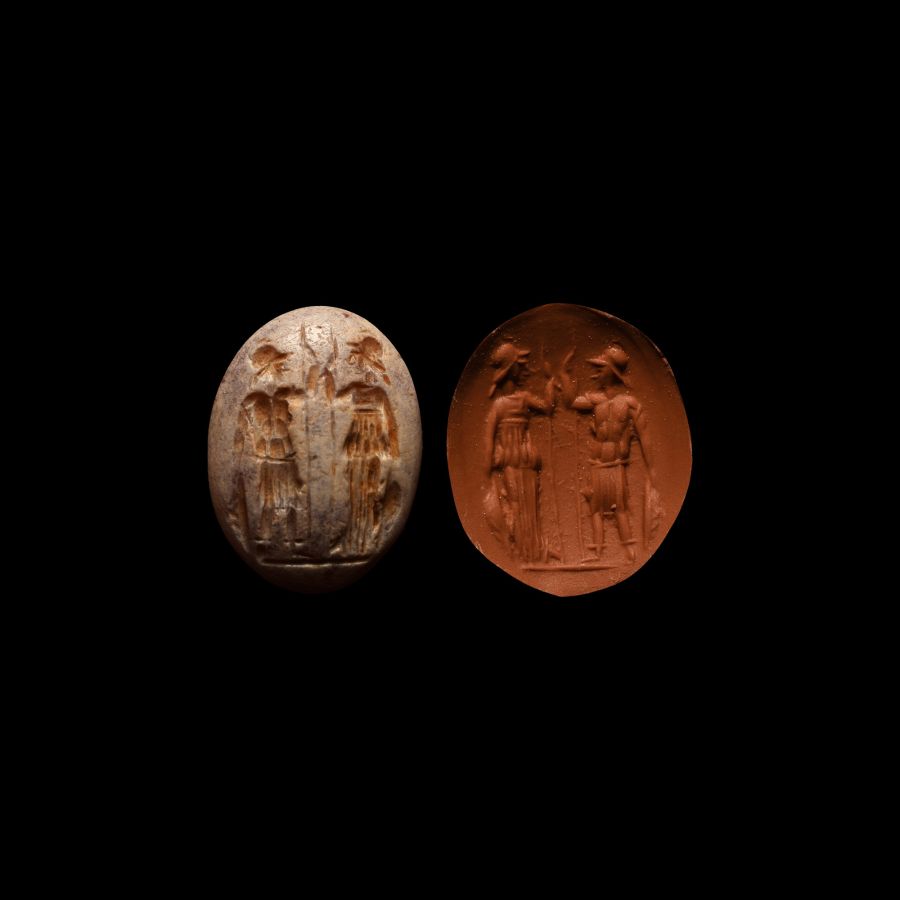
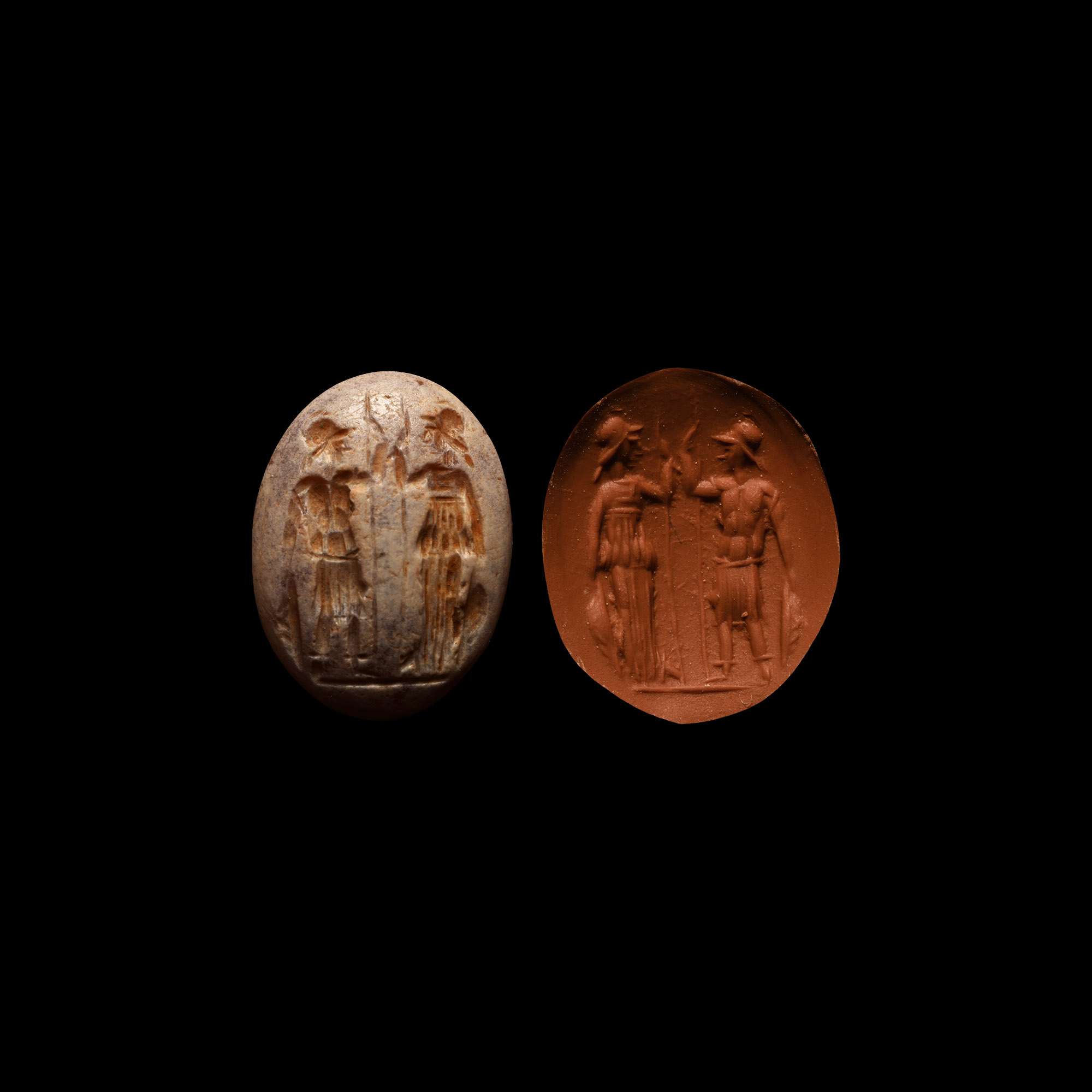
Roman Burnt Carnelian Gemstone with Mars and Minerva
1ST-2ND CENTURY A.D.
1/2 in. (0.87 grams, 14 mm).
The oval intaglio with Mars Ultor and Minerva facing each other; Mars to the left with a spear in raised left hand, armed with helmet, armour and sword, his right hand resting on the shield beside him; Minerva to the right, wearing a helmet, shield and aegis.
ProvenanceAcquired in the late 1980s-early 1990s.
Important North West London collection.
Cf. very similar image of Mars in Platz-Horster, G., ‘Die antiken Gemmen aus Xanten. Teil III: Neufunde, Neuerwerbungen, Nachtrage und Auswertung,’ in Xantener Berichte, Band 15, Grabung-Forschung-Präsentation, Mainz, 2009, pp.129-182, p.155, cat.no.33.
FootnotesMars Ultor and Minerva were both linked with Roman war imagery. Mars represented military power, the strength of the army and violence in battle, Minerva strategy, tactics and intelligence in war. All these qualities were complementary and necessary to win the war. The gemstone was probably a gift for a soldier.
CONDITIONTimeLine Auctions follows a vetting process to ensure the authenticity and legality of all items, reinforcing our commitment to integrity and responsible trading. Each antiquity, antique, and coin lot undergoes thorough examination by a vetting committee of at least ten external specialists, professional trade association members, scientists, and archaeologists: Our Vetting Process
AUCTIONS:
TimeLine is a leading auction house specialising in antiquities, ancient art, collectables, natural history, coins, medals, and books. Our auctions offer museums, collectors, historians, and enthusiasts the opportunity to acquire unique and historically significant pieces.
LOT 0165
Roman Burnt Carnelian Gemstone with Mars and Minerva
Estimate £800 - 1,000€930 - 1,160 (for guidance only)$1,080 - 1,350 (for guidance only)
-
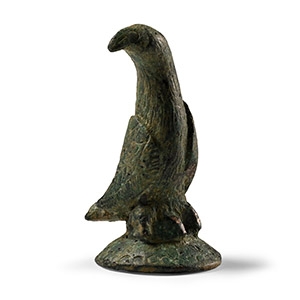
Roman Bronze Eagle on Decorated Base
1st-4th century A.D.Estimate: £100 - 140 (+bp*)
Opening Bid: £56
Modelled in the round with naturalistic detailing, standing on base with wings closed. 32 grams, 41 mm
‘The Ancient Menagerie Collection’ formerly the property of a Cambridgeshire lady, collected since the 1990s and acquired from auctions and dealers throughout Europe and the USA, now ex London collection. -
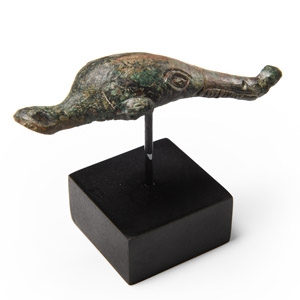
Roman Bronze Dolphin's Head Mount
1st-4th century A.D.Sold for (Inc. bp): £195
Modelled in the half-round a stylised head of a dolphin. 17.6 grams, 73 mm
‘The Ancient Menagerie Collection’ formerly the property of a Cambridgeshire lady, collected since the 1990s and acquired from auctions and dealers throughout Europe and the USA, now ex London collection. -
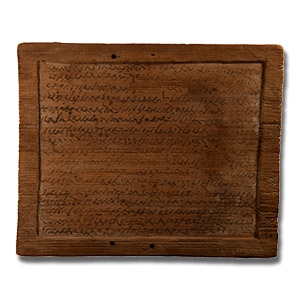
Roman Reused Inked Wooden Wax Tablet Relating to Sheep and Clothing
4th century A.D.Sold for (Inc. bp): £7,150
The shallow recessed panel displaying seventeen lines of hand-inked cursive text; reverse bearing twenty lines of hand-inked cursive text with a shallow rectangular vertical recess which once held wax seals; pierced twice on the upper and lower edges for attachment. 50 grams, 19.5 x 16 cm
From an important London collection since 1975.
Prof. Dr. Phil. Peter Rotenhoefer says: "The tablet is the second tabula of a testament consisting normally of three tablets (a tryptich). It contains in a highly formalistic legal language legacies for various persons (inter alia a Iulia) who receive certain items like e.g. sheep and clothes. 17 lines of cursive script on the first page, 20 lines on the rear."
