
Loading, please wait...

LOT 0790
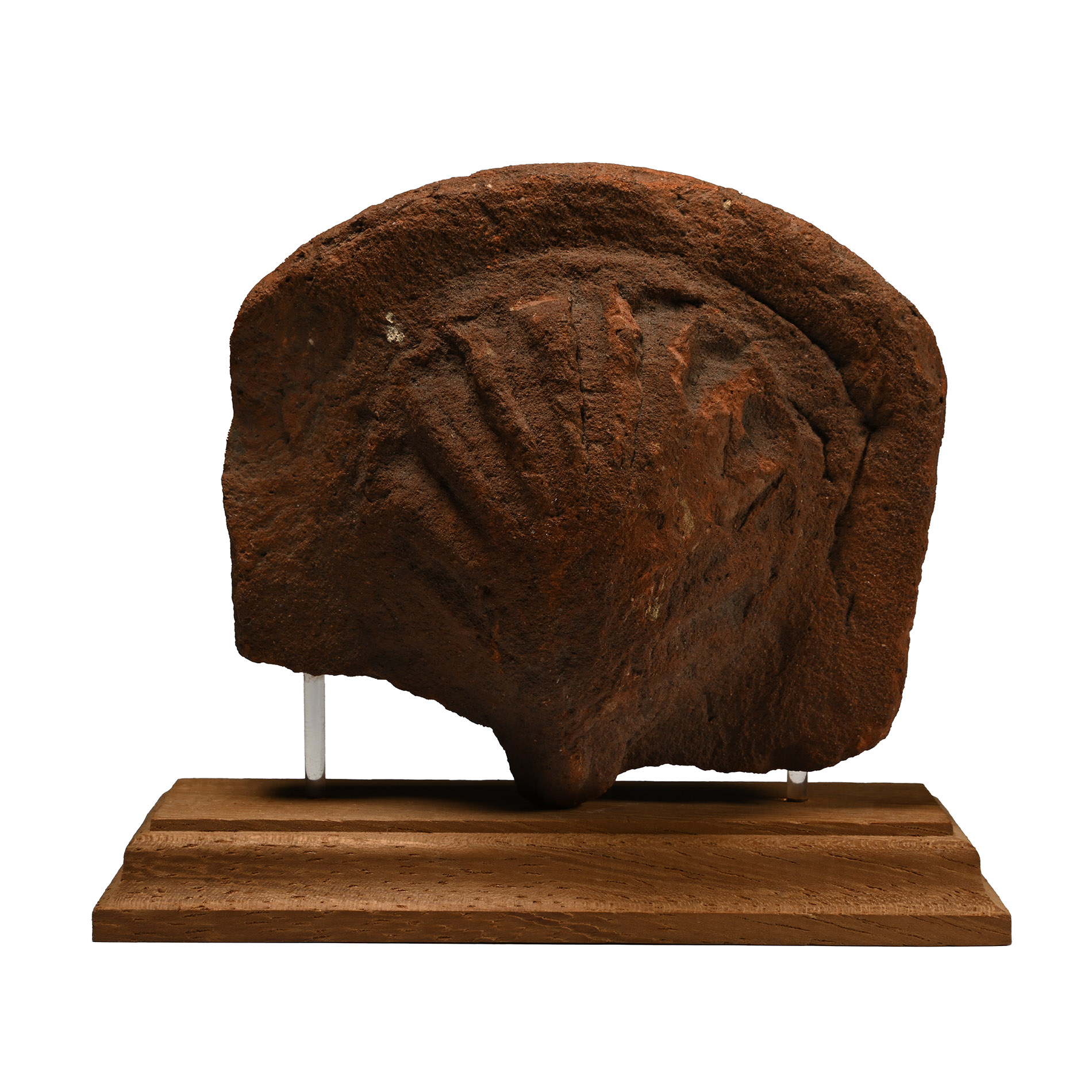
Roman 'Burgh Castle' Terracotta Antefix Shell Decoration
1ST-4TH CENTURY A.D.
5 1/8 in. (342 grams total, 13 cm wide including stand).
The upper part of an antefix, rounded in shape and decorated with a 16-armed shell shape; mounted on a custom-made display stand. [No Reserve]
ProvenanceFound Burgh Castle, Great Yarmouth, Suffolk, UK.
From the collection of a late East Anglian teacher and antiquarian who retired to the Isle of Wight in Hampshire, UK.
He amassed a large collection of objects between the 1960s-1980s.
This lot is accompanied by an illustrated lot declaration signed by the Head of the Antiquities Department, Dr Raffaele D’Amato.
Cf. McComish, J.M., A Guide to Ceramic Building Materials, an insight Report, York, 2015, pl.1, p.8, for Roman antefixes in Britain.
FootnotesAntefix tiles in Britain are rare and typically comprise a decorated vertical panel of triangular or pentagonal shape, though some are known to have a rounded top, and they have a lug or a semi-circular flange on the reverse designed to fit into the open end of either the lowest course of embraces on a roof, or into the gable end of the ridge tiles. Antefix tiles have sanded decorated surfaces showing that they were made in sanded moulds rather than being stamped. The majority of antefix tiles in Britain are decorated with human masks, though several other designs are known: pentagonal panels, vine leaves with grapes, gorgon heads, a female head with a stylised headdress, a second design of female head and a man fishing.
CONDITIONTimeLine Auctions follows a vetting process to ensure the authenticity and legality of all items, reinforcing our commitment to integrity and responsible trading. Each antiquity, antique, and coin lot undergoes thorough examination by a vetting committee of at least ten external specialists, professional trade association members, scientists, and archaeologists: Our Vetting Process
AUCTIONS:
TimeLine is a leading auction house specialising in antiquities, ancient art, collectables, natural history, coins, medals, and books. Our auctions offer museums, collectors, historians, and enthusiasts the opportunity to acquire unique and historically significant pieces.
LOT 0790
Roman 'Burgh Castle' Terracotta Antefix Shell Decoration
Sold for (Inc. bp): £169
-
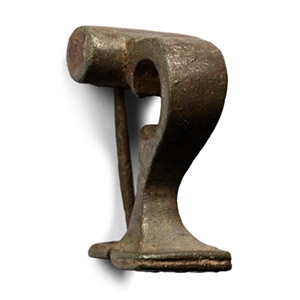
Romano-British Tinned Bronze Decorated Knee Brooch
2nd century A.D.Sold for (Inc. bp): £33
Comprising a chord housed with a horizontal sleeve with pin to the rear, deep scrolled bow with spurs to the reverse, scooped lower end and trapezoidal foot, hooked catch to reverse. 16.2 grams, 30 mm
Found near Wetwang, North Yorkshire, UK. Acquired UK circa 2007. Ian Wilkinson collection, Nottinghamshire, UK, formed since 1985. This lot is accompanied by an illustrated lot declaration signed by the Head of the Antiquities Department, Dr Raffaele D’Amato. -
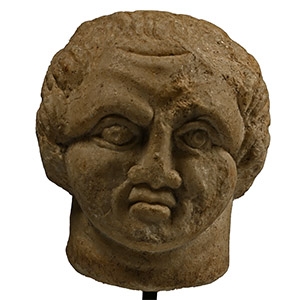
Roman Marble Portrait Head of a Putto
3rd-4th century A.D.Sold for (Inc. bp): £1,300
Carved in the round with detailed layered hairstyle swept back from the temples, broad brow with defined furrows, deep-set eyes, flat nose and small puckered mouth; provincial workmanship; mounted on a custom-made stand. 4.32 kg total, 27.2 cm including stand
Friedlinger-Brandt, circa 1950-1960, ambassador in Cairo before 1920. Thereafter, Münzen und Medaillen AG, Basel, 1960-1970. Accompanied by a copy of an Art Loss Register certificate no.S00064834. This lot is accompanied by an illustrated lot declaration signed by the Head of the Antiquities Department, Dr Raffaele D’Amato.
The generally puffy and rounded appearance of the features and the copious hair suggest that the subject is not a human male but rather a putto or possibly the deity Cupid himself. -
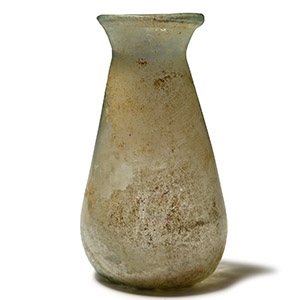
Roman Glass Jar
4th century A.D.Sold for (Inc. bp): £111
Piriform in profile with flared neck and rolled rim, dimple base. 36 grams, 11.1 cm
Ex Helene Wackernagel-Wenk (1901-1979), Switzerland; thence by descent. This lot is accompanied by an illustrated lot declaration signed by the Head of the Antiquities Department, Dr Raffaele D’Amato.
These small jars were used as storage vessels. Their typology shows similarities with some material from Northern Black Sea region as well as with other glass finds found in Eastern Mediterranean settlements due to the decreasing variety of forms starting from the Late Roman Period, with whom they have similarities in colour, shape and typology. Helene Wackernagel-Wenk was a distinguished collector of art and antiquities, celebrated for her refined taste and commitment to preserving cultural heritage. Her collection encompassed a wide range of artefacts, reflecting her deep appreciation for the artistic and historical significance of ancient civilizations. Known for her meticulous curation, Wackernagel-Wenk’s legacy endures through the exceptional pieces that once formed part of her esteemed collection. Artefacts associated with her name are highly valued for their provenance and quality.
