
Loading, please wait...
LOT 0743
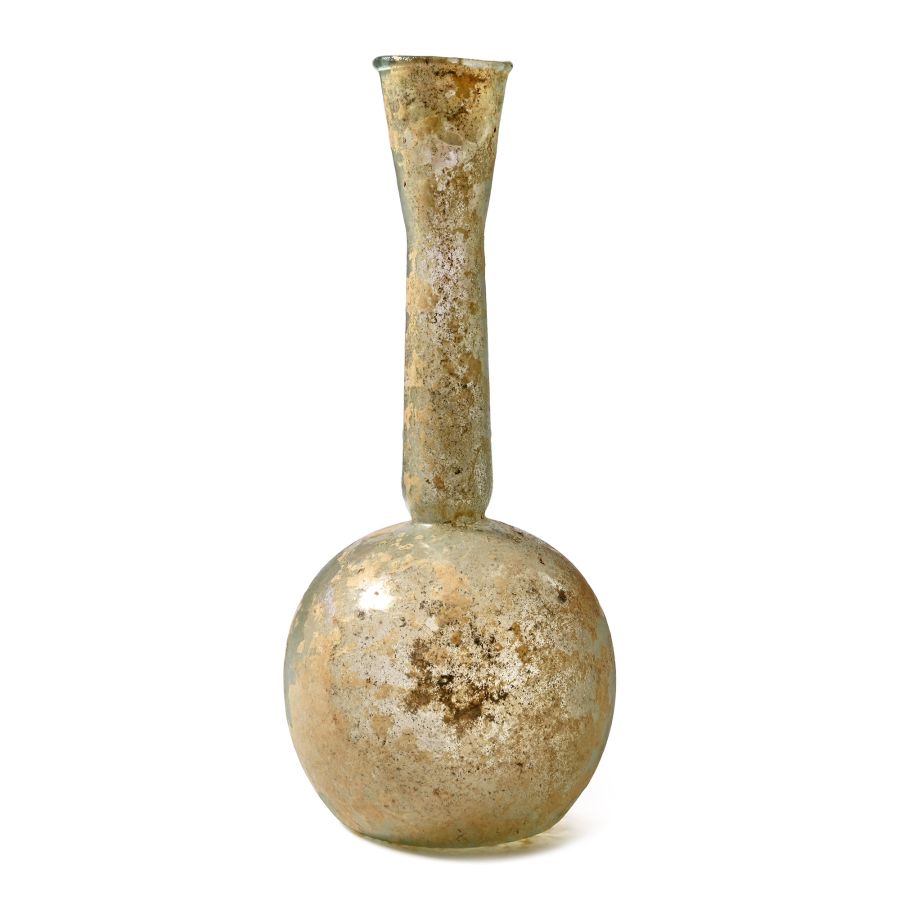
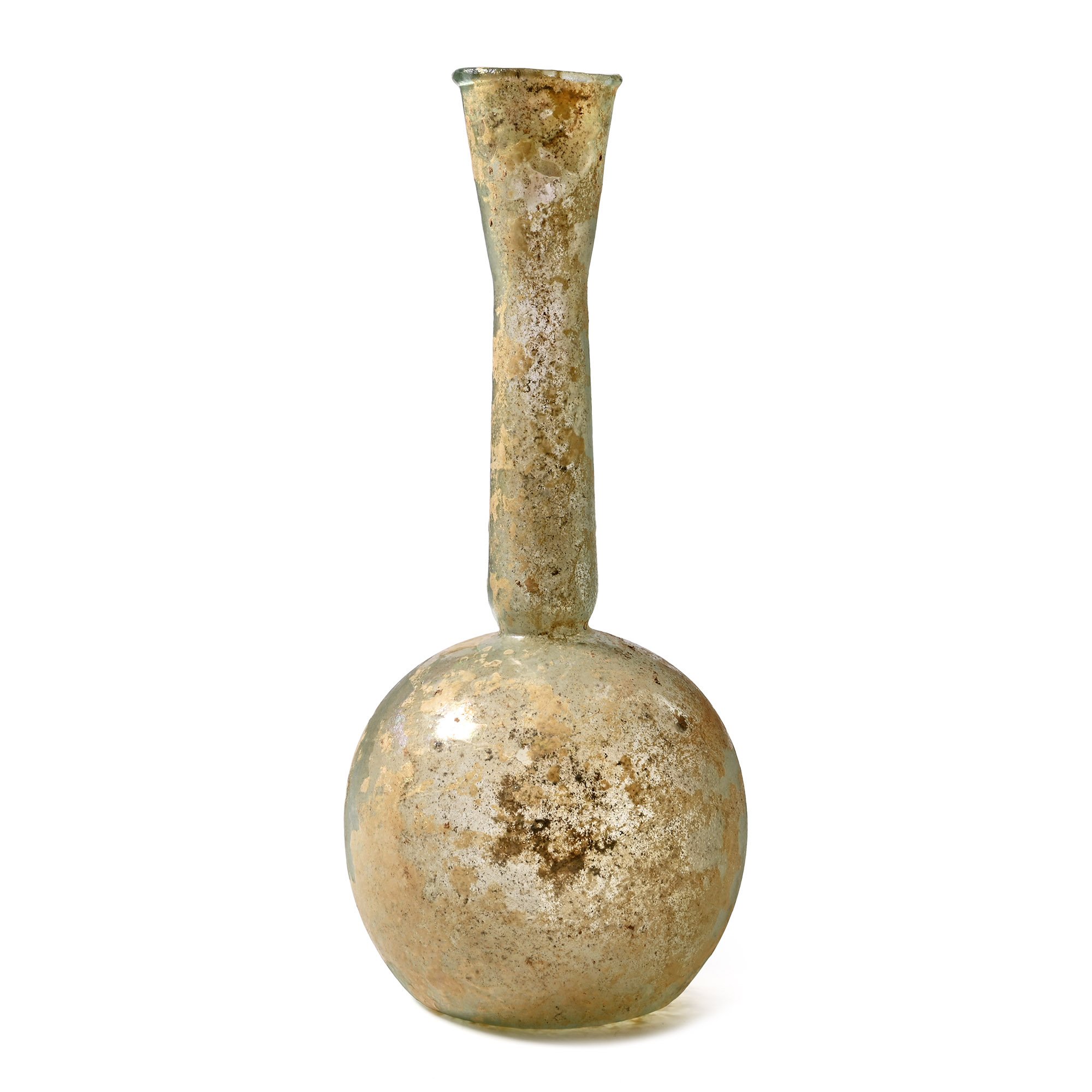
Roman Bulbous Glass Bottle with Tall Neck
3RD-4TH CENTURY A.D.
7 1/2 in. (43.4 grams, 19 cm).
Large bottle with bulbous body and a tall tubular neck with a gently flaring mouth.
ProvenanceAcquired in the 1990s from London dealerships and auction houses.
From the Lonson collection.
Cf. Whitehouse, D., Roman Glass in the Corning Museum of Glass, vol.1, New York, 2001, item 311, for a similar type of bottle.
CONDITIONTimeLine Auctions follows a vetting process to ensure the authenticity and legality of all items, reinforcing our commitment to integrity and responsible trading. Each antiquity, antique, and coin lot undergoes thorough examination by a vetting committee of at least ten external specialists, professional trade association members, scientists, and archaeologists: Our Vetting Process
AUCTIONS:
TimeLine is a leading auction house specialising in antiquities, ancient art, collectables, natural history, coins, medals, and books. Our auctions offer museums, collectors, historians, and enthusiasts the opportunity to acquire unique and historically significant pieces.
LOT 0743
Roman Bulbous Glass Bottle with Tall Neck
Estimate £300 - 400€350 - 460 (for guidance only)$410 - 540 (for guidance only)
-
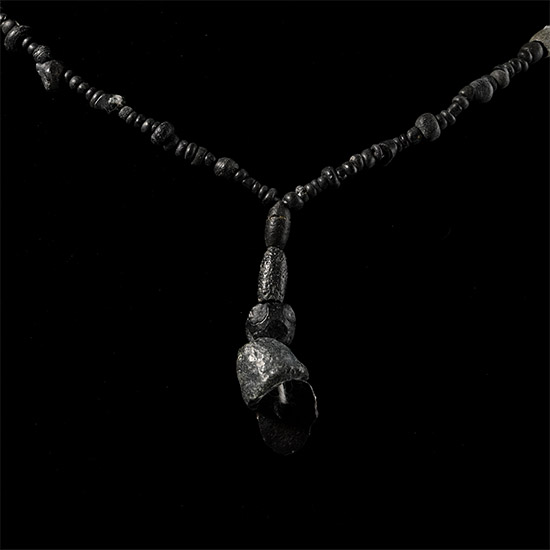
Roman Black Glass and Other Bead Necklace String
1st-4th century A.D. and laterSold for (Inc. bp): £26
Composed mainly of small oblate beads interspersed with larger beads, the central feature composed of five larger beads; restrung. 10.2 grams, 31 cm
Acquired in the 1990s. Ex London, UK, collection. -
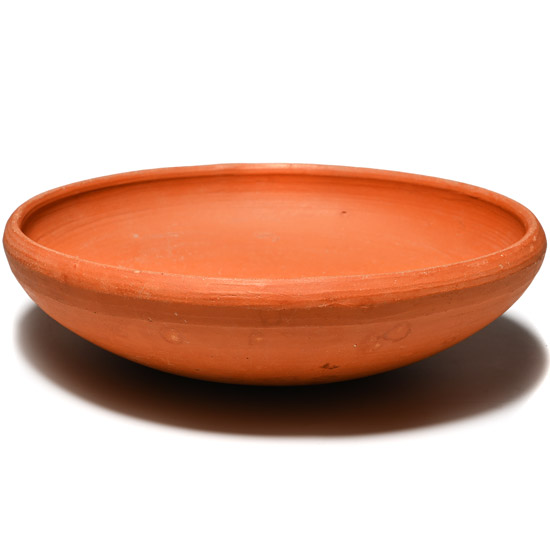
Roman Red Ware Bowl
3rd-4th century A.D.Sold for (Inc. bp): £124
Broad and squat in profile with inturned rim and external carination. 410 grams, 16.7 cm wide
From the collection of David Donlan (1947-2025), a dedicated and lifelong collector with a passion for the ancient world and the natural sciences, forming his collection from 1960s onwards, using many reputable dealers across the United Kingdom, including the well-regarded Coincraft and The Parthenon Gallery. -
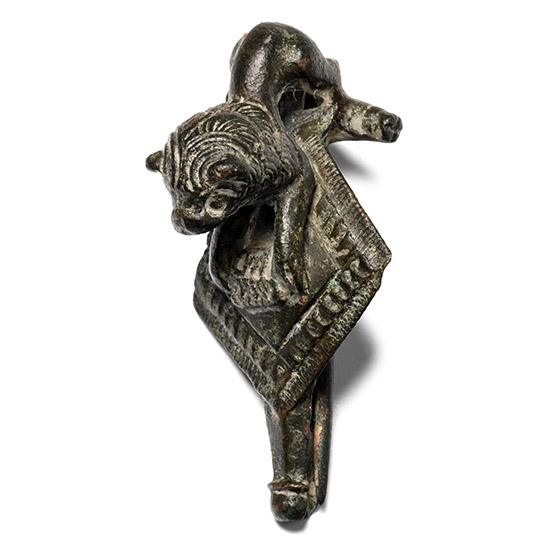
Roman Bronze Lion on Bow Brooch
2nd-3rd century A.D.Sold for (Inc. bp): £286
Lozengiform plaque with tiered design, bow formed as a reclining lion with forepaws flanking a casket; hinged pin above and catch to the reverse. 12.9 grams, 40 mm
Acquired at the York Fair. Property of a Lancashire, UK, collector.
