
Loading, please wait...
LOT 0676
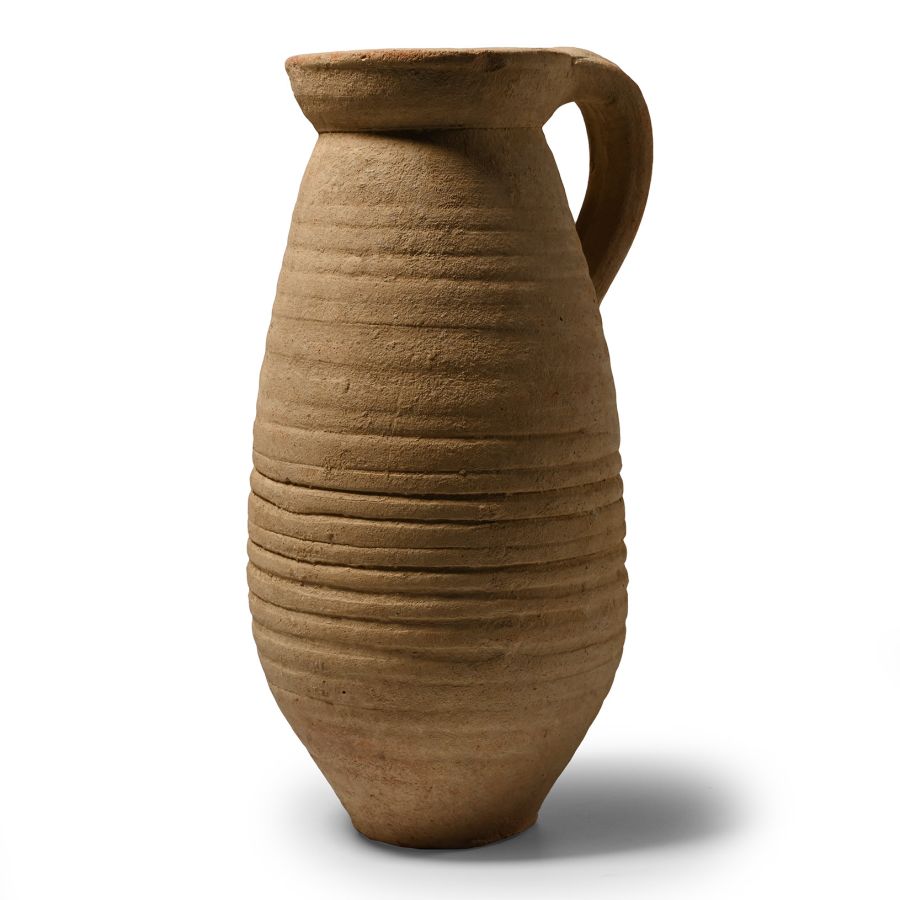
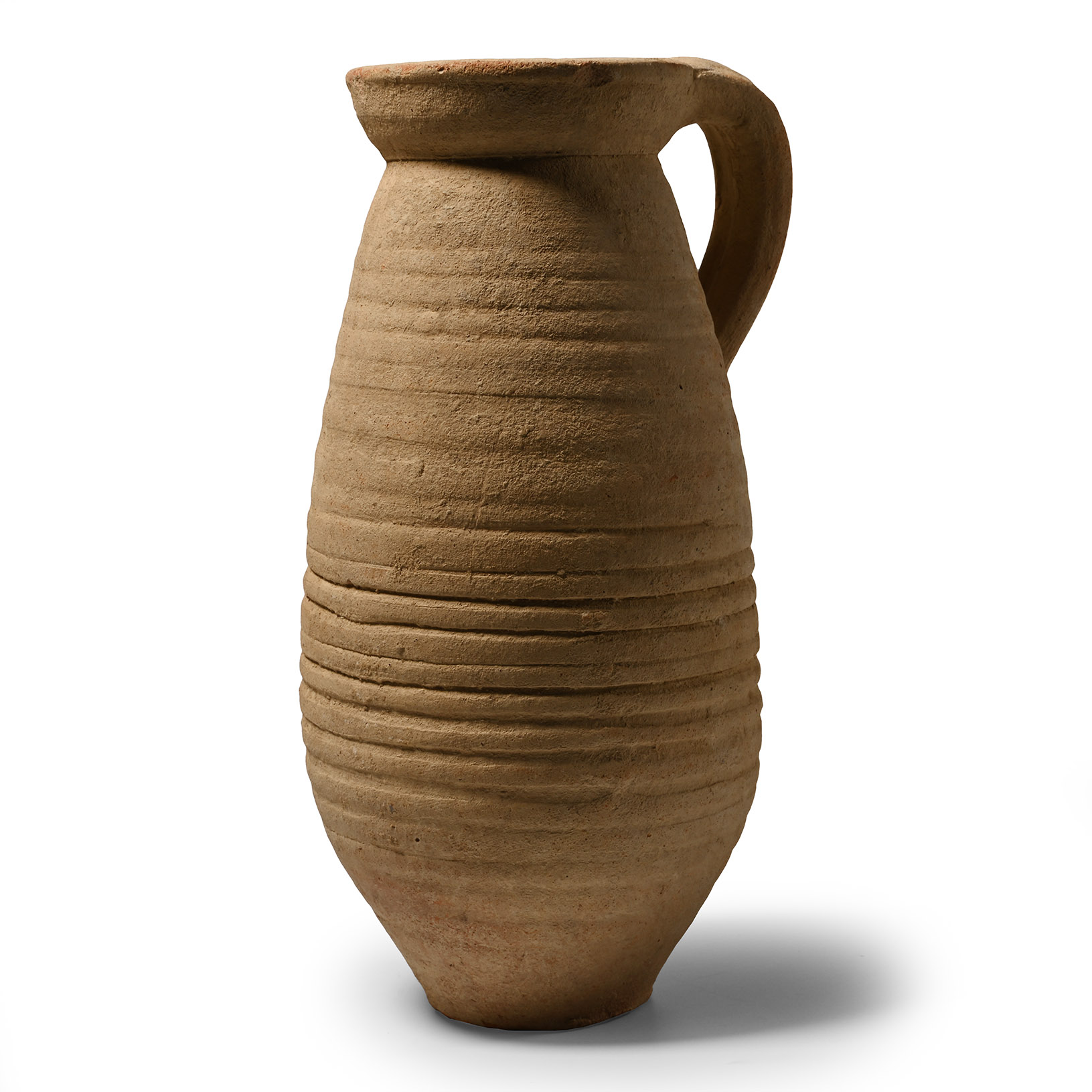
Roman Buff Ware Jug
NORTH AFRICAN, 2ND-3RD CENTURY A.D.
6 1/2 in. (347 grams, 16.5 cm).
A pitcher with short footed base and ribbed sides that taper to the neck; topped by a wide, flared spout and thick strap handle; to the base 'from Tunisia - - (?) 1951'. [No Reserve]
ProvenanceAcquired London art market, 1960s-1980s.
Ex property of an Essex, UK, collector.
TimeLine Auctions follows a vetting process to ensure the authenticity and legality of all items, reinforcing our commitment to integrity and responsible trading. Each antiquity, antique, and coin lot undergoes thorough examination by a vetting committee of at least ten external specialists, professional trade association members, scientists, and archaeologists: Our Vetting Process
AUCTIONS:
TimeLine is a leading auction house specialising in antiquities, ancient art, collectables, natural history, coins, medals, and books. Our auctions offer museums, collectors, historians, and enthusiasts the opportunity to acquire unique and historically significant pieces.
-
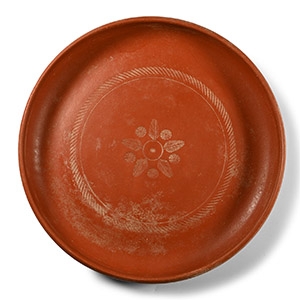
Roman Decorated 'Terra Sigillata' Redware Dish
North Africa, 4th century A.D.Sold for (Inc. bp): £572
Terracotta dish with low sidewall, tondo with ropework border, central motif of five radiating fronds with rosettes between. 466 grams, 22.5 cm diameter
From a UK private collection. Ex London, UK, gallery. with Mallams, Oxford, UK. Property of a Bristol, UK, gentleman. -
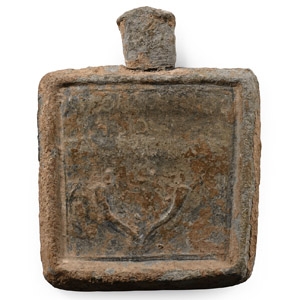
Seleukis and Pieria, Laodicea ad Mare(?) Lead Weight of 1/2 Mna or Hemimnaion
150-149 B.C.Estimate: £200 - 300 (+bp*)
Opening Bid: £100
ΑΠΟΛΛΩΝΙΟΣ (Apollonios), agoranomos, dated Seleucid Era 163 (150/149 BC), ΑΠΟΛΛധΝΙΟΥ Τ Ο Υ TA[...]OY [...] ꞀΞΡ (date) in five lines, two crossed cornucopiae below, monogram(?) to left; the reverse blank. 362 grams, 93 x 70mm.
From the collection of a gentleman, acquired on the London art market in the 1990s. -
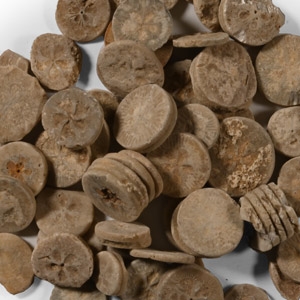
Romano-Egyptian Limestone 'Floral' Inlay Group
30 B.C.-323 A.D. or earlierSold for (Inc. bp): £33
Group of discoid inlay plaques or gaming counters, crinoids with cinquefoil motif. 74 grams total, 8-19 mm
From a central London ADA dealership, 1980-1990.
Flowers were symbolic of rebirth due to the daily reopening of their petals after nightfall. As a result, they were widely used in domestic settings, religious and funerary contexts, and as adornments. Similar rosette discs, like those recovered from the Ramesside Period palace at Qantir, were used as decorative elements in royal palaces.
