
Loading, please wait...
LOT 0922
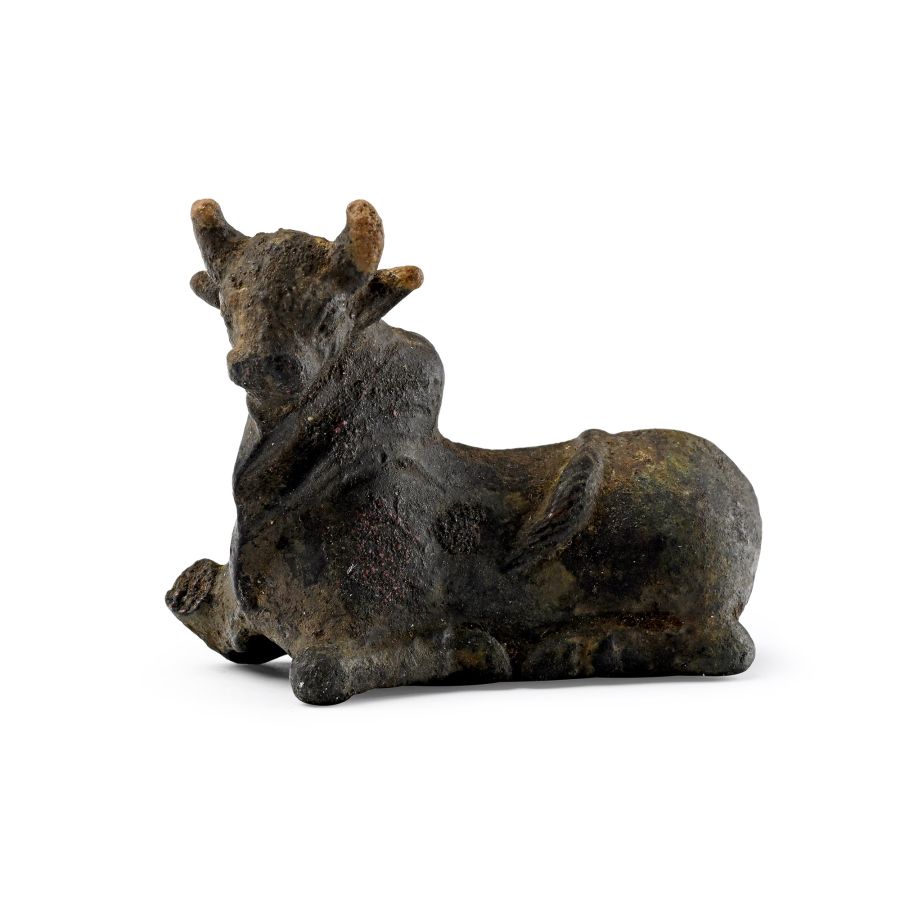
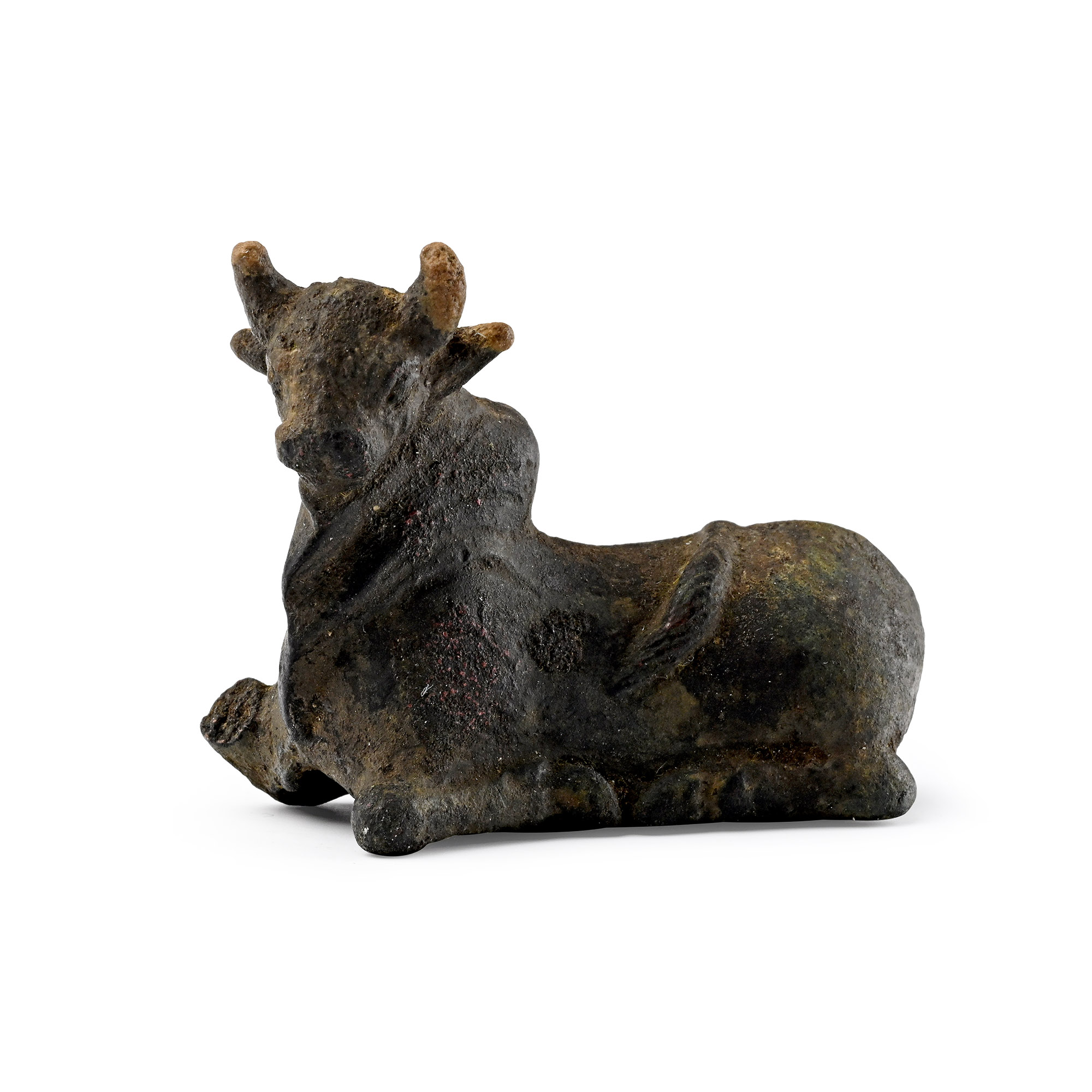
Roman Bronze Zebu Statuette
3RD-4TH CENTURY A.D.
1 7/8 in. (61 grams, 47 mm).
Hollow-formed in reclining pose with the legs folded beneath the body, tail curled over the rump, hump to rear of neck.
ProvenanceAcquired in 1992.
Private collection, thence by descent.
Private collection, since the late 1990s.
TimeLine Auctions follows a vetting process to ensure the authenticity and legality of all items, reinforcing our commitment to integrity and responsible trading. Each antiquity, antique, and coin lot undergoes thorough examination by a vetting committee of at least ten external specialists, professional trade association members, scientists, and archaeologists: Our Vetting Process
AUCTIONS:
TimeLine is a leading auction house specialising in antiquities, ancient art, collectables, natural history, coins, medals, and books. Our auctions offer museums, collectors, historians, and enthusiasts the opportunity to acquire unique and historically significant pieces.
LOT 0922
Roman Bronze Zebu Statuette
Estimate £1,000 - 1,400€1,160 - 1,620 (for guidance only)$1,350 - 1,890 (for guidance only)
-
.jpg)
Roman Iron Ring with Gryllos Gemstone
2nd-3rd century A.D.Sold for (Inc. bp): £364
Substantial D-section hoop set with a red jasper intaglio with a gryllos motif; supplied with a museum-quality impression. 9.06 grams, 27.29 mm overall, 20.24 x 16.48 mm internal diameter (approximate size British N 1/2, USA 6 3/4, Europe 14.35, Japan 13)
From an old English collection, Camden, London, UK.
Grylli motifs usually combine various human and animal heads, sometimes including animal legs. -
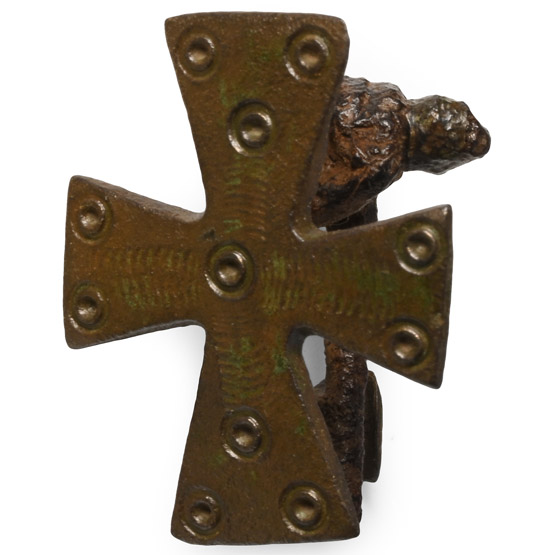
Roman Bronze Christian Cross Brooch
5th-7th century A.D.Sold for (Inc. bp): £182
Expanding-arm type with incised ring-and-dot motifs, pin-lug, spring, pin and catch to reverse. 6.3 grams, 26 mm
Ex German art market, 2000s. Acquired from an EU collector living in London. From the collection of a Surrey, UK, gentleman. -
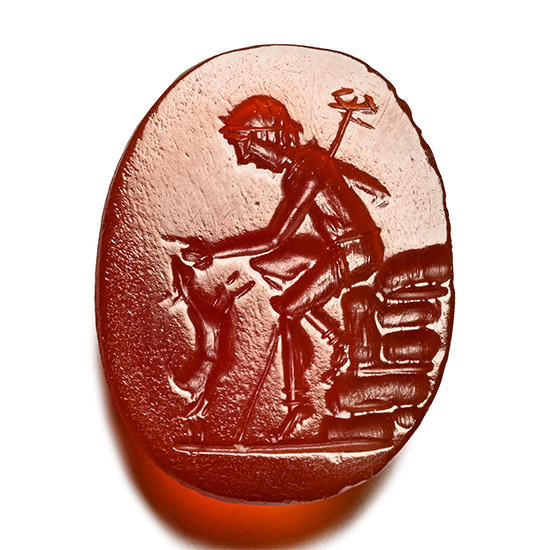
Roman Carnelian Gemstone with Seated Mercury and Goat
2nd century A.D.Sold for (Inc. bp): £260
Plano-convex in section with intaglio scene of a profile male on a baseline resting on a pile of stones, staff (thyrsus?) resting on his shoulder, leaning forward towards a rearing goat; surface repolished; supplied with a museum-quality impression. 1.03 grams, 15 mm
Private collection, England.
