
Loading, please wait...

LOT 0707
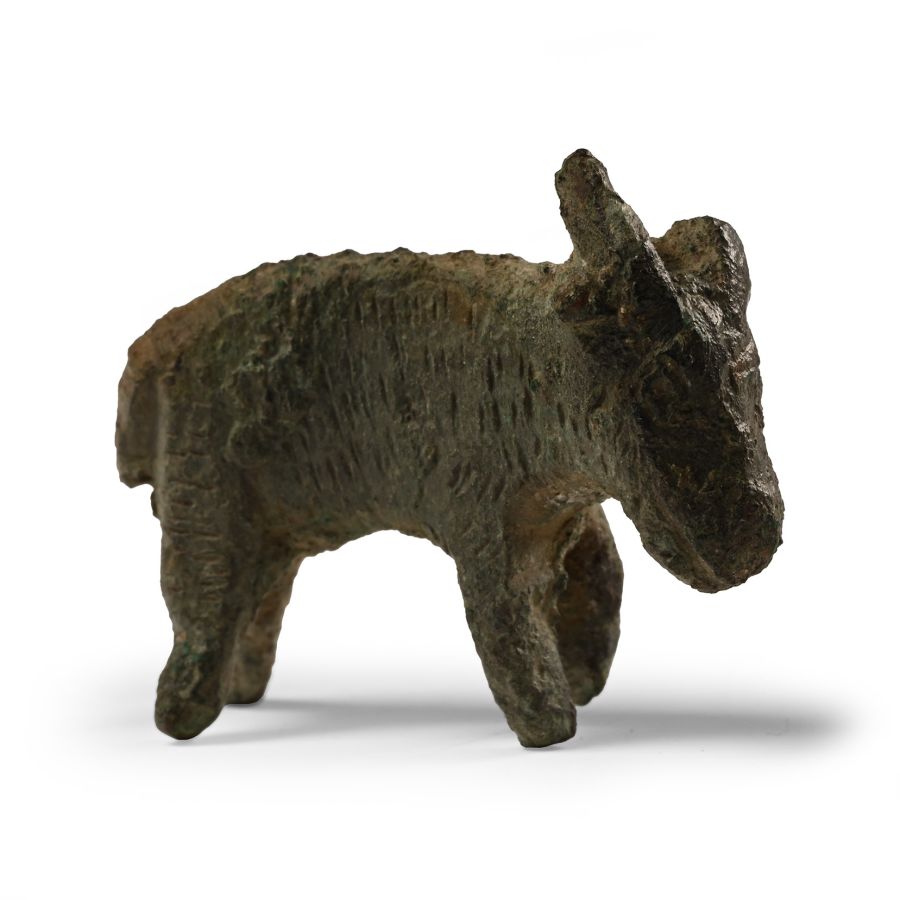
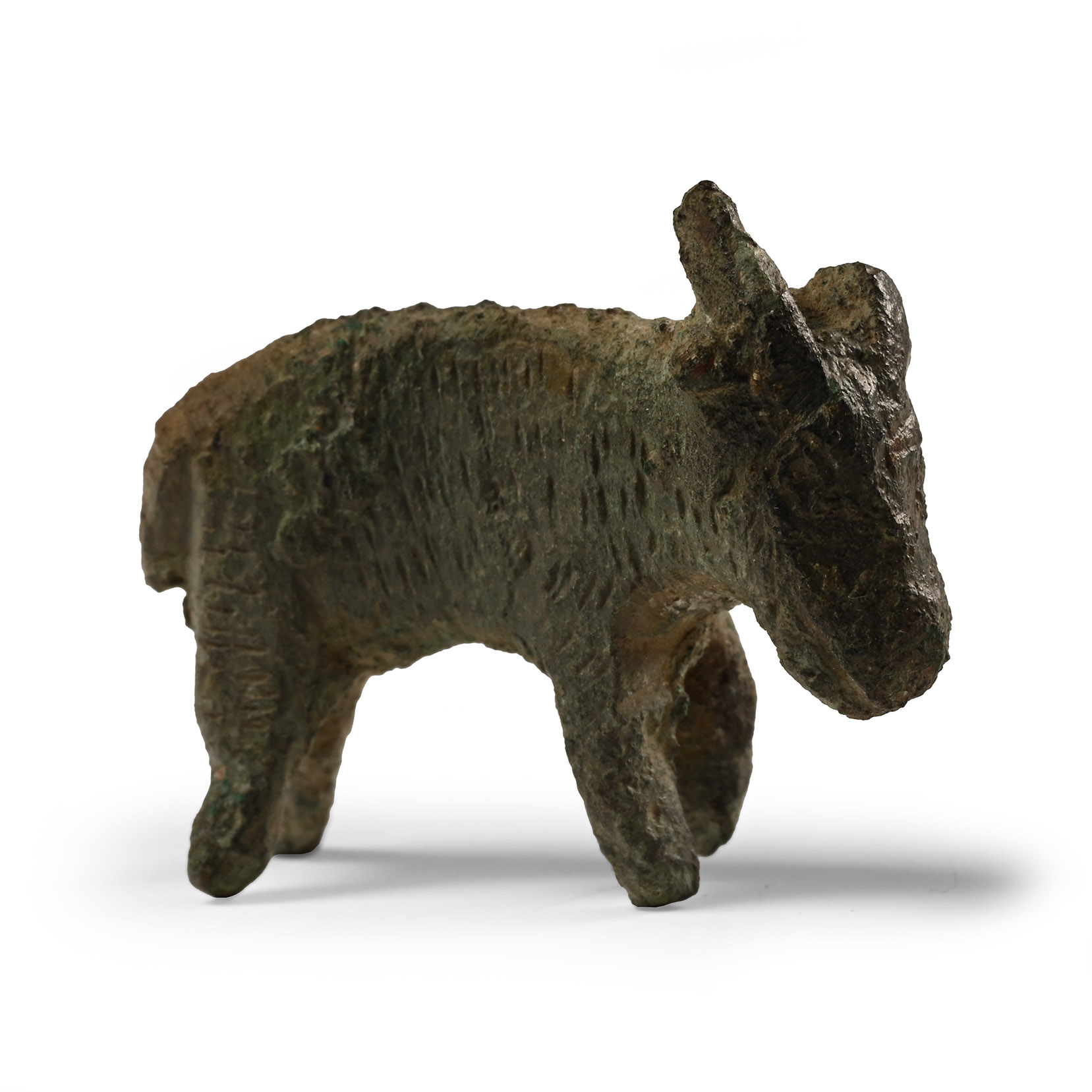
Roman Bronze Votive Ram Figure
1ST-4TH CENTURY A.D.
1 1/4 in. (19.8 grams, 32 mm).
Modelled in the round standing with head lowered, textured fur. [No Reserve]
ProvenanceAcquired on the European art market since the early 2000s.
From the private Northern Ireland collection of R.M.
TimeLine Auctions follows a vetting process to ensure the authenticity and legality of all items, reinforcing our commitment to integrity and responsible trading. Each antiquity, antique, and coin lot undergoes thorough examination by a vetting committee of at least ten external specialists, professional trade association members, scientists, and archaeologists: Our Vetting Process
AUCTIONS:
TimeLine is a leading auction house specialising in antiquities, ancient art, collectables, natural history, coins, medals, and books. Our auctions offer museums, collectors, historians, and enthusiasts the opportunity to acquire unique and historically significant pieces.
-
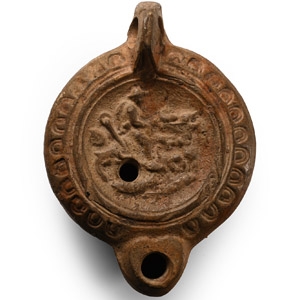
Roman Terracotta EXOFIVSTI Factory Oil Lamp
Circa 2nd century A.D.Sold for (Inc. bp): £195
Squat in profile with pierced lug handle, short nozzle, low-relief image of a horseman to the discus and crescent panels to the shoulder; underside stamped 'EXOFIVSTI'; old collectors' inked legends '1-70' and 'R6-45'. 80 grams, 11.2 cm
Acquired Bideford, Devon, UK, collection. From the private collection of Kenneth Machin (1936-2020), Buckinghamshire, UK; with collection no.OL1; his collection of antiquities and natural history was formed since 1948; thence by descent. -
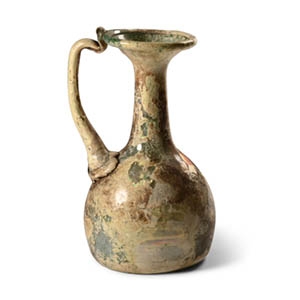
Roman Glass Juglet with Iridescent Surface
1st-3rd century A.D.Estimate: £500 - 700 (+bp*)
Opening Bid: £250
Barrel-shaped body with dimple base; applied trail to the flared mouth; tapering applied trail handle with spur to the rim. 66.7 grams, 12.5 cm
Acquired on the German art market, 1989-1995. with The Museum Gallery, 19 Bury Place, London, WC1, UK, 1998-2003. Property of a London based academic, 2003-present. -
.jpg)
Roman Silver Figure of a Man
1st-3rd century A.D.Estimate: £400 - 600 (‡+bp*)
Opening Bid: £200
Standing erect wearing a draped toga, bearded and with thick bowl-cut hair. 9.05 grams, 39 mm
Acquired in the mid 1980s-1990s. From the family collection of Mr S.A., Switzerland, thence by descent. Private collection since the late 1990s.
