
Loading, please wait...


LOT 0107
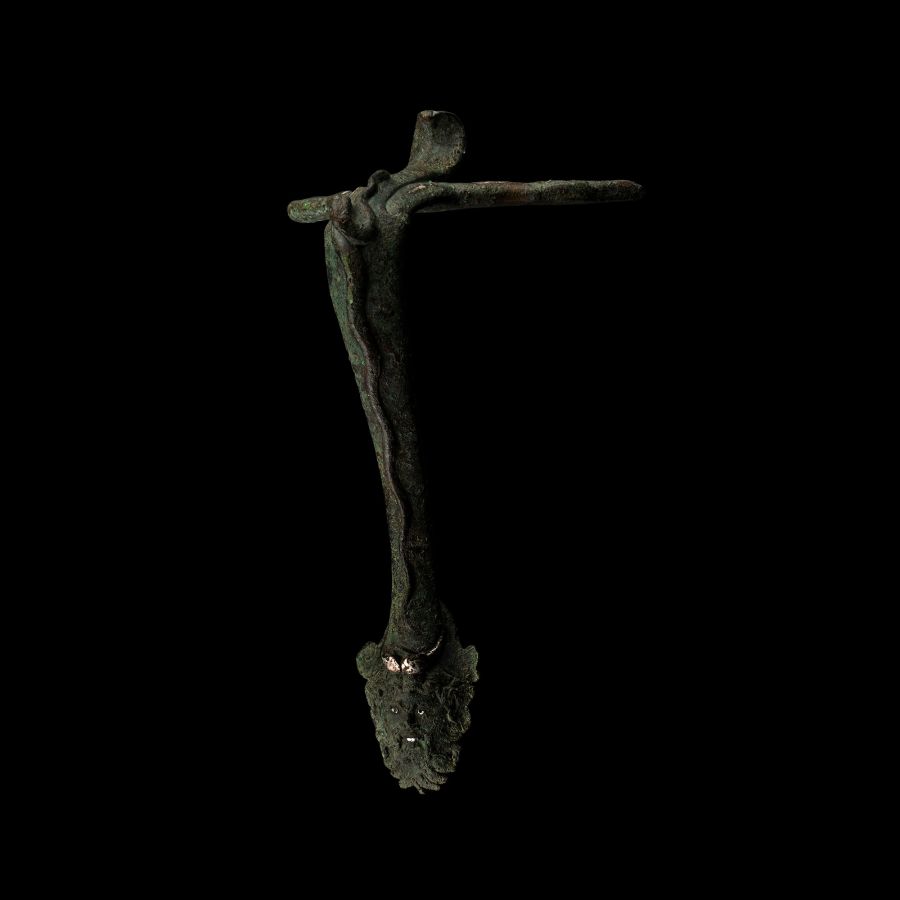
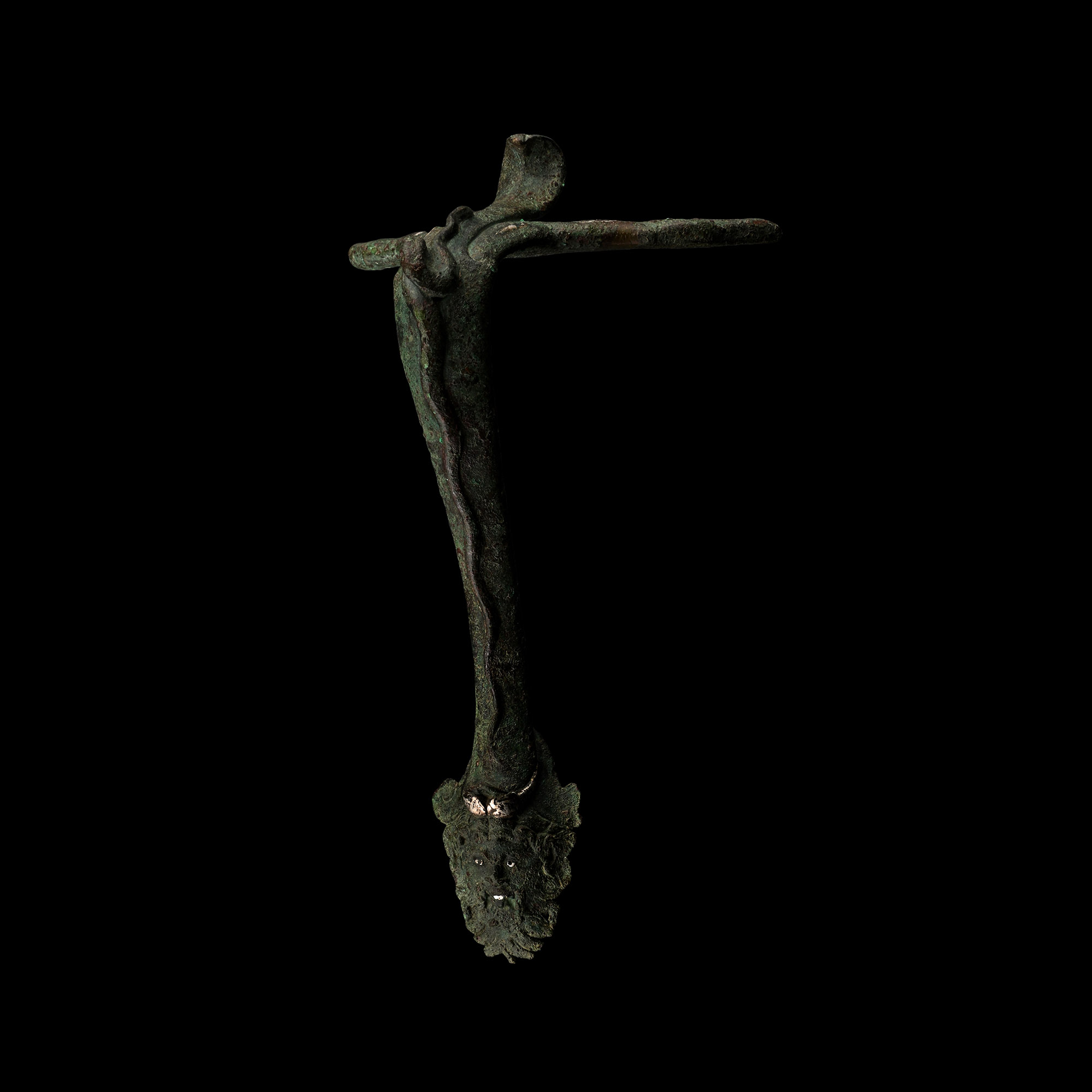
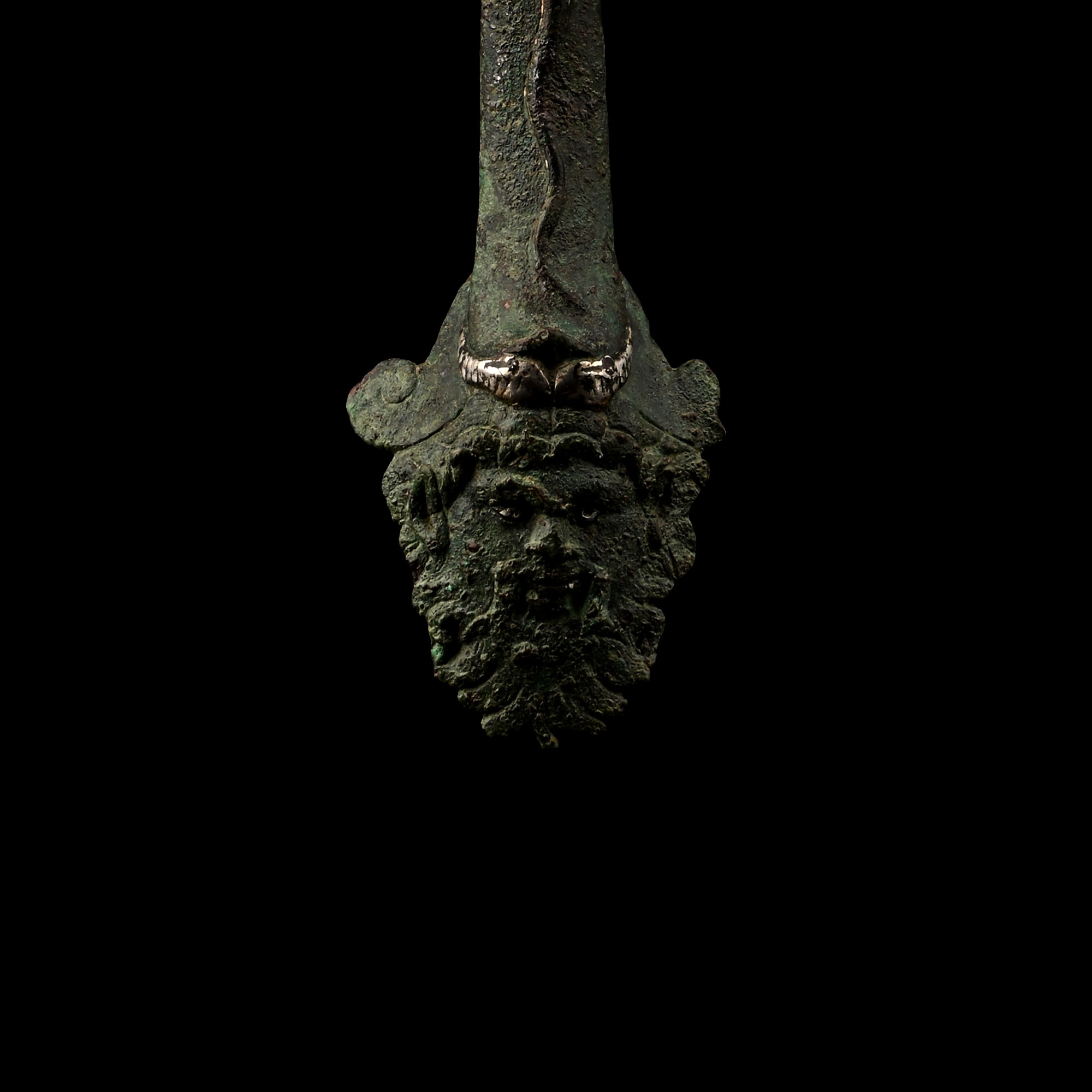
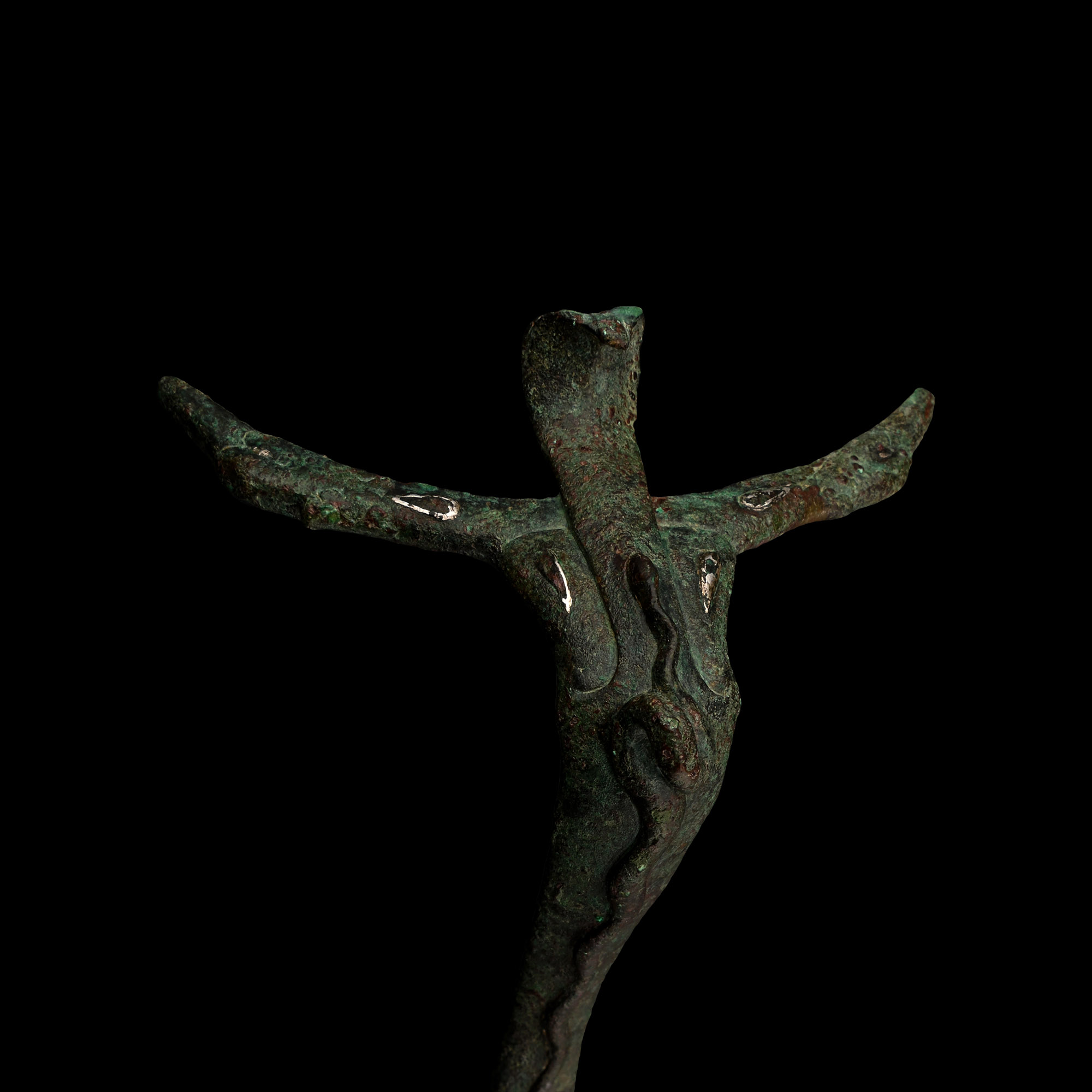
Roman Bronze Vessel Handle with Face
1ST CENTURY A.D.
5 5/8 in. (110 grams, 14.2 cm).
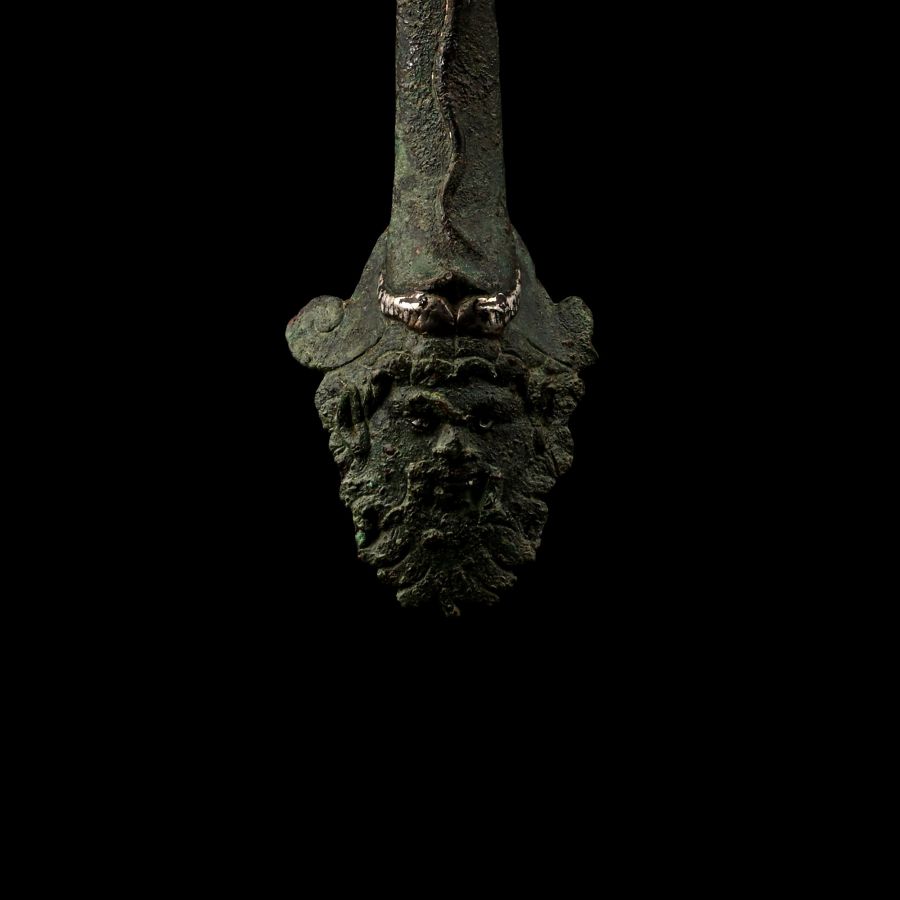
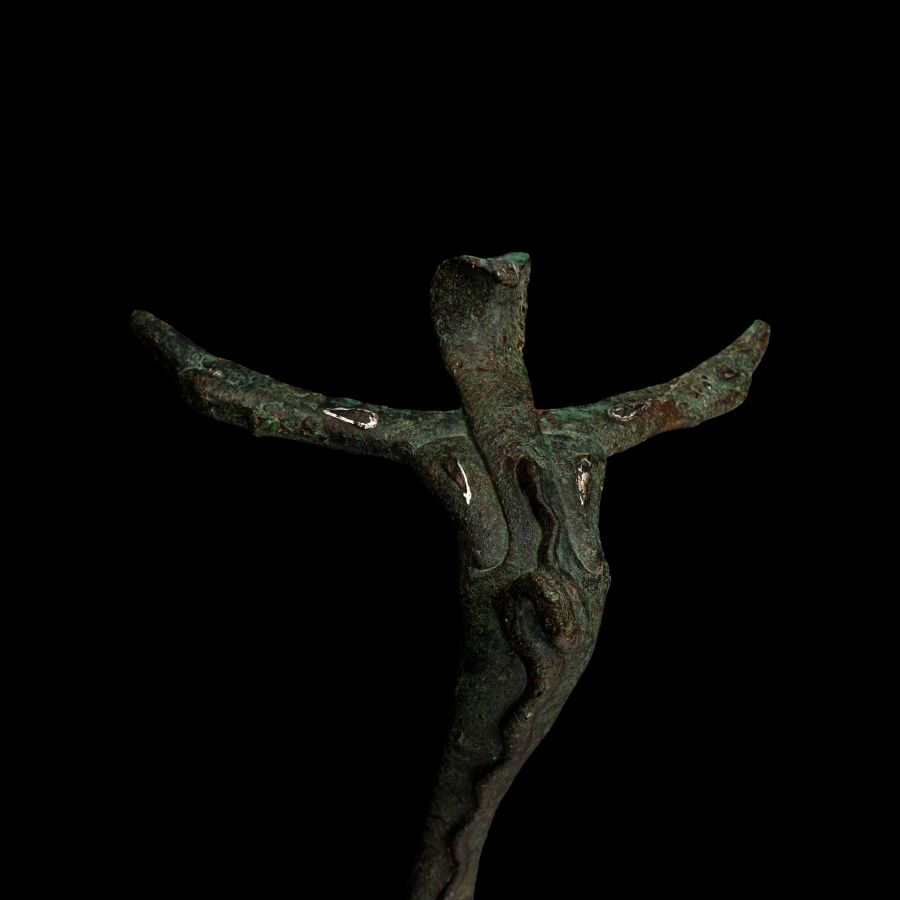
Swept in profile, comprising a horizontal crescentic panel to attach to the rim, with inlaid silver detailing, recurved cobra-shaped thumb pad, raised serpent to the outer face of the tapering handle, finial a mask of Bacchus or Pan, facing with volute scrolls to the brow and thick splayed beard; silver diadem and eyes.
ProvenancePrivate collection.
with Christie's, London, 11 June 1997, no.97 (part).
with Bonhams, 13 April 2000, no.198.
Private collection, Europe.
Accompanied by copies of the relevant Christie's and Bonhams catalogue pages.
Accompanied by a copy of an Art Loss Register certificate.
This lot has been checked against the Interpol Database of stolen works of art and is accompanied by a search certificate number no.12529-232161.
Cf. Rolland, H., Bronzes Antiques de Haute Provence, Paris, 1965, items 290-292, for similar, especially 291.
FootnotesThese handles, which formed a leafy plant element and an S- or T-shaped animal at the top, were usually attached to the belly of the bronze vessel by a human head. In our example, the broad head of the mask, with its broad moustache and beard, characterised by abundant hair, seems to hark back to the iconography of the Sileni or Pan.
CONDITIONTimeLine Auctions follows a vetting process to ensure the authenticity and legality of all items, reinforcing our commitment to integrity and responsible trading. Each antiquity, antique, and coin lot undergoes thorough examination by a vetting committee of at least ten external specialists, professional trade association members, scientists, and archaeologists: Our Vetting Process
AUCTIONS:
TimeLine is a leading auction house specialising in antiquities, ancient art, collectables, natural history, coins, medals, and books. Our auctions offer museums, collectors, historians, and enthusiasts the opportunity to acquire unique and historically significant pieces.
LOT 0107
Roman Bronze Vessel Handle with Face
Estimate £1,500 - 2,000€1,740 - 2,320 (for guidance only)$2,030 - 2,700 (for guidance only)
-
Roman Bronze Fan-Tailed Brooch
2nd-3rd century A.D.Sold for (Inc. bp): £39
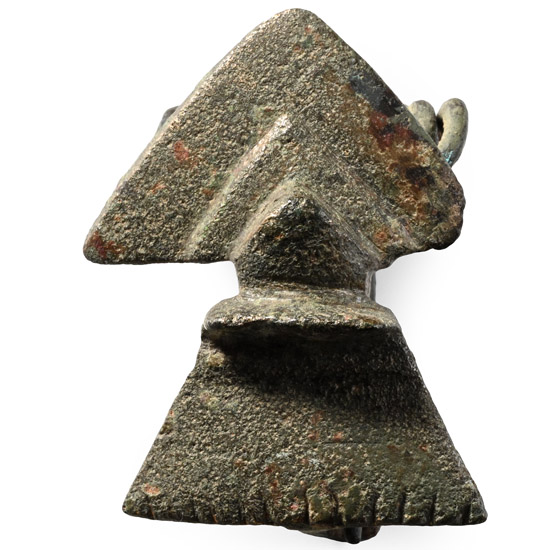
Plate brooch with a triangular-shaped body and a trapezoidal footplate with notched rear edge, coiled spring pin and catch on the reverse. 12.7 grams, 31 mm
From the private coin collection of a West London, UK, gentleman, formed since the mid 1980s. -
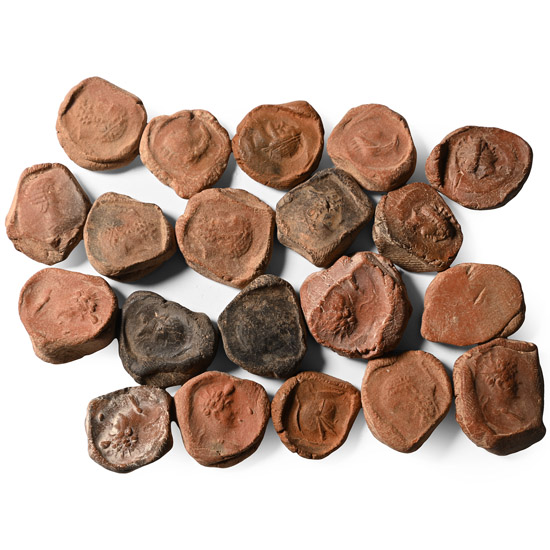
Roman Terracotta Bullae, Tesserae or Token Group
3rd century B.C.-1st century A.D.Sold for (Inc. bp): £143
A mixed group of ceramic bullae, tesserae or theatre tokens bearing low-relief motifs, mainly consisting of profile busts of deities. 41.2 grams total, 17-22 mm
From the private collection of a European gentleman (1942-2024), formed since the 1970s.
The term 'tessera' was used in Roman times to convey the Greek term σύμβολον (token). Small tiles are known as tokens, often shaped like coins, made of metal (copper, lead, iron), clay, bone, wood, or glass, stamped as well as engraved. The tokens, however, are not exclusively coin-shaped, as the Latin term 'tessera' refers to a four-sided shape. Tokens and tesserae seem to have been used both in Athens and Rome for the distribution of goods. According to written sources, the term ‘token’ is identified with credentials of the official authorities. They have also been interpreted as tokens of identity, as entrance tickets to theatre performances, tribunals or assemblies of citizens, archival material of seal engraving, as pawns in games, Charon’s obols and even as amulets. -
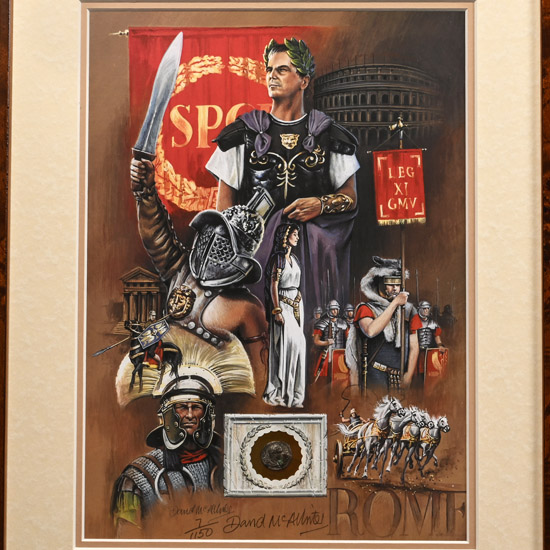
Silver Roman Coin and Framed Limited Edition Print
3rd century A.D. and laterSold for (Inc. bp): £7
The coin of Emperor Severus Alexander (222-235 A.D.) mounted on 22 carat gold foil, framed with an art print signed by the artist David McAllister, depicting scenes of Roman military activity; limited edition number 7/1150. 1.26 kg, 49.5 x 37.5 cm
UK gallery, early 2000s. Accompanied by a previous numbered certificate of authenticity.
David McAllister's exciting design is a 'one of a kind' work that portrays the might and riches of the Roman civilisation. This limited edition print is a celebration of the award-winning artist's lifetime dedication to historical paintings of the ancient world. To enhance appreciation of this rare and historic work, each print is signed and numbered by the artist.
