
Loading, please wait...

LOT 0853
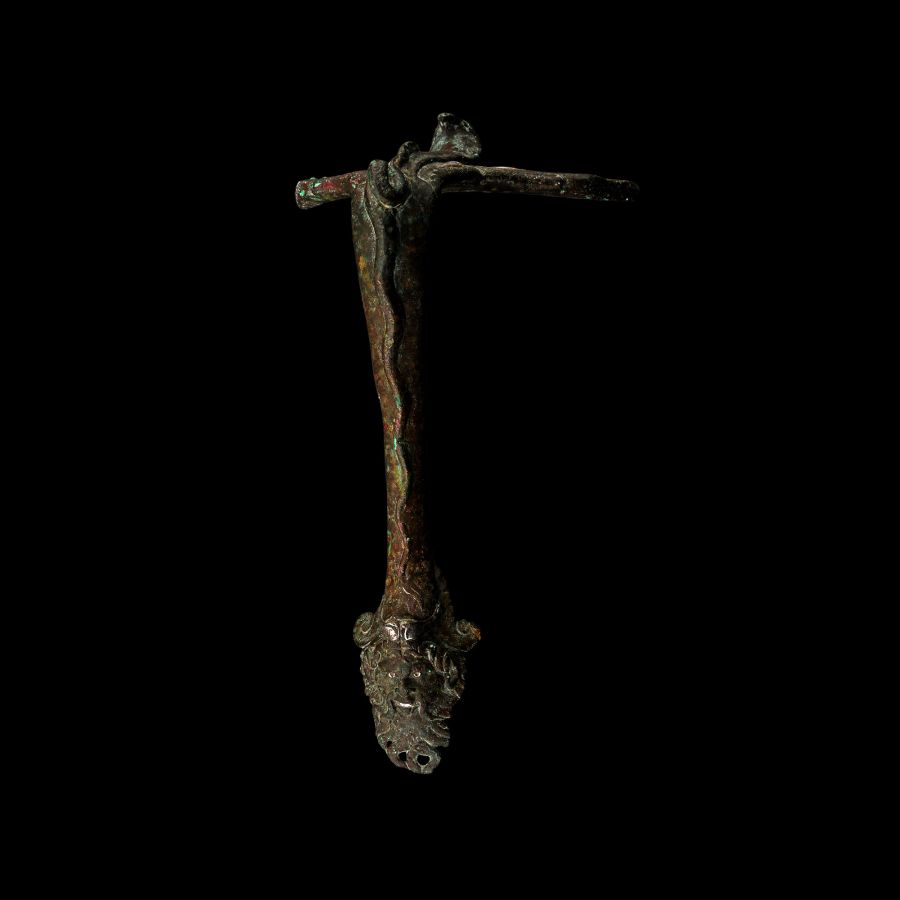
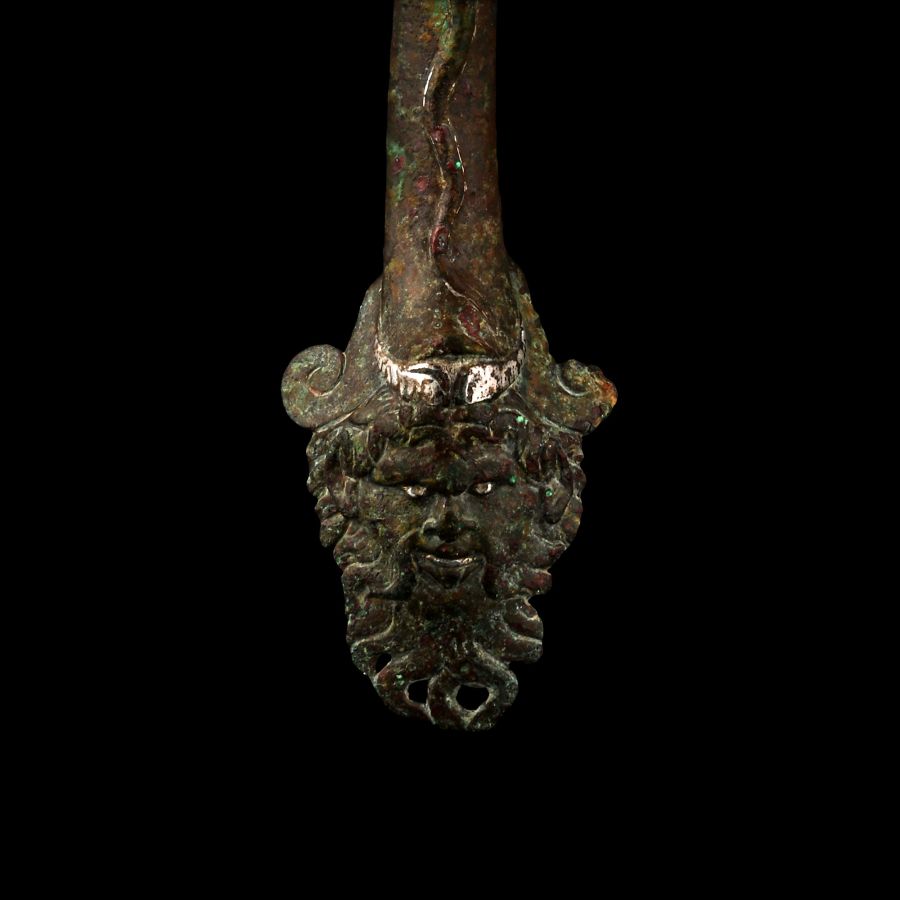
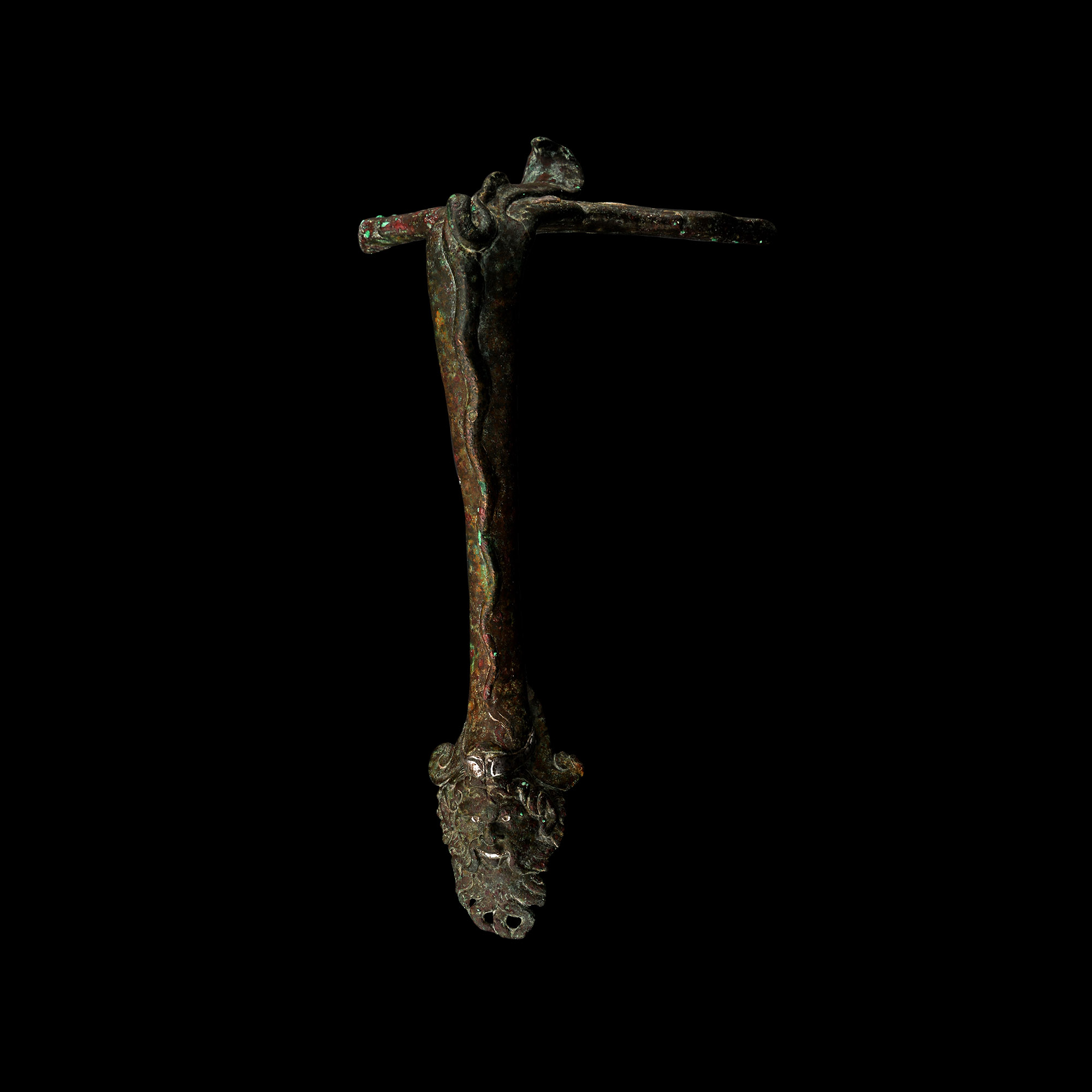
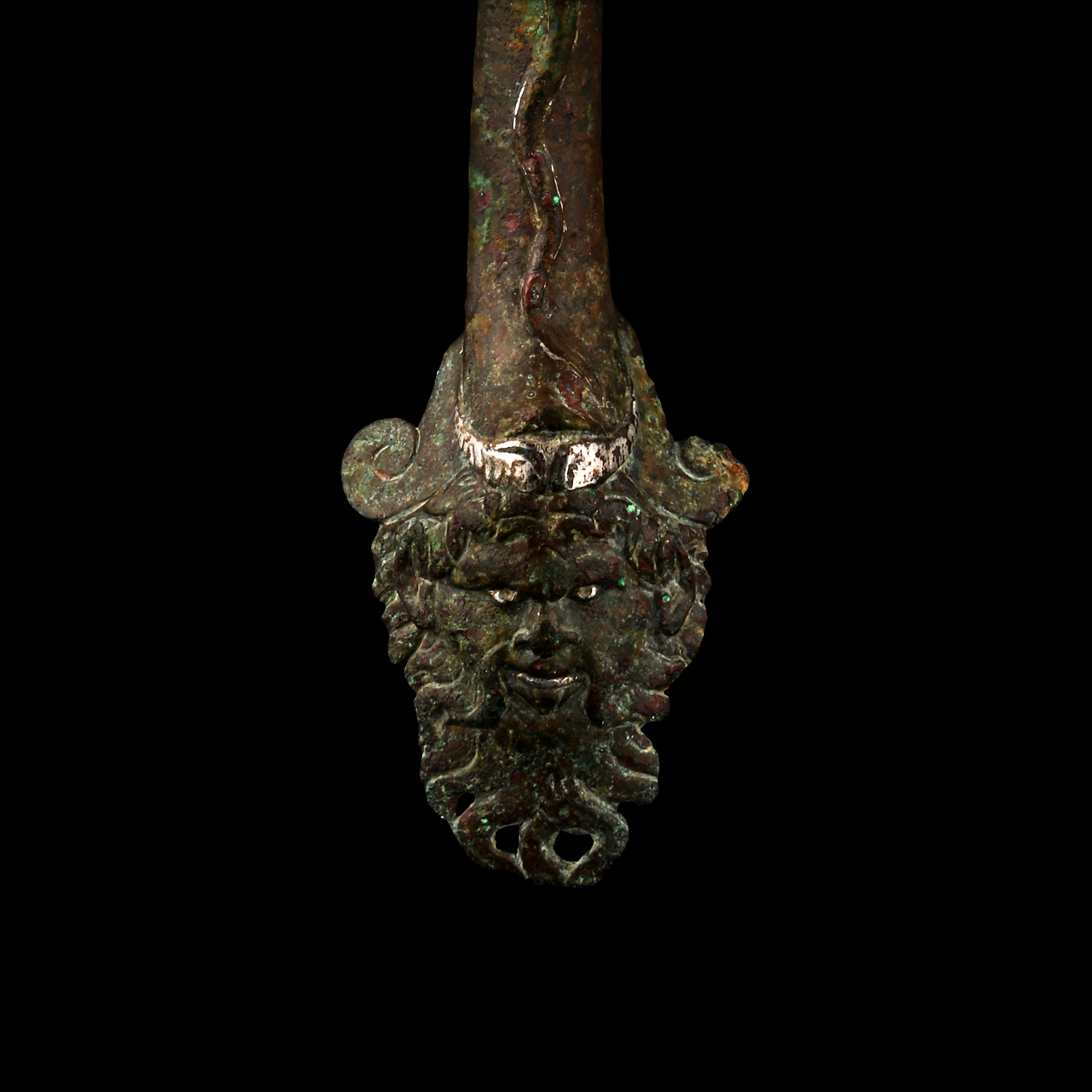
Roman Bronze Vessel Handle with Face
1ST CENTURY A.D.
5 5/8 in. (118 grams, 14.4 cm).
Swept in profile comprising a horizontal crescentic panel to attach to the rim, with inlaid silver detailing, recurved cobra-shaped thumb pad, raised serpent to the outer face of the tapering handle, finial a mask of Bacchus or Pan, facing with volute scrolls to the brow and thick splayed beard; silver diadem.
ProvenancePrivate collection.
with Christie's, London, 11 June 1997, no.97 (part).
with Bonhams, 13 April 2000, no.198.
Private collection, Europe.
Cf. The Metropolitan Museum, accession number 74.51.5463, for similar.
CONDITIONTimeLine Auctions follows a vetting process to ensure the authenticity and legality of all items, reinforcing our commitment to integrity and responsible trading. Each antiquity, antique, and coin lot undergoes thorough examination by a vetting committee of at least ten external specialists, professional trade association members, scientists, and archaeologists: Our Vetting Process
AUCTIONS:
TimeLine is a leading auction house specialising in antiquities, ancient art, collectables, natural history, coins, medals, and books. Our auctions offer museums, collectors, historians, and enthusiasts the opportunity to acquire unique and historically significant pieces.
LOT 0853
Roman Bronze Vessel Handle with Face
Estimate £2,000 - 3,000€2,320 - 3,480 (for guidance only)$2,700 - 4,050 (for guidance only)
-
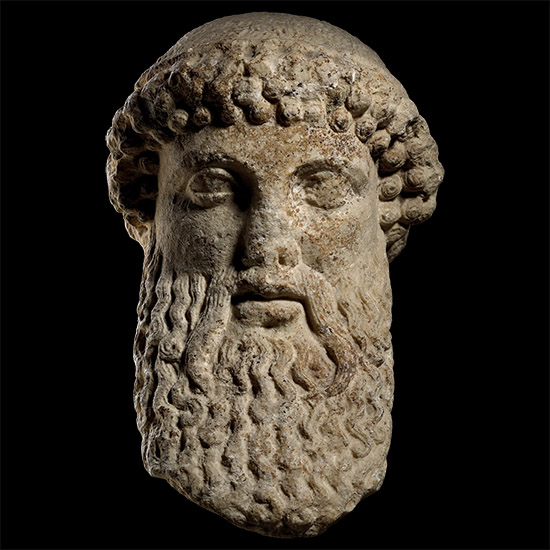
Life-Size Roman Bearded Head of the Greek God Hermes
1st-2nd century A.D.Sold for (Inc. bp): £33,800
With densely curled hair, stern facial expression beneath a broad brow, luxuriant curled beard falling in waves and cut square at the lower edge, a Roman copy after a 5th century B.C. Greek original; mounted on a custom-made display stand. 32.2 kg total, 52 cm high including stand
with Chaucer Fine Arts Ltd, 1980s. English private collection. Accompanied by an academic report by Dr Marina Mattei and Dr Laura Maria Vigna. This lot has been checked against the Interpol Database of stolen works of art and is accompanied by search certificate no.11615-199747.
This belongs to a type of archaic sculpture which can be traced back to the original ‘Hermes Propylaios’ by the Attic sculptor Alkamenes, a pupil of Phidias, active in the second half of the 5th century B.C. According to some theories, such depictions of Hermes (Hermae) were created for the Propylaea of the Acropolis of Athens, Hermes being the patron deity of doors and entrances. According to others, this type of bearded Hermes was located within the Acropolis as a devotional figure. -
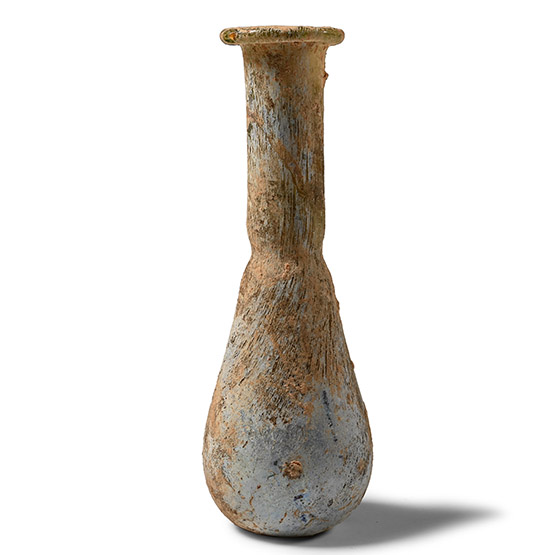
Roman Glass Vessel
1st-2nd century A.D.Sold for (Inc. bp): £65
With piriform lower body, extended cylindrical neck and flange rim; iridescent surfaces. 31.4 grams, 10.1 cm
From a London, UK, collection, 1990s.
This toilet bottle (Clairmont balsamarium type F) is characterised by the cylindrical neck with slight constriction at the bottom. Similar examples have been found in the Wadi Eshari, Jordan (Wadi-Es-Sir). -
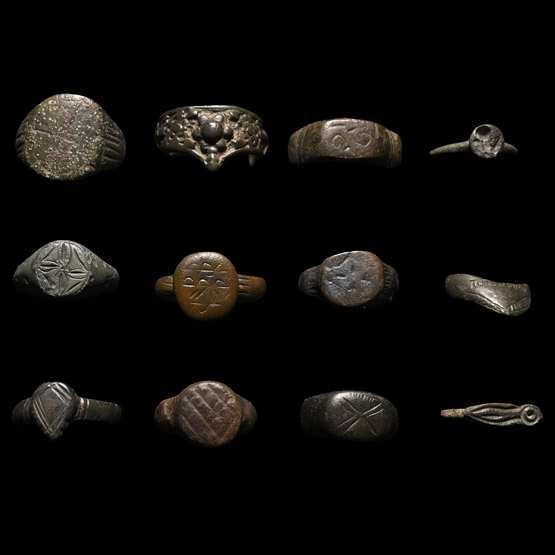
Roman to Post Medieval Bronze Ring Collection
1st-18th century A.D.Sold for (Inc. bp): £156
including archer's thumb ring, reserved saltire and other types. 67 grams total, 23-26 mm
Ex German art market, 2000s. Acquired from an EU collector living in London. From the collection of a Surrey, UK, gentleman.
