
Loading, please wait...
LOT 0923
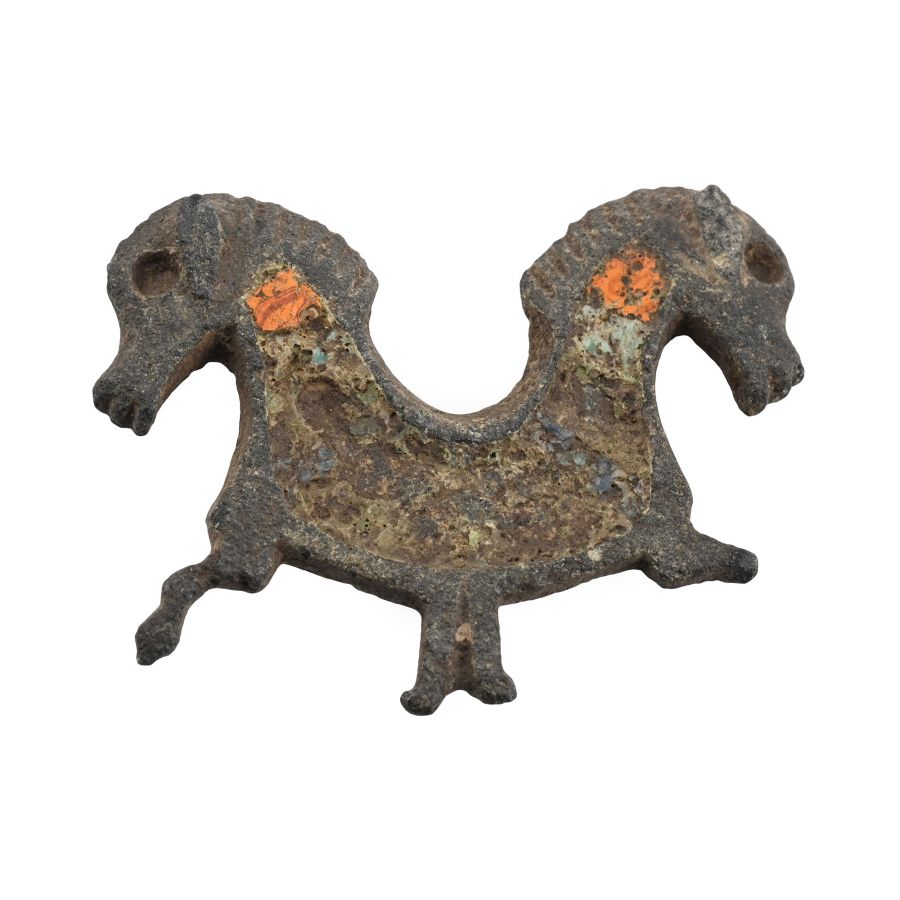
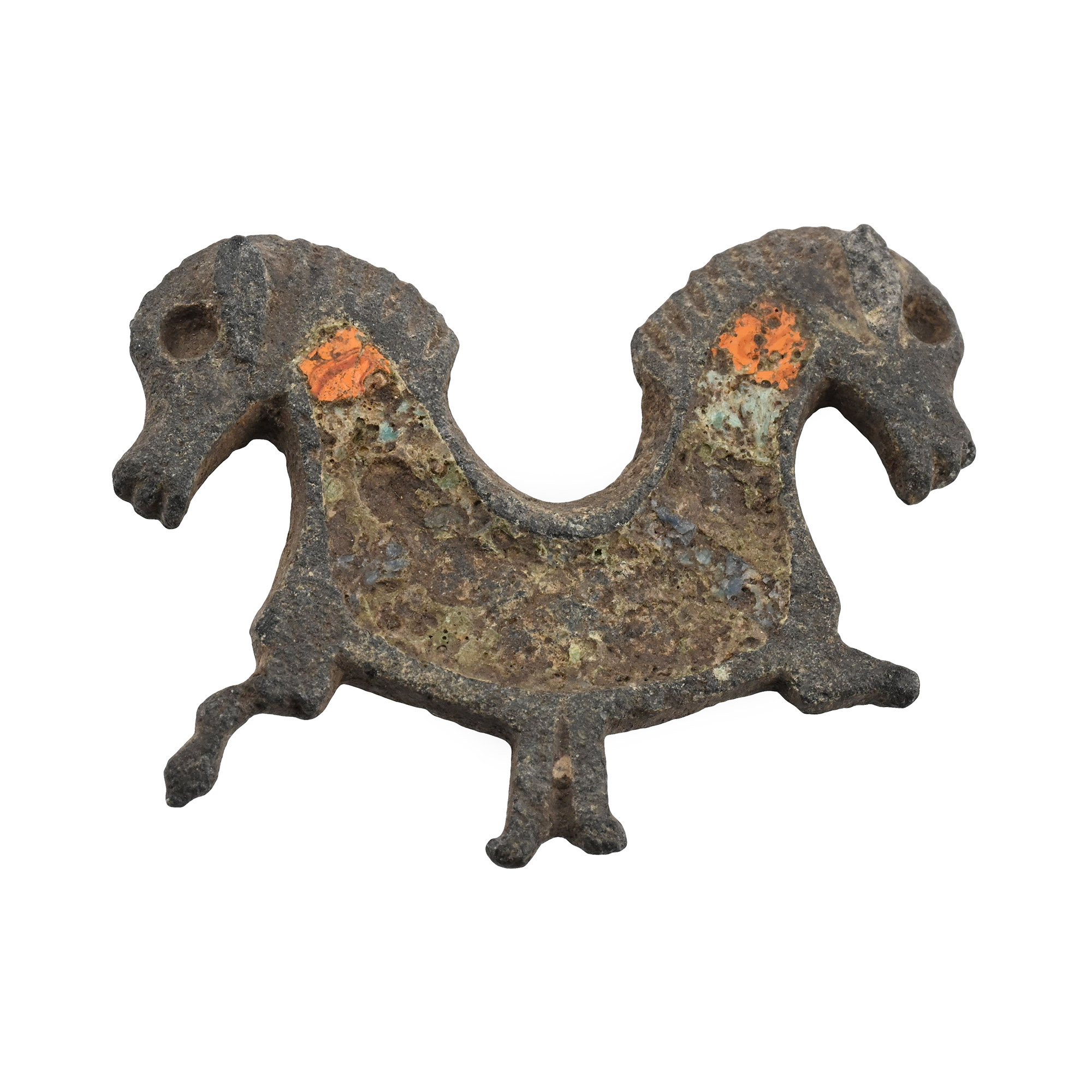
Roman Bronze Two-Headed Sea Horse Brooch
CIRCA 2ND-3RD CENTURY A.D.
1 3/8 in. (9.25 grams, 37 mm).
Plate brooch with pin-lugs, pin and catch to reverse, addorsed equine heads with recesses to accept enamel. [No Reserve]
ProvenanceEx German art market, 2000s.
Acquired from an EU collector living in London.
From the collection of a Surrey, UK, gentleman.
Cf. Hattatt, R., Brooches of Antiquity, Oxford, 1987, item 1192, for zoomorphic type.
CONDITIONTimeLine Auctions follows a vetting process to ensure the authenticity and legality of all items, reinforcing our commitment to integrity and responsible trading. Each antiquity, antique, and coin lot undergoes thorough examination by a vetting committee of at least ten external specialists, professional trade association members, scientists, and archaeologists: Our Vetting Process
AUCTIONS:
TimeLine is a leading auction house specialising in antiquities, ancient art, collectables, natural history, coins, medals, and books. Our auctions offer museums, collectors, historians, and enthusiasts the opportunity to acquire unique and historically significant pieces.
-
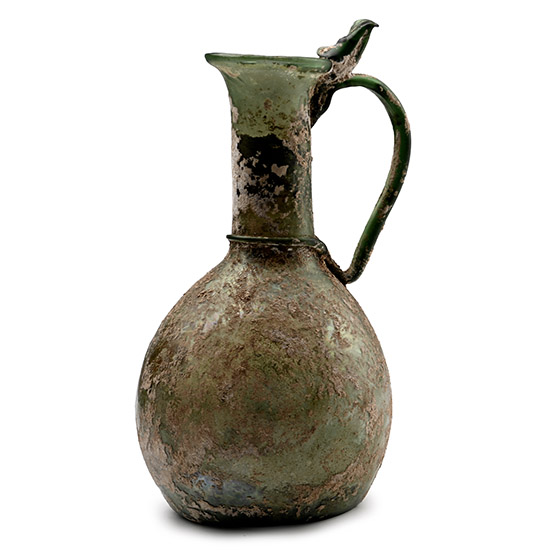
Roman Glass Juglet
1st-3rd century A.D.Sold for (Inc. bp): £445
Oblate body with dimple base; applied trail to the flared mouth and another at the junction of the neck and shoulder; ribbed applied trail handle with spur to the rim. 90 grams, 15 cm
From a London, UK, collection of glass, 1970-2000s. -
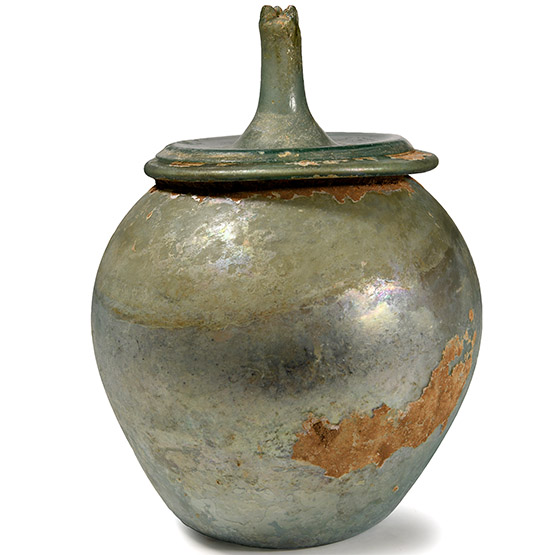
Large Roman 'The Sangiorgi' Pale Green Glass Cinerary Urn
3rd-1st century B.C.Estimate: £6,000 - 8,000 (+bp*)
Opening Bid: £3,333
Of piriform shape with everted rim, gently chamfered upper lip and concave underside; lid with bevelled rim, gently dished upper face rising to a central dome and cylindrical handle with piecrust pleats; iridescent surfaces. 823 grams total, 29.5 cm high
Ex Sangiorgi collection, acquired in the 19th century. with Christie's, 3 June 1999, no.121. The remains of a 19th-early 20th-century label can be seen on the glass on one side. with Christie's, New York, 9 December 1999, no.476. American private collection, Westchester, New York, acquired in 1999. with Bonhams, London, 30 September 2015, no.91. Private collection, UK. This lot has been checked against the Interpol Database of stolen works of art and is accompanied by search certificate number no.13132-248966.
A similar jar in the British Museum was found in Warwick Square, London, inside a lead canister, and was originally filled with bone ashes. The Romans often reused glass jars, originally made for storing liquids and foodstuffs, as cremation vessels, but this kind of jar seems too fragile and was therefore probably purpose-made. The lead canister, which was found with the jar from London, protected the glass and bones. Georgio Sangiorgi is one of the most famous names associated with the field of ancient glass collecting. Working from the Galleria Sangiorgi in the Palazzo Borghese, Sangiorgi acquired the most magnificent collection of ancient glass, seeking only the finest examples. -
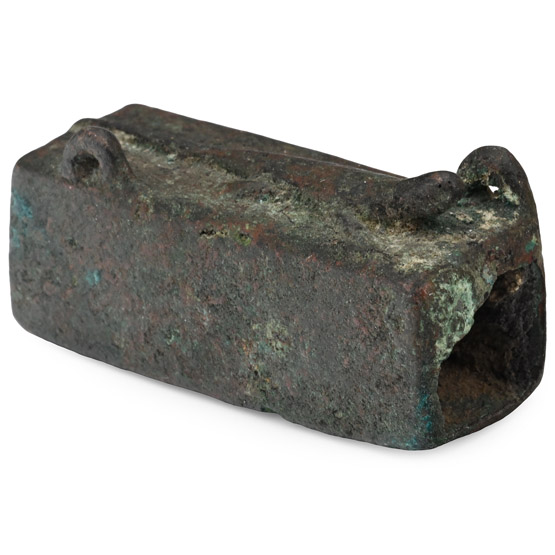
Roman Bronze Padlock Barrel with Lizard
43-410 A.D.Sold for (Inc. bp): £221
Hollow square in cross-section, with thin walls; terminals with copper-alloy plate soldered onto them; moulded lizard decoration to the upper face consisting of a low oval body tapering to a thin tail; head raised and short legs spread out from the body; small indentation either side of the head representing the eyes, linear engraved texture the body for scales; two perforated lugs at opposed corners. 29 grams, 48 mm
Found Gloucestershire, UK. From the collection of a late Gloucestershire, UK, collector. Accompanied by a copy of the British Museum's Portable Antiquities Scheme (PAS) report no.GLO-791057.
