
Loading, please wait...
_900x900.jpg "Roman Bronze Trumpet Whorl Brooch")
_200x200.jpg "Roman Bronze Trumpet Whorl Brooch")
.jpg "Roman Bronze Trumpet Whorl Brooch")
LOT 0517
Roman Bronze Trumpet Whorl Brooch
CIRCA 2ND CENTURY A.D.
1 1/4 in. (8.89 grams, 33 mm).
S-shaped La Tène scroll with trumpet and bulb detailing, catch and pin to the reverse. [No Reserve]
ProvenanceFrom the collection of a Suffolk, UK, gentleman, established from the early 2000s.
This lot is accompanied by an illustrated lot declaration signed by the Head of the Antiquities Department, Dr Raffaele D'Amato.
Cf. Heeren, S. & van der Feijst, L., Fibulae uit de Lage Landen. Beschrijving, Analyse en Interpretatie van een Archeologische Vondstcategorie, Amersfoort, 2017, item NL-0454-07b-048, for a more elaborate example of the type.
CONDITIONTimeLine Auctions follows a vetting process to ensure the authenticity and legality of all items, reinforcing our commitment to integrity and responsible trading. Each antiquity, antique, and coin lot undergoes thorough examination by a vetting committee of at least ten external specialists, professional trade association members, scientists, and archaeologists: Our Vetting Process
AUCTIONS:
TimeLine is a leading auction house specialising in antiquities, ancient art, collectables, natural history, coins, medals, and books. Our auctions offer museums, collectors, historians, and enthusiasts the opportunity to acquire unique and historically significant pieces.
-
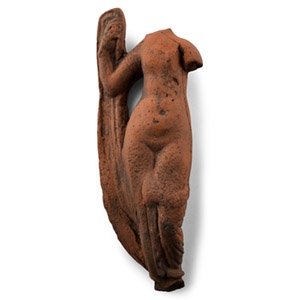
Roman Terracotta Figure of the Naked Venus
1st-4th century A.D.Sold for (Inc. bp): £182
Hollow-formed moulded figurine, Venus (Greek Aphrodite) standing nude holding up a fold of her robe cascading to her feet. 120 grams, 16.5 cm
Ex German art market, 2000s. Acquired from an EU collector living in London. From the collection of a Surrey, UK, gentleman. This lot is accompanied by an illustrated lot declaration signed by the Head of the Antiquities Department, Dr Raffaele D'Amato. -
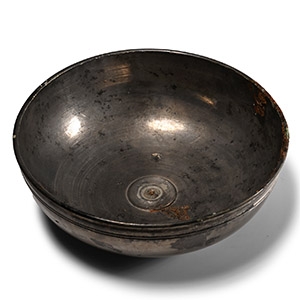
Roman Tinned Bronze Bowl
1st-3rd century A.D.Estimate: £1,500 - 2,000 (‡+bp*)
Opening Bid: £750
Hemispherical in profile with low foot, incised circumferential lines to rim; high-tin surface with silvery appearance. 177 grams, 10.3 cm
Acquired in the mid 1980s-1990s. Private collection, Switzerland, thence by descent. Private collection, since the late 1990s. This lot has been checked against the Interpol Database of stolen works of art and is accompanied by search certificate number no.12234-222176. This lot has been cleared against the Art Loss Register database, and is accompanied by an illustrated lot declaration signed by the Head of the Antiquities Department, Dr Raffaele D'Amato. -
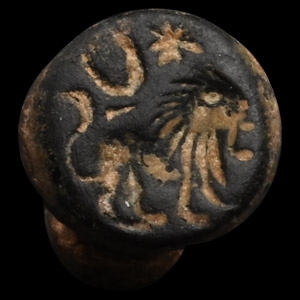
Roman Bronze Stamp Seal with Moon
4th-5th century A.D.Sold for (Inc. bp): £195
Of tiered and balustered form with incuse image to underside, lion passant surmounted by a star and crescent moon. 4.61 grams, 23 mm
Acquired in 1993. Private collection, thence by descent. Private collection, since the late 1990s. This lot is accompanied by an illustrated lot declaration signed by the Head of the Antiquities Department, Dr Raffaele D'Amato.
