
Loading, please wait...

LOT 0766
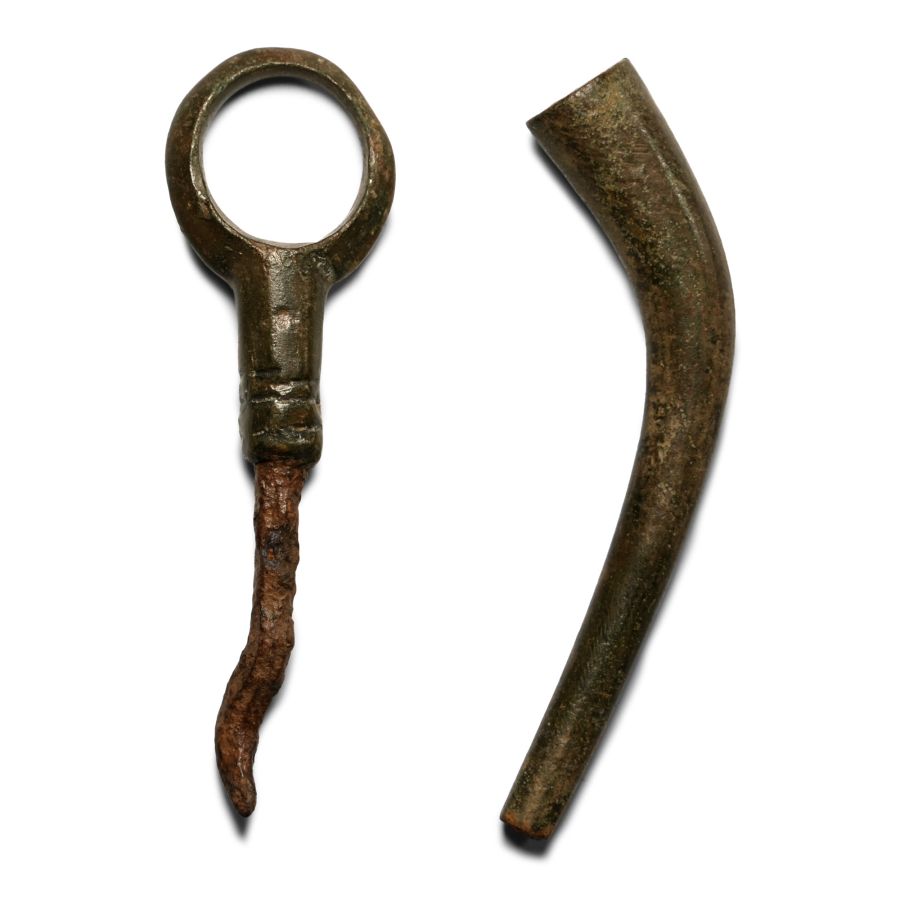
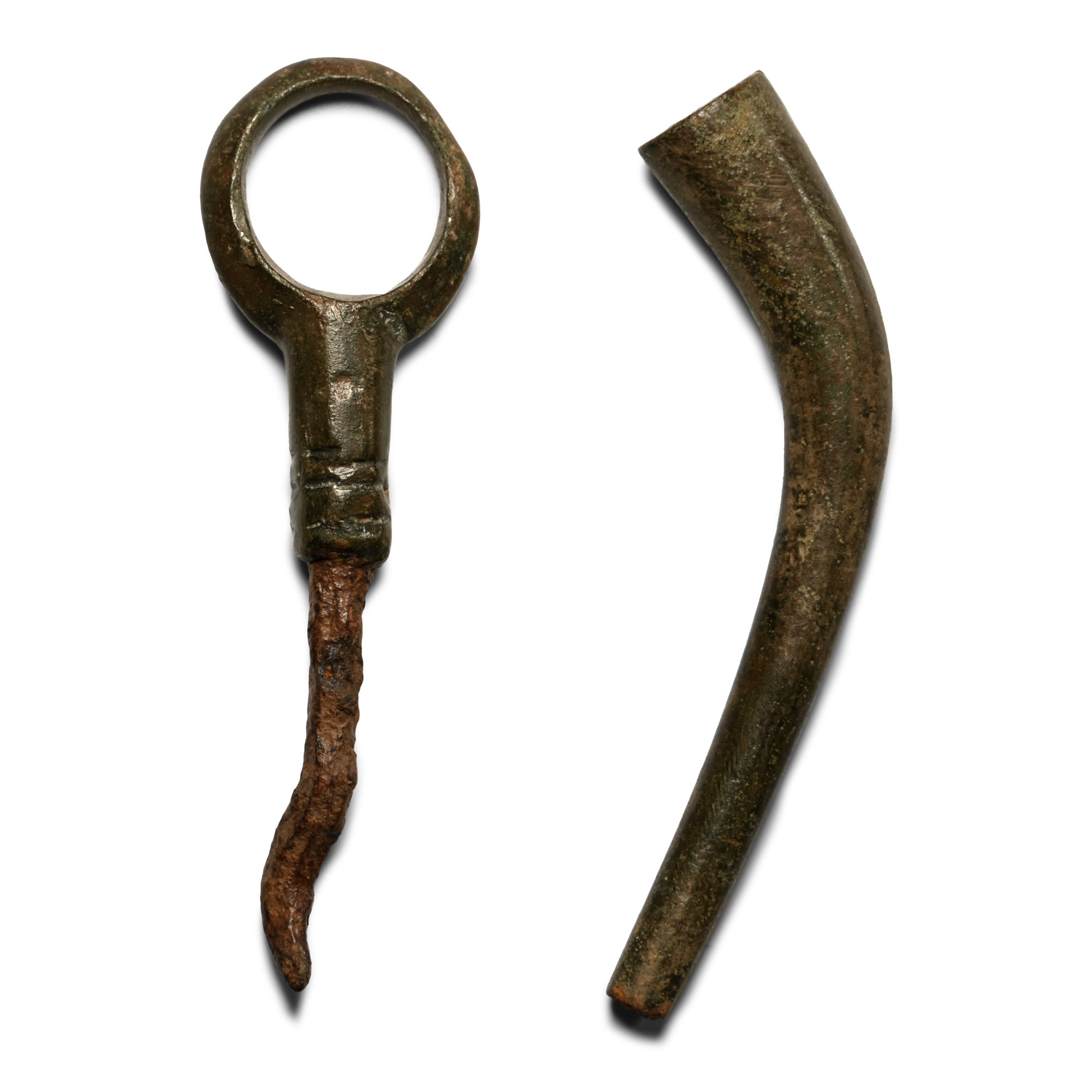
Roman Bronze Trumpet Mouth Piece and Handle
1ST-4TH CENTURY A.D.
3 5/8 - 3 3/4 in. (70 grams total, 92-94 mm).
Curved and tapering tube for a trumpet; bronze annular fitting with hooked iron shank. [2, No Reserve]
ProvenanceAcquired from Ancient & Oriental in the 1990s.
Ian Wilkinson collection, Nottinghamshire, UK, formed since 1985.
This lot is accompanied by an illustrated lot declaration signed by the Head of the Antiquities Department, Dr Raffaele D’Amato.
TimeLine Auctions follows a vetting process to ensure the authenticity and legality of all items, reinforcing our commitment to integrity and responsible trading. Each antiquity, antique, and coin lot undergoes thorough examination by a vetting committee of at least ten external specialists, professional trade association members, scientists, and archaeologists: Our Vetting Process
AUCTIONS:
TimeLine is a leading auction house specialising in antiquities, ancient art, collectables, natural history, coins, medals, and books. Our auctions offer museums, collectors, historians, and enthusiasts the opportunity to acquire unique and historically significant pieces.
-
.jpg)
Roman Bronze Horse Whorl Brooch
3rd-4th century A.D.Sold for (Inc. bp): £130
With horse-head decoration to each arm, each head with punched ring-and-dot eye, and a similar motif to the centre; catchplate and hinged pin to verso. 14.9 grams, 41 mm
Ex German art market, 2000s. Acquired from an EU collector living in London. From the collection of Surrey, UK, gentleman. This lot is accompanied by an illustrated lot declaration signed by the Head of the Antiquities Department, Dr Raffaele D’Amato. -
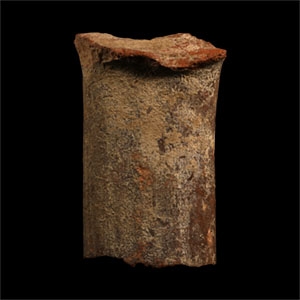
Roman Terracotta Fragment of a Handle
2nd-4th century A.D.Sold for (Inc. bp): £7
With base and part of the body of a Roman vessel, perhaps a transport amphora, with encrustation to surface. 112 grams, 75 mm
Private collection of an English gentleman, acquired between 1950-1975. This lot is accompanied by an illustrated lot declaration signed by the Head of the Antiquities Department, Dr Raffaele D’Amato. -
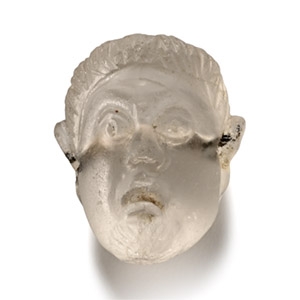
Roman Miniature Rock Crystal Bead of a Man
Circa 300 A.D.Sold for (Inc. bp): £520
Triangular in section and curved to the rear, with wide-eyed expression; pierced at the ears for suspension as a bead; small goatee beard to the chin and radiating leaf pattern to rear of head. 4.32 grams, 19 mm
Mr F.D. collection, acquired on the European art market, 1975 to present. This lot is accompanied by an illustrated lot declaration signed by the Head of the Antiquities Department, Dr Raffaele D’Amato.
